Sleep position guide
Best pillow for stomach sleepers with neck pain
Stomach sleeping often asks the neck to rotate for hours. The pillow goal is less lift, less twist, and a clear boundary when pain needs care.
Quick answer
For pillow for stomach sleepers with neck pain, the useful answer is to solve neck angle, pillow height, and whether discomfort improves or worsens after setup changes without creating a worse tradeoff. Best fit: shoppers who only spend part of the night on their stomach and still need a pillow that works for side or back sleep. Lumuwala Cloud Pillow is worth considering when you want a plush support feel, cooler sleep surface, and a current-policy home trial. Skip it if you are a strict stomach sleeper who already knows any normal pillow pushes your neck too high.
Founder and primary Lumuwala byline
Edited by Anya for editorial content editor
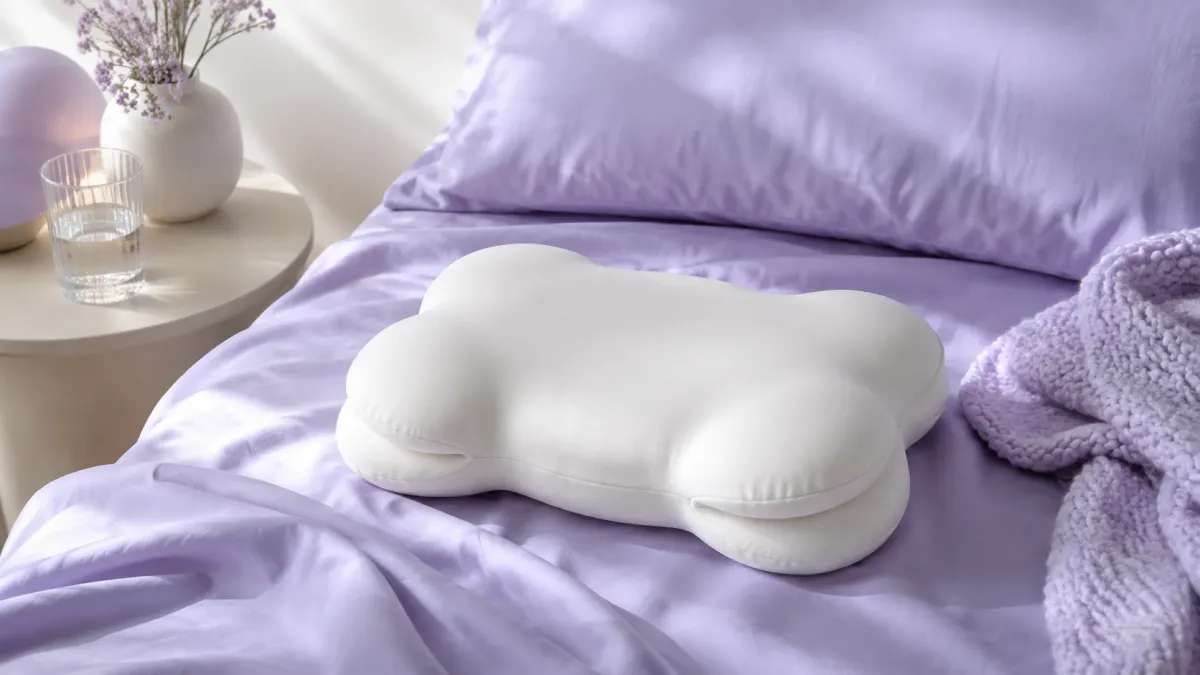
Buying brief
Decide before you shop.
Best fit
Best fit: shoppers who only spend part of the night on their stomach and still need a pillow that works for side or back sleep.
Skip if
Skip it if you are a strict stomach sleeper who already knows any normal pillow pushes your neck too high.
Pattern
Map the complaint to neck angle, pillow height, and whether discomfort improves or worsens after setup changes; do not treat the pillow as a diagnosis.
Position fit
Check side, back, or stomach height separately because each changes neck angle.
Pressure points
Notice jaw, ear, shoulder, skull-base, and arm pressure after several hours.
Care boundary
Persistent or worsening symptoms deserve medical advice before product testing.
Try the Lumuwala fit
Cloud Pillow is the product this guide points back to.
Lumuwala fits when the issue looks like a comfort setup problem: pillow collapse, unstable height, heat-driven turning, or pressure from an old pillow. It should be judged as a comfort product, not a treatment.
See if Cloud Pillow fits your sleepCluster links
Keep reading in this sleep path.
Stomach sleeping adds rotation
Stomach sleepers usually turn the head to breathe. That means the neck can spend hours rotated to one side. A tall pillow adds lift on top of that rotation, often pushing the neck into a more awkward shape. If you wake with one-sided neck stiffness, the pillow may be part of the setup, but the position itself matters too.
The first goal is not a special contour. It is less. Less pillow height, less forced chin angle, less shoulder shrug, and less need to tuck an arm under the head. Many stomach sleepers are using the pillow as a prop because the mattress or shoulder position feels wrong. A thicker pillow can make that prop feel comfortable at first and punishing by morning.
What the research can safely support
Most pillow research is stronger for neck pain, side sleeping, and pillow height than for stomach sleeping alone. A systematic review found that pillow designs can affect neck pain, waking symptoms, neck disability, satisfaction, and alignment outcomes. A pillow-height study found that height changed head-neck pressure and cervical alignment mechanics.
A clinical trial comparing neck support pillows found that people tended to prefer support that was soft, not too high, washable, and supportive of the cervical curve. A 2023 study on strict pillow-height adjustment reported changes in neck pain and somatic symptoms after height adjustment. Those sources do not make stomach sleeping harmless. They support a careful lower-loft test.
Try the Lumuwala fit
Cloud Pillow is the product this guide points back to.
Lumuwala fits when the issue looks like a comfort setup problem: pillow collapse, unstable height, heat-driven turning, or pressure from an old pillow. It should be judged as a comfort product, not a treatment.
Use the guide, then test the fitLow loft is usually the starting point
A stomach sleeper with neck pain should usually start by lowering the pillow, not raising it. Too much loft can push the head backward or sideways while the face is already turned. A thin pillow, a compressible edge, or no head pillow may reduce the lift that makes rotation worse.
The test is simple. Lie on your stomach in the position you actually use. If the neck feels arched, crowded, or jammed to one side, the pillow is too tall or too firm for that setup. If removing the pillow makes breathing or shoulder position awkward, test a very thin layer rather than jumping back to a full-height pillow.
A lower pillow can feel strange for a night because the sleeper is used to leaning into height. Strange is not the same as painful. Give a low-risk change a couple of ordinary nights if it does not create new symptoms. Stop quickly if the neck feels sharper, the arm tingles, or the shoulder has to climb toward the ear.
Watch the arm under the pillow
Many stomach sleepers slide one arm under the pillow. That raises the pillow, twists the shoulder, and changes neck angle. The pillow gets blamed, but the arm stack did part of the work. If you need the arm there to feel stable, the sleep position may be asking too much from the shoulder and neck.
Try a small body pillow or folded blanket near the torso so the arm has somewhere else to rest. Keep the head pillow thin while you test this. If the neck improves when the arm leaves the pillow, the fix was not a taller head pillow. It was removing the hidden lift under the head.
Also watch the knee and hip. Some stomach sleepers twist one knee up, which rotates the pelvis and can pull the upper body into a different angle. The head pillow cannot fix that whole chain. A small torso or hip support may reduce the twist enough that the neck no longer has to compensate as much.
Stop the pillow test when symptoms point beyond setup
Neck pain with numbness, weakness, arm symptoms, severe headache, trauma, fever, or pain that keeps escalating deserves medical advice. Stomach sleeping can irritate a sensitive neck, but it is not a diagnosis. A pillow experiment should not ask you to push through warning signs.
For ordinary position-related stiffness, keep the experiment gentle. Do not force yourself to sleep without a pillow if it creates new pain. Do not buy a tall contour because it claims to support every position. Stomach sleeping is the position where universal pillow copy breaks down fastest.
A five-night stomach-sleeper test
For five nights, write down pillow height, head-turn direction, arm position, shoulder shrug, heat, and morning stiffness. Keep the same side of head rotation only if it is normal for you, but notice if one side is always worse. If one side hurts more, rotate the sleep setup or talk to a clinician rather than pretending the pillow alone can solve it.
Night one: current setup. Night two: thinner pillow. Night three: thin pillow plus arm out from under the head. Night four: test a small torso support if you keep twisting. Night five: repeat the best low-risk setup. The result should show whether height, arm position, or the stomach position itself is the loudest variable.
If every stomach setup hurts, the honest answer may be gradual position change rather than a new pillow. Try starting on the side with a body pillow before expecting a head pillow to rescue a position your neck dislikes.
What to look for
Look for thin, compressible support, a washable cover, and a return policy. Stomach sleepers with neck pain should be careful with tall contours, thick foam slabs, and pillows that advertise one height for every position. The best stomach-sleeper pillow is often the one that does less.
If you are a stomach-and-side sleeper, decide which position you are buying for. A pillow low enough for the stomach may be too low for the side. A side-sleeper pillow may be too high for the stomach. Combination sleepers need a compromise, and sometimes that compromise is a side-sleeping pillow plus a plan to spend less time face-down.
A trial should make that tradeoff obvious before the return window closes. The lower setup should still let you breathe easily.
Where Lumuwala fits
Lumuwala Cloud Pillow is usually not the first pillow I would test for a pure stomach sleeper with neck pain. The 6 inch medium-firm profile is built for stable support, and that can be too much lift when the head is turned down into the mattress.
It can make sense for stomach sleepers who are really combination sleepers: they start on the stomach, roll to the side, and need a pillow that works after the roll. In that case, judge the side-sleeping portion separately from the stomach portion. A pillow can be good for the side and still wrong for the stomach.
If you trial Lumuwala for this use case, use the flattest practical edge and do not put an arm under it. Check whether the neck arches within the first few minutes. If it does, the mismatch is immediate. If the stomach portion feels strained but side sleeping feels good, the pillow is telling you which position it supports.
The cleanest result may be a no. That is not a product failure; it is fit clarity. A stomach sleeper with neck pain often needs lower loft than a medium-firm side-sleeper pillow can provide.
Lumuwala makes more sense if your real pattern is side-first with occasional stomach rolling. Then the stable core and cooling surface can help the side-sleeping part of the night, while the stomach portion remains a signal to manage. Judge the pillow by the position you want to spend more time in, not the one that already hurts.
If the pillow makes you roll off your stomach and onto your side comfortably, that may be a useful outcome. If it traps you in a strained stomach posture, it is the wrong tool.
Keep the final decision plain: less rotation, less morning stiffness, no new pressure, and a position you can repeat without bracing. If those are missing, choose a thinner setup.
Where Cloud Pillow does and does not fit
Good fit
Lumuwala fits when the issue looks like a comfort setup problem: pillow collapse, unstable height, heat-driven turning, or pressure from an old pillow. It should be judged as a comfort product, not a treatment.
Not the fit
Lumuwala is not the right fit for every pillow for stomach sleepers with neck pain shopper. Do not buy it as a substitute for medical care, as a rigid prescription contour, or as a promise that a pillow alone can fix the room, mattress, or health factors behind poor sleep.
Questions shoppers ask
What is the quick answer for pillow for stomach sleepers with neck pain?
Focus on neck angle, pillow height, and whether discomfort improves or worsens after setup changes. The right pillow should solve that main job while keeping height, heat, care, and return risk in balance.
Where does Lumuwala Cloud Pillow fit in pillow for stomach sleepers with neck pain?
It fits when you want a soft support pillow to test at home with the current policy details in view and you are not looking for a rigid medical contour.
Can a pillow treat pain or numbness?
No. A pillow may reduce one comfort variable, such as height, pressure, or heat, but persistent or nerve-like symptoms should be discussed with a clinician.
How many nights should I test the pillow?
Use several normal nights, not one nap or one showroom squeeze. Keep the same pillowcase, mattress, and bedding so the pillow is the main variable.
What should I write down during the test?
Track heat timing, pillow flips, folds, stacking, pressure at the jaw or ear, shoulder load, neck angle, and morning comfort.
Is a higher pillow always better?
No. Side sleepers often need more loft than stomach sleepers, but too much height can tilt the neck upward or push a back sleeper's chin down.
When should I stop self-testing?
Stop and get medical guidance if symptoms are persistent, worsening, nerve-like, tied to injury, or include weakness, numbness, dizziness, or breathing concerns.
What makes an article trustworthy for pillow shopping?
Trust pages that separate fit guidance from medical claims, cite real sources, disclose evidence limits, and avoid invented review counts, ratings, or lab measurements.
Sources
- Lei F, Ren W, Zhang Y, et al. Effects of pillow designs on neck pain, sleep quality and spinal alignment. PubMed PMID: 33895703.
- Ren S, Wong DW, Yang H, et al. Effect of pillow height on the biomechanics of the head-neck complex. PubMed PMID: 27635354.
- Persson L, Moritz U. Neck support pillows: a comparative study. PubMed PMID: 9608378.
- Yamada S, Hoshi T, Toda M, et al. Changes in neck pain after adjustment of pillow height. PubMed PMID: 36744195.