Sleep position guide
Best pillow for side sleepers with neck pain
Side sleepers with neck pain need a pillow that fills the shoulder gap without forcing the head upward. Height, surface pressure, and mattress sink all matter.
Quick answer
For pillow for side sleepers with neck pain, the useful answer is to solve side-sleeper neck angle, shoulder-gap fill, and heat-driven pillow flipping without creating a worse tradeoff. Best fit: side or side/back sleepers who need enough loft to avoid head drop without a hard pressure point at the jaw or ear. Lumuwala Cloud Pillow is worth considering when you want a plush support feel, cooler sleep surface, and a current-policy home trial. Skip the self-test and talk to a clinician if symptoms are persistent, worsening, one-sided, nerve-like, or linked to injury.
Founder and primary Lumuwala byline
Edited by Anya for editorial content editor
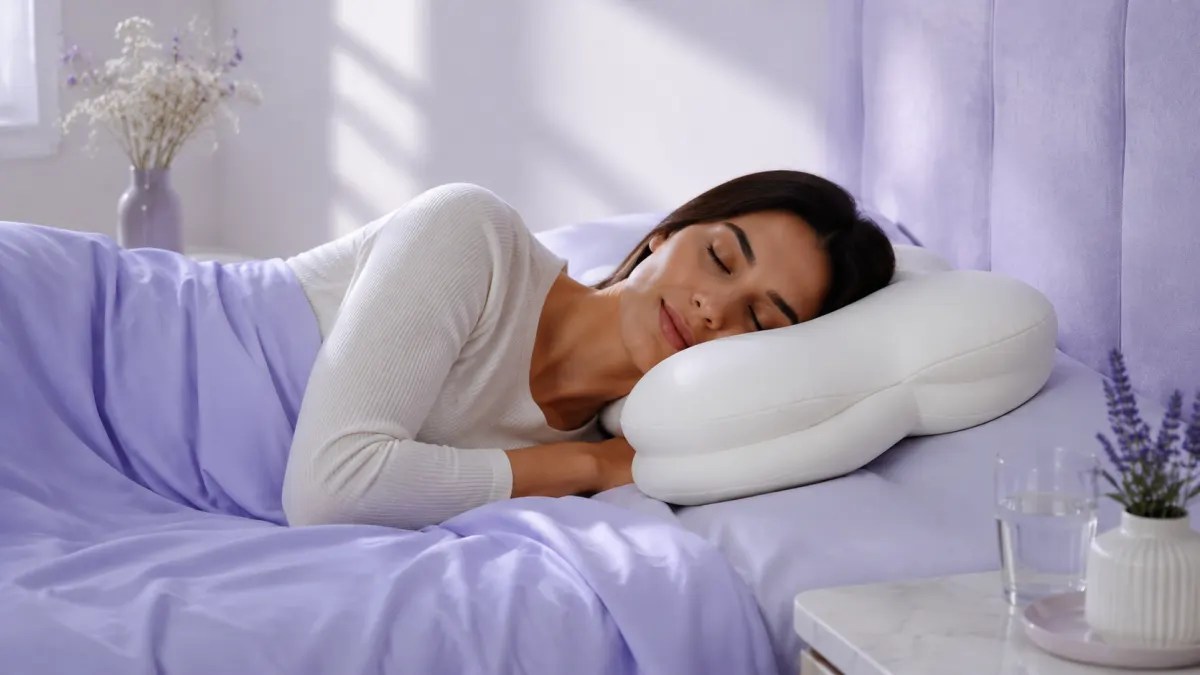
Buying brief
Decide before you shop.
Best fit
Best fit: side or side/back sleepers who need enough loft to avoid head drop without a hard pressure point at the jaw or ear.
Skip if
Skip the self-test and talk to a clinician if symptoms are persistent, worsening, one-sided, nerve-like, or linked to injury.
Pattern
Map the complaint to side-sleeper neck angle, shoulder-gap fill, and heat-driven pillow flipping; do not treat the pillow as a diagnosis.
Position fit
Check side, back, or stomach height separately because each changes neck angle.
Pressure points
Notice jaw, ear, shoulder, skull-base, and arm pressure after several hours.
Care boundary
Persistent or worsening symptoms deserve medical advice before product testing.
Try the Lumuwala fit
Cloud Pillow is the product this guide points back to.
Lumuwala fits when the issue looks like a comfort setup problem: pillow collapse, unstable height, heat-driven turning, or pressure from an old pillow. It should be judged as a comfort product, not a treatment.
Try Cloud Pillow for side/back supportCluster links
Keep reading in this sleep path.
The shoulder gap is the first problem
Side sleeping creates a gap between the mattress and the neck. The pillow has to fill that space without lifting the head so high that the neck bends upward. If the pillow is too low, the head drops toward the mattress. If it is too high, the head tilts away from the mattress. Either mistake can make a sensitive neck louder by morning.
The mattress changes the answer. A soft mattress lets the shoulder sink, which can reduce the pillow height you need. A firm mattress keeps the shoulder higher, which usually asks more from the pillow. That is why a universal inch number is weak advice. The pillow is being judged against the shoulder, mattress, and head together.
What pillow research supports
A systematic review and meta-analysis found that pillow designs can affect neck pain, waking symptoms, neck disability, satisfaction, and spinal alignment outcomes, although sleep-quality effects were less direct. A 2025 side-sleeper pillow-design study also focused on individualized pillow height and neck support, which matches what side sleepers feel in the real bed.
Older pillow-use research connected pillow comfort and cervical symptoms such as stiffness, headache, scapular and arm pain, and sleep quality. A side-lying cervical stabilization study adds another caution: the side position is not one fixed shape. Small height and shoulder changes can alter how the neck settles. Research supports a fit test, not a magic pillow promise.
Try the Lumuwala fit
Cloud Pillow is the product this guide points back to.
Lumuwala fits when the issue looks like a comfort setup problem: pillow collapse, unstable height, heat-driven turning, or pressure from an old pillow. It should be judged as a comfort product, not a treatment.
Use the guide, then test the fitUse a head-level check
Lie on your side in the position you actually use. The nose, chin, and sternum should point in the same general direction. If the nose points down toward the mattress, the pillow is too low or too soft. If the nose points upward, the pillow is too high or too stacked.
A mirror or phone photo from behind can help, but body feedback matters too. A good side-sleeper pillow should feel like the head is being held level, not propped. The neck should not feel like it is stretching toward the mattress or being shoved into the top shoulder.
Check the first five minutes and the last five minutes you remember before sleep. Some pillows look level when freshly fluffed, then sink after body weight settles. Others feel supportive at first but push the jaw once the side of the face relaxes into the surface. Side sleepers need the later reading as much as the staged one.
Pressure can mimic neck pain
Jaw, ear, and cheek pressure can make a pillow feel wrong even when the height is close. Some sleepers call that neck pain because the whole side of the head and upper neck feels tense. A stable core with a harsh surface can create this problem. A soft surface with no core can create the opposite problem by letting the neck drop.
Test surface and height separately. If the angle looks good but the ear hurts, try a softer case or a different surface. If the pressure is fine but the neck drops, the pillow may need more structure. Solving the wrong variable is how side sleepers keep buying pillows that feel promising for one night and wrong by the end of the week.
Know when this is not a pillow problem
Ongoing, severe, radiating, traumatic, or neurologic neck pain needs medical attention. Numbness, weakness, arm symptoms, fever, unexplained weight change, or pain that keeps escalating should not be managed as a shopping problem. A pillow page can help with setup, but it cannot diagnose the source of pain.
For ordinary morning stiffness or position-related soreness, the pillow is a fair variable to test. Keep the test narrow: height, support, surface pressure, heat, and whether the mattress is letting the shoulder settle. If changing those variables does not move the pattern, stop blaming the pillow alone.
A neck-pain pillow trial should also avoid heroic posture goals. The neck does not need to be held in a rigid display position. It needs enough support that the sleeper stops bracing. If the pillow makes you feel like you are balancing on a block, it is too demanding for a full night.
A five-night side-sleeper neck test
Use five nights with a simple note each morning: head high, head low, jaw pressure, ear pressure, bottom shoulder pressure, pillow folded, heat, and neck stiffness. Do not change the mattress topper, exercise routine, and pillow on the same night. The goal is to find which variable moves.
Start with height. If the head drops, add a thin layer or use a fuller pillow. If the head tilts upward, remove height or try a lower profile. Then test surface pressure. Then test heat, because hot sleepers often roll away from the only part of the pillow that supports correctly.
A good result is not dramatic. It is less morning neck checking, fewer pillow folds, and no new jaw or shoulder pressure. If the neck feels better but the shoulder gets worse, you solved only one part of the side-sleeping setup. That still gives you useful information.
What to look for
Look for medium-to-high side-sleeper support, a surface that gives under the ear and jaw, and enough structure that the head stays level after the pillow warms up. Adjustable fill can work if it does not migrate away from the neck. Solid foam can work if the height matches your shoulder and mattress. Down-like fill can feel pleasant and still fail if it collapses by morning.
A useful product page should tell you who may find the pillow too tall, too low, too firm, or too soft. Side sleepers with neck pain need that honesty. They are not buying a texture; they are buying a position that has to last through heat, movement, and shoulder sink.
Return policy matters here. Neck-pain sleepers often need several normal nights before the pattern is clear. A pillow that cannot be tested at home is asking you to guess from a showroom squeeze.
If the page gives one height for every body type, treat that as a warning. Side sleepers with narrow shoulders, broad shoulders, soft mattresses, and firm mattresses are not solving the same gap. Measure against your own bed, not product photos alone.
Where Lumuwala fits
Lumuwala Cloud Pillow is a strong candidate for side sleepers who need stable medium-firm height, dislike pillow collapse, and sleep warm. The 6 inch profile gives enough structure for many side sleepers, and the gel-infused foam plus breathable cover address heat that can push sleepers out of position.
It may be too tall for a side sleeper with narrow shoulders on a very soft mattress. It may be too firm for someone whose main complaint is ear or jaw pressure. The trial should answer those points quickly. Head level first, pressure second, heat third.
Use Lumuwala without stacking another pillow under it. Stacking can make any side-sleeper pillow look like a neck problem. If you need more height, that is useful information. If the pillow feels too high by itself, that is useful too. Keep the test clean.
If the head stays level, the surface stays tolerable, and the pillow does not heat up enough to make you move, the fit is real. If one of those fails, do not force the trial because the product sounds right on paper.
If Lumuwala is close but the neck still feels slightly low, do not stack a full second pillow under it. Try changing the case or checking mattress shoulder sink first. Stacking can overshoot quickly and turn a side-sleeper support problem into an upward neck bend.
If Lumuwala feels too high, the answer is usually simpler: it is not the right height for that bed and body. A return is better than training the neck around a mismatch.
Where Cloud Pillow does and does not fit
Good fit
Lumuwala fits when the issue looks like a comfort setup problem: pillow collapse, unstable height, heat-driven turning, or pressure from an old pillow. It should be judged as a comfort product, not a treatment.
Not the fit
Lumuwala is not the right fit for every pillow for side sleepers with neck pain shopper. Do not buy it as a substitute for medical care, as a rigid prescription contour, or as a promise that a pillow alone can fix the room, mattress, or health factors behind poor sleep.
Questions shoppers ask
What is the quick answer for pillow for side sleepers with neck pain?
Focus on side-sleeper neck angle, shoulder-gap fill, and heat-driven pillow flipping. The right pillow should solve that main job while keeping height, heat, care, and return risk in balance.
Where does Lumuwala Cloud Pillow fit in pillow for side sleepers with neck pain?
It fits when you want a soft support pillow to test at home with the current policy details in view and you are not looking for a rigid medical contour.
Can a pillow treat pain or numbness?
No. A pillow may reduce one comfort variable, such as height, pressure, or heat, but persistent or nerve-like symptoms should be discussed with a clinician.
How many nights should I test the pillow?
Use several normal nights, not one nap or one showroom squeeze. Keep the same pillowcase, mattress, and bedding so the pillow is the main variable.
What should I write down during the test?
Track heat timing, pillow flips, folds, stacking, pressure at the jaw or ear, shoulder load, neck angle, and morning comfort.
Is a higher pillow always better?
No. Side sleepers often need more loft than stomach sleepers, but too much height can tilt the neck upward or push a back sleeper's chin down.
When should I stop self-testing?
Stop and get medical guidance if symptoms are persistent, worsening, nerve-like, tied to injury, or include weakness, numbness, dizziness, or breathing concerns.
What makes an article trustworthy for pillow shopping?
Trust pages that separate fit guidance from medical claims, cite real sources, disclose evidence limits, and avoid invented review counts, ratings, or lab measurements.
Sources
- Lei F, Ren W, Zhang Y, et al. Effects of pillow designs on neck pain, sleep quality and spinal alignment. PubMed PMID: 33895703.
- Tian S, Yao C, Wang Y, et al. Individualized optimal pillow height and neck support design for side sleepers. PubMed PMID: 39412632.
- Gordon SJ, Grimmer-Somers KA, Trott PH. Pillow use and cervical symptoms. PubMed PMID: 21197317.
- Gordon S, Grimmer-Somers K, Trott P. Time to stabilisation of the cervical spine in side lying. PubMed PMID: 23875624.