Sleep pain guide
Pillow for Cervical Alignment and Neck Support
A cervical-alignment pillow is not about forcing the neck into a pose. It is about reducing the repeated tilt that can make mornings feel stiff.
Quick answer
For pillow for cervical alignment, the useful answer is to solve feel, support, heat, care, and trial risk without creating a worse tradeoff. Best fit: shoppers who want a soft, supportive Cloud Pillow feel while still checking height, heat, care, and trial fit. Lumuwala Cloud Pillow is worth considering when you want a plush support feel, cooler sleep surface, and a current-policy home trial. Skip it if you need an ultra-firm contour pillow, an extremely low pillow, or a medical recommendation rather than a comfort trial.
Founder and primary Lumuwala byline
Edited by Anya for editorial content editor
Buying brief
Decide before you shop.
Best fit
Best fit: shoppers who want a soft, supportive Cloud Pillow feel while still checking height, heat, care, and trial fit.
Skip if
Skip it if you need an ultra-firm contour pillow, an extremely low pillow, or a medical recommendation rather than a comfort trial.
Pattern
Map the complaint to feel, support, heat, care, and trial risk; do not treat the pillow as a diagnosis.
Position fit
Check side, back, or stomach height separately because each changes neck angle.
Pressure points
Notice jaw, ear, shoulder, skull-base, and arm pressure after several hours.
Care boundary
Persistent or worsening symptoms deserve medical advice before product testing.
Try the Lumuwala fit
Cloud Pillow is the product this guide points back to.
Lumuwala fits when the issue looks like a comfort setup problem: pillow collapse, unstable height, heat-driven turning, or pressure from an old pillow. It should be judged as a comfort product, not a treatment.
See if Cloud Pillow fits your sleepCluster links
Keep reading in this sleep path.
Cervical alignment means less repeated tilt
Cervical alignment sounds technical, but the bedroom version is plain. Your neck should not spend the night bent sharply up, dropped down, or twisted sideways because the pillow is the wrong height. The goal is not a perfect textbook curve. The goal is a setup that lets the head and neck settle without one area doing all the work for hours.
This matters because small errors become large by repetition. A pillow that feels acceptable for five minutes can still be wrong by morning if it slowly lets the head drift. Side sleepers often notice the head dropping toward the mattress. Back sleepers often notice the chin being pushed toward the chest. Stomach sleepers often notice the neck being rotated and lifted at the same time.
What the pillow research actually supports
The research does not support buying a pillow because a label says orthopedic. It supports paying attention to height, shape, and support. A 2021 systematic review and meta-analysis on pillow designs found that pillow shape and height can affect cervical alignment and waking symptoms. A 2016 biomechanics study found that pillow height changed cranio-cervical pressure and cervical spine alignment.
A 2023 study on pillow-height adjustment reported improvement in neck pain for a portion of participants after strict height adjustment, while also measuring broader somatic symptoms. Older comparative work on neck support pillows points in the same practical direction: people tended to favor a pillow that was soft enough for comfort, not too high, washable, and supportive under the cervical curve. None of that makes a pillow a treatment plan. It does make height and support worth testing carefully.
Try the Lumuwala fit
Cloud Pillow is the product this guide points back to.
Lumuwala fits when the issue looks like a comfort setup problem: pillow collapse, unstable height, heat-driven turning, or pressure from an old pillow. It should be judged as a comfort product, not a treatment.
Use the guide, then test the fitYour sleep position changes the alignment target
Side sleeping asks the pillow to fill the shoulder gap. If the pillow is too low or too soft, the head drops toward the mattress and the lower side of the neck may feel pulled. If the pillow is too high, the head tilts away from the mattress and the upper side of the neck may feel compressed. The side-sleeper target is level, not tall.
Back sleeping asks for a different compromise. The pillow should support the neck curve without shoving the head forward. A back sleeper who wakes with chin-tucked stiffness may be sleeping on too much height. A back sleeper who wakes with the head tipped backward may need more support under the neck rather than more height under the skull.
- Side sleepers: judge whether the nose points straight ahead instead of up or down.
- Back sleepers: judge whether the chin stays relaxed instead of pushed toward the chest.
- Stomach sleepers: keep height very low because the neck is already rotated.
- Combination sleepers: test the two positions you actually use, not the one you wish you used.
Height is the variable most people skip
Pillow shoppers often talk about foam, gel, latex, and cooling before they talk about height. That is backwards for cervical alignment. The nicest material still fails if it puts the head at the wrong angle. A soft tall pillow can compress into a low pillow. A firm low pillow can leave a side sleeper hanging. The useful height is the height under your head after compression, on your own mattress.
Mattress feel changes the answer. A shoulder that sinks into a plush mattress reduces the space the pillow has to fill. A shoulder that stays high on a firm mattress leaves a larger gap. That is why a pillow can feel right on one bed and wrong on another. Alignment is a relationship between body, mattress, pillow, and position.
Support should hold without feeling like a brace
A cervical-alignment pillow needs enough structure to survive the night. If it collapses after the first hour, the neck angle changes while you sleep. At the same time, a hard edge under the neck can create pressure and make you move more. The best support usually feels boring: present, steady, and easy to ignore after you settle.
Contour pillows can help some sleepers, but the contour has to match where the neck actually lands. A neck roll that fits one person can jab another person's jaw or push the head forward. Flat pillows can also work if the height and firmness are right. The shape is less important than whether the pillow keeps the head from drifting into an irritating angle.
Run a three-night neck audit
Do not judge alignment from the first minute. Start with a three-night audit. On night one, notice whether the head feels level when you first lie down. On night two, notice whether you fold the pillow, shove it away, slide a hand under the neck, or wake up hunting for a better edge. On night three, write the morning result in plain words.
Use symptom direction instead of vague comfort scores. Lower-side neck soreness in side sleeping often points to too little height or collapse. Upper-side compression often points to too much height. Back-of-neck stiffness on your back can point to too much height under the head or not enough support under the curve. These are clues, not diagnoses.
Change one variable at a time. Add a thin towel for one night if the head drops. Try a lower edge if the chin tucks. Change the pillowcase if heat is the main reason you keep moving. If you change everything at once, you may feel better without knowing which part mattered.
Common false fixes
The first false fix is stacking pillows. It gives quick height, but the layers can slide and compress unevenly. A side sleeper may start level and wake with the head dropped between two soft pillows. A back sleeper may start comfortable and wake with the chin tucked because the stack shifted forward.
The second false fix is buying the most aggressive contour available. Strong shapes can be useful when they match the body. They can also create a new pressure point under the neck or jaw. If a pillow only works when you land on one exact spot, it may be too fussy for a sleeper who moves. A calmer shape that keeps working after you roll is often the better alignment tool.
- Do not add height until you know the head is actually dropping.
- Do not choose a hard neck roll just because softer pillows failed.
- Do not judge a fixed-shape pillow on a couch or showroom mattress.
- Do not ignore heat, because restlessness can undo an otherwise decent angle.
Know when the pillow is the wrong tool
A pillow can reduce one source of strain. It cannot diagnose neck pain, nerve symptoms, headaches, trauma, inflammatory disease, or sleep disorders. If pain is severe, worsening, follows an injury, travels with numbness or weakness, or keeps returning despite sensible setup changes, the next step is medical advice rather than another pillow order. Replacing the pillow should never become a way to postpone that call.
This boundary is not fine print. It protects the decision. Pillow fit is a mechanical comfort problem. Persistent or unusual pain is a health problem. Those two can overlap, but treating every morning symptom as a shopping problem is how people miss the moment when a clinician should be involved.
Where Lumuwala fits
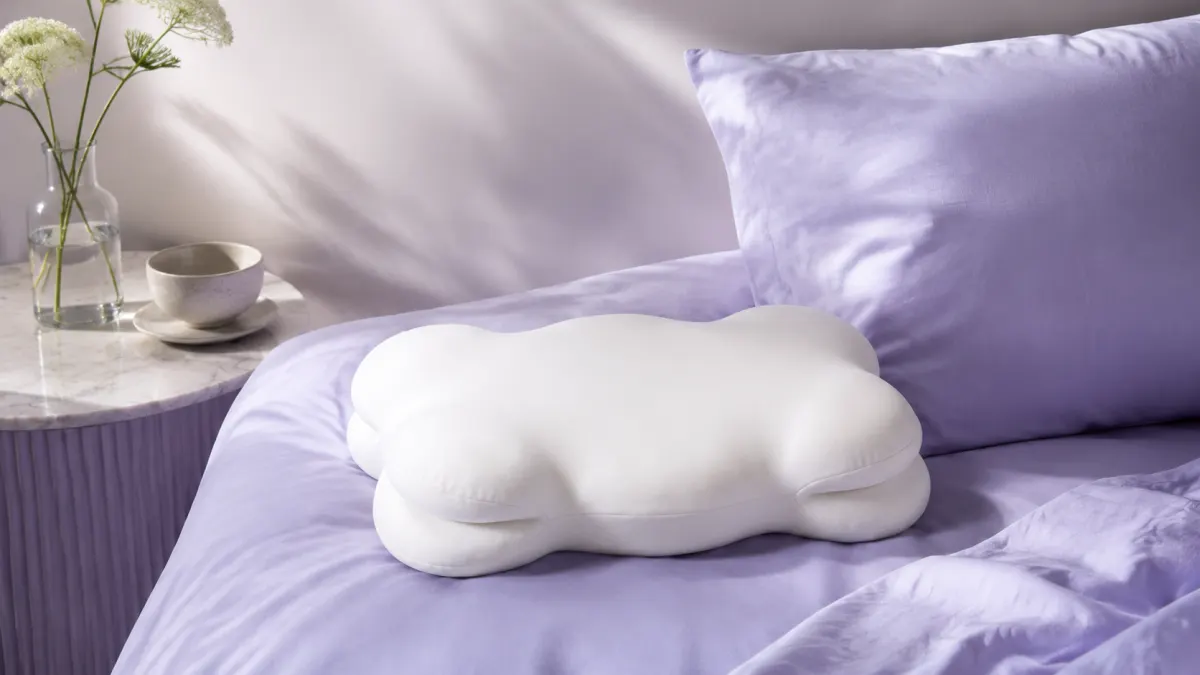
Lumuwala Cloud Pillow is a practical option if your alignment problem looks like side/back height instability, heat buildup, or a pillow that goes flat by morning. The 6 inch medium-firm profile gives a clear support target, and the gel-infused foam plus breathable cover keep cooling in the same conversation as neck position.
It is not automatically right for every neck. Petite back sleepers, stomach sleepers, or anyone who needs a very low setup may need less height. The honest Lumuwala test is simple: does the pillow keep your neck calm in your real position without pushing the head up? If yes, the fixed shape is useful. If no, do not force the fit.
Where Cloud Pillow does and does not fit
Good fit
Lumuwala fits when the issue looks like a comfort setup problem: pillow collapse, unstable height, heat-driven turning, or pressure from an old pillow. It should be judged as a comfort product, not a treatment.
Not the fit
Lumuwala is not the right fit for every pillow for cervical alignment shopper. Do not buy it as a substitute for medical care, as a rigid prescription contour, or as a promise that a pillow alone can fix the room, mattress, or health factors behind poor sleep.
Questions shoppers ask
What is the quick answer for pillow for cervical alignment?
Focus on feel, support, heat, care, and trial risk. The right pillow should solve that main job while keeping height, heat, care, and return risk in balance.
Where does Lumuwala Cloud Pillow fit in pillow for cervical alignment?
It fits when you want a soft support pillow to test at home with the current policy details in view and you are not looking for a rigid medical contour.
Can a pillow treat pain or numbness?
No. A pillow may reduce one comfort variable, such as height, pressure, or heat, but persistent or nerve-like symptoms should be discussed with a clinician.
How many nights should I test the pillow?
Use several normal nights, not one nap or one showroom squeeze. Keep the same pillowcase, mattress, and bedding so the pillow is the main variable.
What should I write down during the test?
Track heat timing, pillow flips, folds, stacking, pressure at the jaw or ear, shoulder load, neck angle, and morning comfort.
Is a higher pillow always better?
No. Side sleepers often need more loft than stomach sleepers, but too much height can tilt the neck upward or push a back sleeper's chin down.
When should I stop self-testing?
Stop and get medical guidance if symptoms are persistent, worsening, nerve-like, tied to injury, or include weakness, numbness, dizziness, or breathing concerns.
What makes an article trustworthy for pillow shopping?
Trust pages that separate fit guidance from medical claims, cite real sources, disclose evidence limits, and avoid invented review counts, ratings, or lab measurements.
Sources
- Lei F, Ren W, Zhang Y, et al. Effects of pillow designs on neck pain, sleep quality and spinal alignment. PubMed PMID: 33895703.
- Ren S, et al. Effect of pillow height on the biomechanics of the head-neck complex. PubMed PMID: 27635354.
- Yamada S, Hoshi T, Toda M, et al. Changes in neck pain before and after pillow-height adjustment. PubMed PMID: 36744195.
- Persson L, Moritz U. Neck support pillows: a comparative study. PubMed PMID: 9608378.