Sleep position guide
Pillow Height Calculator for Side Sleepers and Back Sleepers
You can estimate pillow loft without pretending there is one perfect inch number. Start with shoulder gap, mattress sink, and primary position.
Quick answer
For pillow height calculator, the useful answer is to solve the usable height under your head, not the label height on a product page without creating a worse tradeoff. Best fit: shoppers who want a soft, supportive Cloud Pillow feel while still checking height, heat, care, and trial fit. Lumuwala Cloud Pillow is worth considering when you want a plush support feel, cooler sleep surface, and a current-policy home trial. Skip it if you need an ultra-firm contour pillow, an extremely low pillow, or a medical recommendation rather than a comfort trial.
Founder and primary Lumuwala byline
Edited by Anya for editorial content editor
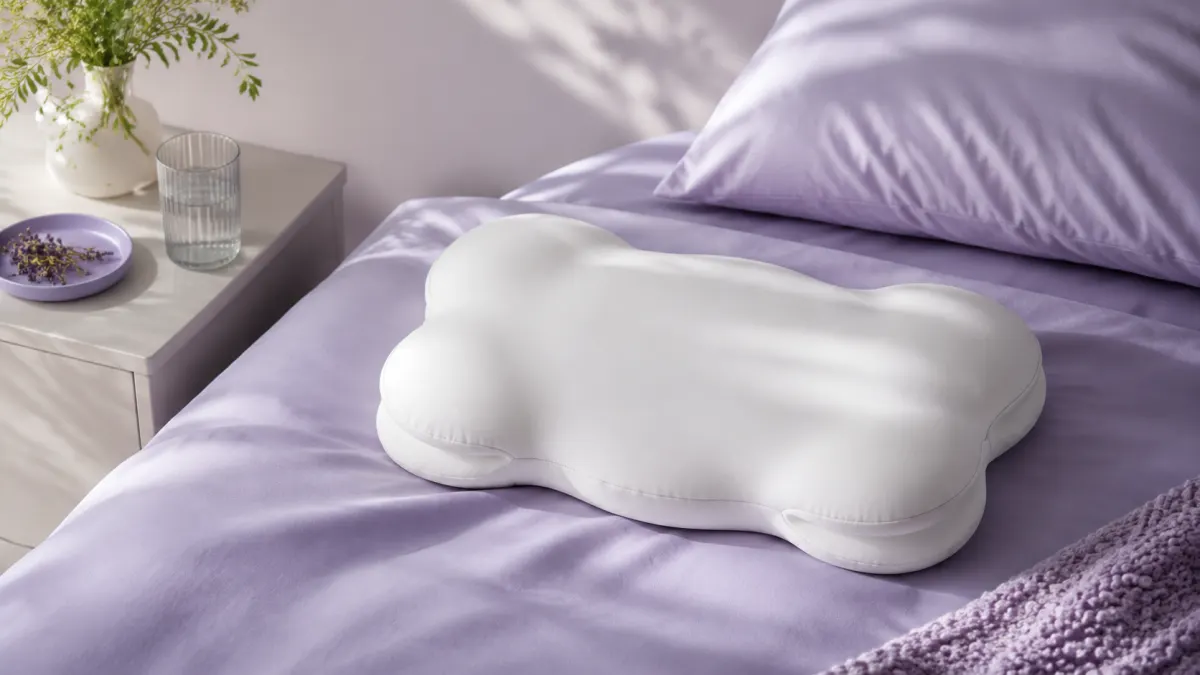
Buying brief
Decide before you shop.
Best fit
Best fit: shoppers who want a soft, supportive Cloud Pillow feel while still checking height, heat, care, and trial fit.
Skip if
Skip it if you need an ultra-firm contour pillow, an extremely low pillow, or a medical recommendation rather than a comfort trial.
Primary job
Name the job first: the usable height under your head, not the label height on a product page.
Sleep position
Side, back, stomach, and combination sleepers should not buy from the same checklist.
Heat and care
A pillow has to feel good after hours and be realistic to maintain.
Trial risk
Use the policy as part of the buying decision, not an afterthought.
Try the Lumuwala fit
Cloud Pillow is the product this guide points back to.
Lumuwala fits when the shopper wants one Cloud Pillow to test for comfort, support, heat, and care instead of building a complicated pillow stack.
See if Cloud Pillow fits your sleepCluster links
Keep reading in this sleep path.
Use a range, not a single magic number
A pillow-height calculator should give you a starting point, not a verdict. Bodies are not flat blocks, mattresses do not compress the same way, and pillows lose height under head weight. Still, a simple estimate is useful because most people shop by feel and then wonder why the pillow fails after a few hours.
The useful question is: how much space does the pillow need to fill after your shoulder and pillow both compress? Side sleepers usually need the most height, back sleepers usually need medium height, and stomach sleepers usually need little or none. Combination sleepers need the compromise that fails least often across their two main positions.
Measure the shoulder gap roughly
For side sleeping, stand naturally and estimate the distance from the outside of your shoulder to the side of your neck/head line. Do not obsess over exact inches. The real gap will change when you lie down. A broad shoulder, firm mattress, and heavy head need more support. A narrow shoulder, plush mattress, and lighter head need less.
Then subtract mattress sink. If your shoulder sinks two inches into the mattress, the pillow does not need to fill the original standing gap. If the shoulder barely sinks, the pillow carries more of the gap. This is why the same 6 inch pillow can feel perfect on one bed and too tall on another.
Measure the position you actually use. If you sleep with the lower arm forward, the shoulder may sit differently than it does when the arm is tucked. If you hug a blanket or pillow, your upper shoulder may rotate. Those small changes alter how the neck lands, so a rough real-position check beats a tidy measurement taken while standing straight.
- Side sleeper on firm mattress: start medium-high and check whether the nose points straight ahead.
- Side sleeper on soft mattress: start medium and check whether the head is pushed upward.
- Back sleeper: start medium or medium-low and avoid the chin being pushed toward the chest.
- Stomach sleeper: start very low and consider no head pillow if the neck twists upward.
Try the Lumuwala fit
Cloud Pillow is the product this guide points back to.
Lumuwala fits when the shopper wants one Cloud Pillow to test for comfort, support, heat, and care instead of building a complicated pillow stack.
Use the guide, then test the fitWhy the estimate deserves respect
The research supports treating height as a real variable. The PeerJ pillow-height biomechanics study found changes in cranio-cervical pressure and cervical spine alignment as height changed. The newer side-sleeper design paper treats individualized height and neck support as the design problem, not a side detail. The systematic review on pillow designs also points back to shape and height as important variables.
The exact number is still individual. A lab can measure angles and pressure more cleanly than a bedroom can, but the bedroom has the real mattress, the real shoulder, and the real sleep habits. The calculator should get you close enough to test intelligently. It should not make you believe a universal number exists.
Position rules that usually hold
Side sleepers need the pillow to prevent the head from dropping toward the mattress. Back sleepers need support under the neck without forcing the chin forward. Stomach sleepers need the least height because the head is already rotated, and extra loft usually makes that rotation sharper. Combination sleepers need to pick the position they spend the most time in or the position that causes the worst symptoms.
If you do not know your main position, look at the pillow in the morning. A pillow pushed upward against the headboard can mean you spent time on your back and slid down. A pillow folded under one side can mean you were trying to add side-sleeper height. A pillow shoved aside can mean the height was too much for stomach or back sleeping.
Account for compression
Pillow height on a product page is unloaded height. Your head does not sleep on unloaded height. Foam, latex, fiber, down, and shredded fill compress differently. A soft 7 inch pillow may behave like a 4 inch pillow after a few hours. A firmer 6 inch foam pillow may hold closer to its useful height. That difference matters more than the number printed on the box.
This is also why stackable pillows are tricky. Two soft pillows may feel adjustable, but they can slide and compress unevenly. One stable pillow plus a thin backup layer can work better if you are tuning height. The goal is a height that survives the night, not a tall pile at bedtime.
The quickest compression check is boring but useful. Press the center of the pillow with the side of your head weight, not just your hand. Hold it for a minute and notice whether the pillow keeps easing down. A slow sink can feel luxurious at first and wrong later. Side sleepers are especially sensitive because a small drop changes the neck angle.
A practical calculator
Start with your main position. Side sleeper: choose a pillow that fills the shoulder gap after mattress sink. Back sleeper: choose enough loft to support the neck curve while the face points upward, not toward the feet. Stomach sleeper: choose the thinnest setup you can tolerate. Combination sleeper: choose the lower height if you rotate between back and stomach; choose medium support if you rotate between side and back.
Then run the mirror check. Lie on your mattress in your real position and have someone look from the foot of the bed or take a photo. In side sleeping, your face should not tilt up or down. In back sleeping, your chin should not tuck sharply toward the chest. In stomach sleeping, any head pillow that forces the neck farther into rotation is suspect. This is crude, but it catches the biggest mistakes.
After that, adjust one thing at a time. Add a folded towel under the pillow for one night if the head drops. Remove a layer or try a lower edge if the head is pushed upward. Change the pillowcase if heat is the main complaint. If you change height, surface, and temperature all at once, you will not know which variable helped.
Adjust by symptom, not by mood
A pillow can feel wonderful at 10 p.m. and still be the wrong height at 6 a.m. Judge it by repeat symptoms. Lower-side neck soreness in side sleeping often points to too little height or too much collapse. Upper-side neck compression often points to too much height. Chin-tucked stiffness on your back often points to a pillow that lifts the head too much.
Heat symptoms need their own lane. If the neck angle feels right but you keep flipping the pillow for a cool spot, the height calculation may be fine and the material may be the weak link. A breathable cover, cooler foam feel, and less face sink can matter as much as loft for hot sleepers. Comfort is mechanical and thermal at the same time.
Keep the experiment small. If you add height tonight, do not also change your mattress topper, pillowcase, and sleep position. One clear change gives you one clear result. Two or three changes give you a vague feeling that something improved, which is not enough when you are choosing the pillow you will use every night.
How to judge Lumuwala's 6 inch profile
Lumuwala Cloud Pillow gives you a fixed 6 inch medium-firm profile. That makes it easy to test because the pillow has a clear shape. It is most likely to fit side, back, and side/back combination sleepers who need more than a thin pillow but do not want to tune loose fill. Its cooling gel and breathable cover are useful if heat is part of your pillow failure pattern.
The fit question is direct: does the 6 inch profile keep your neck level without pushing it up? If yes, the product's simplicity is a strength. If no, do not force it. Pillow height is not a loyalty test. It is a mechanical fit between your body, mattress, and sleeping position.
Where Cloud Pillow does and does not fit
Good fit
Lumuwala fits when the shopper wants one Cloud Pillow to test for comfort, support, heat, and care instead of building a complicated pillow stack.
Not the fit
Lumuwala is not the right fit for every pillow height calculator shopper. Do not buy it as a substitute for medical care, as a rigid prescription contour, or as a promise that a pillow alone can fix the room, mattress, or health factors behind poor sleep.
Questions shoppers ask
What is the quick answer for pillow height calculator?
Focus on the usable height under your head, not the label height on a product page. The right pillow should solve that main job while keeping height, heat, care, and return risk in balance.
Where does Lumuwala Cloud Pillow fit in pillow height calculator?
It fits when you want a soft support pillow to test at home with the current policy details in view and you are not looking for a rigid medical contour.
How should I test a new pillow?
Use your normal pillowcase, keep bedding stable, and track heat, height, turns, and morning comfort for several nights before deciding.
How many nights should I test the pillow?
Use several normal nights, not one nap or one showroom squeeze. Keep the same pillowcase, mattress, and bedding so the pillow is the main variable.
What should I write down during the test?
Track heat timing, pillow flips, folds, stacking, pressure at the jaw or ear, shoulder load, neck angle, and morning comfort.
Is a higher pillow always better?
No. Side sleepers often need more loft than stomach sleepers, but too much height can tilt the neck upward or push a back sleeper's chin down.
When should I stop self-testing?
Stop and get medical guidance if symptoms are persistent, worsening, nerve-like, tied to injury, or include weakness, numbness, dizziness, or breathing concerns.
What makes an article trustworthy for pillow shopping?
Trust pages that separate fit guidance from medical claims, cite real sources, disclose evidence limits, and avoid invented review counts, ratings, or lab measurements.
Sources
- Ren S, et al. Effect of pillow height on the biomechanics of the head-neck complex. PubMed PMID: 27635354.
- Kuo YL, et al. The individualized optimal pillow height and neck support design for side sleepers. PubMed PMID: 39412632.
- Gordon S, Grimmer-Somers K, Trott P. Time to stabilisation of the cervical spine in side lying. PubMed PMID: 23875624.
- Lei F, Ren W, Zhang Y, et al. Effects of pillow designs on neck pain, sleep quality and spinal alignment. PubMed PMID: 33895703.