Cooling pillow guide
Cooling Pillow for Side Sleepers With Neck Pain
Side sleepers with neck pain need cooling and height to work together. A cool surface still fails if the shoulder gap lets the head drop overnight.
Quick answer
For cooling pillow for side sleepers with neck pain, the useful answer is to solve side-sleeper neck angle, shoulder-gap fill, and heat-driven pillow flipping without creating a worse tradeoff. Best fit: side or side/back sleepers who need enough loft to avoid head drop without a hard pressure point at the jaw or ear. Lumuwala Cloud Pillow is worth considering when you want a plush support feel, cooler sleep surface, and a current-policy home trial. Skip the self-test and talk to a clinician if symptoms are persistent, worsening, one-sided, nerve-like, or linked to injury.
Founder and primary Lumuwala byline
Edited by Anya for editorial content editor
Buying brief
Decide before you shop.
Best fit
Best fit: side or side/back sleepers who need enough loft to avoid head drop without a hard pressure point at the jaw or ear.
Skip if
Skip the self-test and talk to a clinician if symptoms are persistent, worsening, one-sided, nerve-like, or linked to injury.
Heat source
Decide whether the main problem is side-sleeper neck angle, shoulder-gap fill, and heat-driven pillow flipping.
Air and moisture path
Look for a breathable cover, lighter case, and less face-burying contact.
Height stability
A cooler pillow still fails if it leaves the head too low or too high.
Home test
Judge after several normal nights when the pillow has warmed up fully.
Try the Lumuwala fit
Cloud Pillow is the product this guide points back to.
Lumuwala fits the cooling pillow for side sleepers with neck pain search when the buyer wants cooling comfort tied to pillow height, not just a chilly first touch. It is strongest for shoppers who rotate between side and back sleep and want to test the heat story at home.
Try Cloud Pillow for side/back supportCluster links
Keep reading in this sleep path.
There are two different ways to fail
Side sleepers with neck pain usually arrive at a cooling pillow search for one of two reasons. Either the pillow gets hot and makes them flip all night, or the pillow shape lets the head drop toward the mattress after the shoulder settles. Many people have both problems at once.
A cool pillow can feel like an answer for the first ten minutes and still miss the bigger issue. If the shoulder gap is not filled, the neck spends the night angled downward. If the pillow is too tall, the neck tips upward. Heat relief cannot cancel either support miss.
The right test separates temperature from height. Heat, sweat, face pressure, head level, shoulder pressure, and morning symptoms each get their own score. A single comfort score hides the detail that side sleepers with neck pain need most.
What the research supports
Thermal-environment research reports that heat exposure can affect sleep and circadian rhythm. Side-sleeper pillow-height research connects individualized pillow height and neck support design with body measures. A pillow-design review connects pillow design with neck pain, waking symptoms, sleep quality, and spinal alignment.
A systematic review on pillows for chronic neck pain looked at pain, disability, and sleep quality. These sources do not prove one cooling pillow treats neck pain. They support a practical framework: control heat without giving up the side-sleeper height and neck support that make the position tolerable.
That means a cooling pillow should be judged by all-night behavior. Fewer flips matter. So do fewer rebuilds, calmer head level, less damp cheek contact, and no worse morning neck symptoms.
Try the Lumuwala fit
Cloud Pillow is the product this guide points back to.
Lumuwala fits the cooling pillow for side sleepers with neck pain search when the buyer wants cooling comfort tied to pillow height, not just a chilly first touch. It is strongest for shoppers who rotate between side and back sleep and want to test the heat story at home.
Test the cooling setup at homeStart with the shoulder gap
Side sleeping creates a space between the mattress and the neck because the shoulder holds the body up. The pillow has to fill that space after the shoulder and pillow both compress. First-touch height is less useful than settled height.
Broad shoulders on a firm mattress often need more stable loft. Narrow shoulders on a soft mattress may need less. A pillow that works for one side sleeper can be too low or too tall for another.
If the pillow is too low, the head drops and the neck bends toward the mattress. That can make the sleeper shove a hand under the pillow. The hand is useful evidence: the body is borrowing height.
If the pillow is too high, the head tips away from the mattress and the top side of the neck can feel compressed. A cool surface may hide that for a few minutes, but morning stiffness often exposes it.
Let the shoulder settle before judging. Lie on the side for at least ten quiet minutes. If the head level changes as the mattress compresses, write that down.
Check the case. A tight case can lower a pillow by squeezing the fill. A slick case can let the head slide forward. A rough case can make the sleeper drag the pillow during turns.
Check the edge. Side sleepers often migrate. If the center works but the edge is thinner or hotter, the pillow can start the night correctly and end it wrong.
The pillow should not need folding. Folding adds height, blocks airflow, and changes the support score every time it happens. A cooling pillow that works only after folding is not passing the test.
Check the lower arm before blaming the pillow. If the arm goes under the head, the pillow may be too low. If the arm goes across the chest and the top shoulder pulls forward, the pillow may be fine but the arm needs support.
Check the mattress after the pillow. A firm mattress can keep the shoulder high and make a pillow feel low. A soft mattress can swallow the shoulder and make the same pillow feel tall. The pillow verdict should name the mattress feel.
Check whether the pain starts at the neck or the shoulder. A neck-first complaint usually points to head angle. A shoulder-first complaint may point to pressure, mattress sink, or arm position. The fix is different.
Heat makes support harder to read
Heat-driven movement can look like support failure. The sleeper flips the pillow, rolls forward, tucks an arm, or pushes the pillow down. Once that happens, the original neck angle is gone.
A breathable cover helps when the case and protector do not trap heat. Gel-infused foam can help with first-contact comfort, but heat still needs a path away from the cheek and neck.
Moisture should be scored separately. Damp cheek, sticky jaw, warm neck, and damp hairline point to different layers. The pillow, case, protector, room, and blanket can each be the limiting layer.
A cooler pillow can still create pressure. If the jaw, ear, or temple presses harder into the surface, the sleeper may move from pressure rather than heat. That movement can aggravate the neck anyway.
A supportive pillow can still run warm. If head level is good but the sleeper leaves the spot because of heat, support did not get a fair all-night test.
Recovery matters. A side sleeper may return to the same cheek area after turning. If the spot stays warm and compressed, the pillow may invite more movement.
Room heat matters too. A pillow can improve the head-and-neck area without fixing a hot room or warm mattress. The verdict should say which layer failed.
The useful cooling win is quieter sleep. Fewer hot moves, fewer pillow flips, and less awareness of the surface are better signs than a dramatic cold feeling at bedtime.
A seven-night side-neck cooling test
Use seven nights. Record shoulder pressure, head level, neck angle, jaw or ear pressure, heat, sweat, case, protector, flips, folds, hand-under-pillow behavior, and morning symptoms.
Nights one and two use the current setup. Do not change the room, sheets, case, pillow, and protector all at once. The baseline has to be readable.
Night three changes the case if the surface feels sticky or warm. Keep height stable.
Night four changes height only if the head clearly drops or tips. Keep the case stable so the height test is fair.
Night five checks the protector. A hot protector can make a cooling pillow look worse than it is.
Nights six and seven repeat the best setup. Repetition matters because neck pain can vary from day to day.
A good result is less heat awareness, stable head level, fewer flips, no new jaw or ear pressure, and no worse morning neck symptoms.
If cooling improves but the neck hurts more, reject the setup. If neck support improves but heat stays loud, test the outer layers before changing support again.
If pain spreads, follows trauma, includes weakness, or comes with numbness that does not settle, stop treating the pillow as the main question and seek medical advice.
The final note should name the main failure: height, pressure, heat, outer layers, room, mattress, or medical red flag. That keeps the next change small.
Keep the same side for the repeat nights when possible. Switching sides can change shoulder gap, jaw pressure, and heat exposure enough to make the pillow look inconsistent.
If the pillow works only with a different case, write that down as a pair. The useful result is the pillow-and-case setup, not a fantasy version of the pillow alone.
If the sleeper wakes and adjusts the pillow without remembering it clearly, use the morning shape as evidence. Fold marks, edge drift, and a pillow pulled low all count.
Common mistakes
The first mistake is buying the coldest-touch pillow and ignoring settled height.
The second mistake is testing on the back even though side sleeping owns the night.
The third mistake is using a hand under the pillow and pretending the pillow alone passed.
The fourth mistake is ignoring jaw and ear pressure.
The fifth mistake is blaming support before testing the case and protector.
The sixth mistake is letting one unusually hot night decide the verdict.
The seventh mistake is folding the pillow every night and calling that fit.
The eighth mistake is treating persistent or spreading pain as a bedding problem.
Where Lumuwala fits
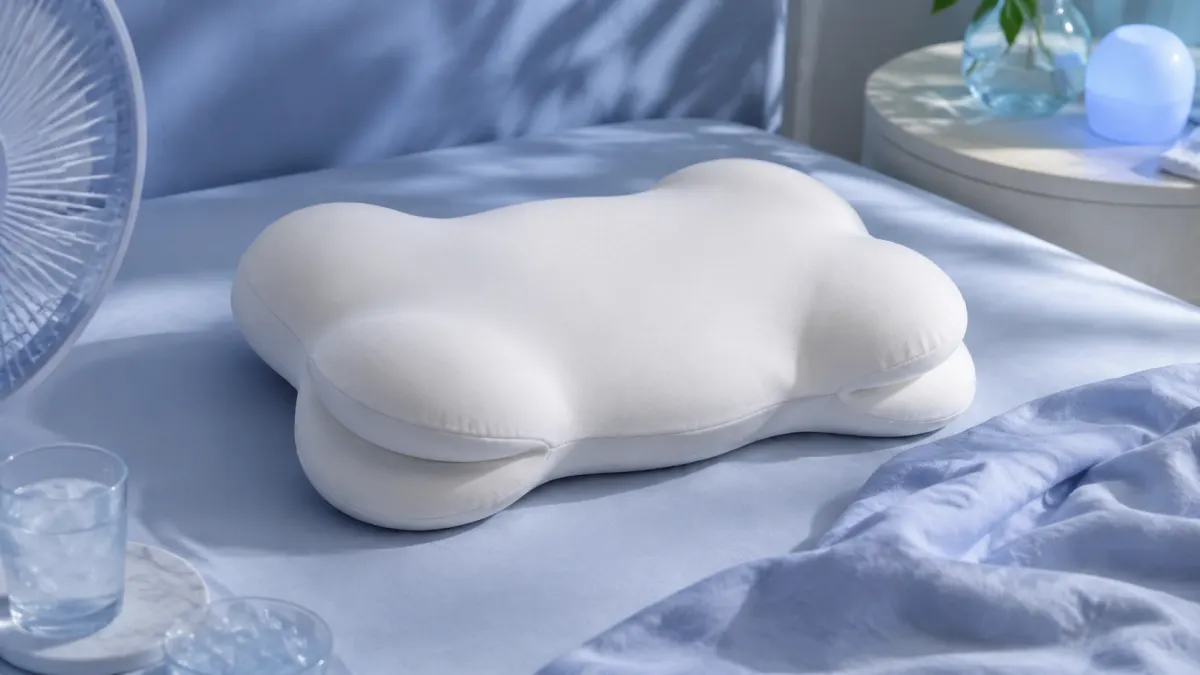
Lumuwala Cloud Pillow can work for side sleepers with neck pain when the main need is stable height plus a cooler face-and-neck surface. The medium-firm 6 inch profile is meant to resist collapse better than a soft low pillow.
It may be too tall for narrow-shouldered sleepers, petite frames, or soft mattresses. It may feel too firm for sleepers whose ear, jaw, or temple pressure is already sensitive.
Test Lumuwala after the shoulder settles. Keep it only if several normal nights show less heat awareness, stable head level, no new pressure, and no worse morning neck symptoms.
If it cools well but makes the neck angle worse, it is the wrong fit for this use case. If support works but the case makes it warm, the next change may be the case rather than the pillow.
A good result is plain: fewer hot moves, less pillow rebuilding, calmer side-sleeping height, and no new pain signal.
Where Cloud Pillow does and does not fit
Good fit
Lumuwala fits the cooling pillow for side sleepers with neck pain search when the buyer wants cooling comfort tied to pillow height, not just a chilly first touch. It is strongest for shoppers who rotate between side and back sleep and want to test the heat story at home.
Not the fit
Lumuwala is not the right fit for every cooling pillow for side sleepers with neck pain shopper. Do not buy it as a substitute for medical care, as a rigid prescription contour, or as a promise that a pillow alone can fix the room, mattress, or health factors behind poor sleep.
Questions shoppers ask
What is the quick answer for cooling pillow for side sleepers with neck pain?
Focus on side-sleeper neck angle, shoulder-gap fill, and heat-driven pillow flipping. The right pillow should solve that main job while keeping height, heat, care, and return risk in balance.
Where does Lumuwala Cloud Pillow fit in cooling pillow for side sleepers with neck pain?
It fits when you want a soft support pillow to test at home with the current policy details in view and you are not looking for a rigid medical contour.
Will a cooling pillow stay cold all night?
No honest pillow stays cold all night. A better goal is slower heat buildup, better moisture handling, and fewer wakeups to flip or rebuild the pillow.
How many nights should I test the pillow?
Use several normal nights, not one nap or one showroom squeeze. Keep the same pillowcase, mattress, and bedding so the pillow is the main variable.
What should I write down during the test?
Track heat timing, pillow flips, folds, stacking, pressure at the jaw or ear, shoulder load, neck angle, and morning comfort.
Is a higher pillow always better?
No. Side sleepers often need more loft than stomach sleepers, but too much height can tilt the neck upward or push a back sleeper's chin down.
When should I stop self-testing?
Stop and get medical guidance if symptoms are persistent, worsening, nerve-like, tied to injury, or include weakness, numbness, dizziness, or breathing concerns.
What makes an article trustworthy for pillow shopping?
Trust pages that separate fit guidance from medical claims, cite real sources, disclose evidence limits, and avoid invented review counts, ratings, or lab measurements.
Sources
- Okamoto-Mizuno K, Mizuno K. Effects of thermal environment on sleep and circadian rhythm. PubMed PMID: 22738673.
- Tian S, Yao C, Wang Y, et al. Individualized optimal pillow height and neck support design for side sleepers. PubMed PMID: 39412632.
- Chun-Yiu JP, Man-Ha ST, Chak-Lun AF. Effects of pillow designs on neck pain, waking symptoms, sleep quality and spinal alignment. PubMed PMID: 33895703.
- Kim J, Kang J, Lee S, et al. Effect of pillow on pain, disability and sleep quality in patients with chronic neck pain: a systematic review. PubMed PMID: 40633255.