Sleep position guide
Best pillow for combination sleepers: the side/back tradeoff
Combination sleepers need a pillow that survives position changes. The best choice is usually the least-bad compromise, not the perfect specialist pillow.
Quick answer
For combination sleeper pillow, the useful answer is to solve turn recovery, side/back compromise, and whether the pillow needs constant reshaping without creating a worse tradeoff. Best fit: sleepers who rotate and need the pillow to recover after turns without a full rebuild. Lumuwala Cloud Pillow is worth considering when you want a plush support feel, cooler sleep surface, and a current-policy home trial. Skip it if you need an ultra-firm contour pillow, an extremely low pillow, or a medical recommendation rather than a comfort trial.
Founder and primary Lumuwala byline
Edited by Anya for editorial content editor
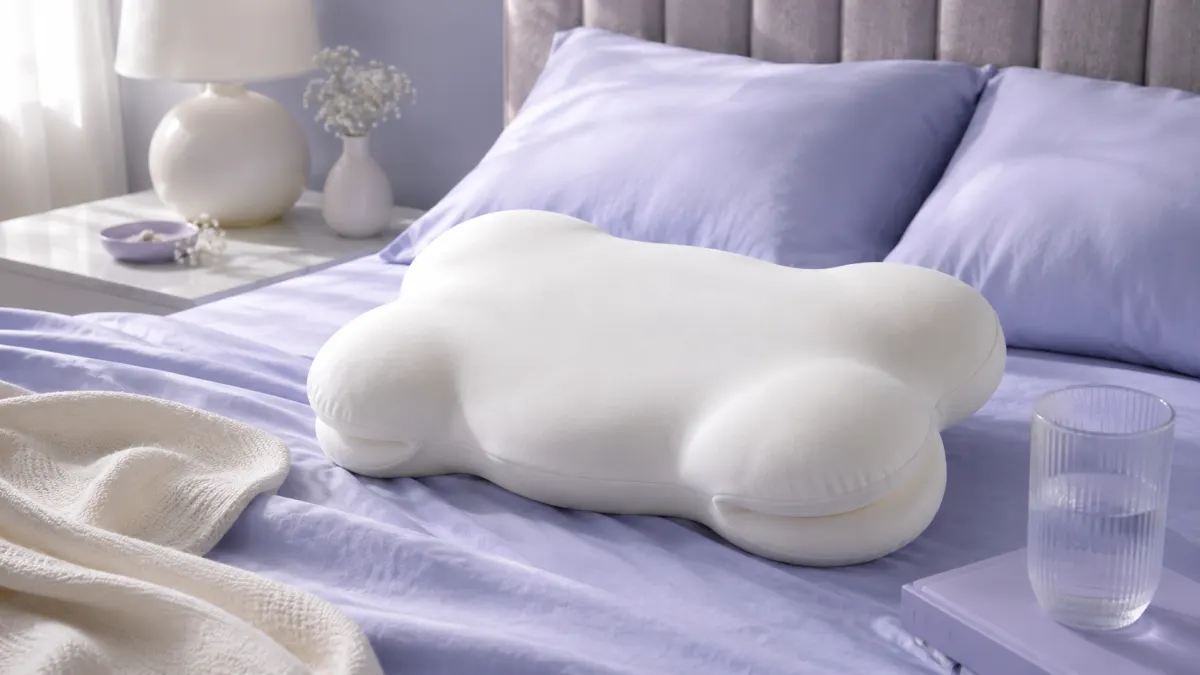
Buying brief
Decide before you shop.
Best fit
Best fit: sleepers who rotate and need the pillow to recover after turns without a full rebuild.
Skip if
Skip it if you need an ultra-firm contour pillow, an extremely low pillow, or a medical recommendation rather than a comfort trial.
Primary job
Name the job first: turn recovery, side/back compromise, and whether the pillow needs constant reshaping.
Sleep position
Side, back, stomach, and combination sleepers should not buy from the same checklist.
Heat and care
A pillow has to feel good after hours and be realistic to maintain.
Trial risk
Use the policy as part of the buying decision, not an afterthought.
Try the Lumuwala fit
Cloud Pillow is the product this guide points back to.
Lumuwala fits when the shopper wants one Cloud Pillow to test for comfort, support, heat, and care instead of building a complicated pillow stack.
See if Cloud Pillow fits your sleepCluster links
Keep reading in this sleep path.
Combination sleepers are hard to fit
A side sleeper wants the pillow to fill the shoulder gap. A back sleeper wants the pillow to support the neck curve without pushing the chin forward. A stomach sleeper wants the least height possible. A combination sleeper asks one pillow to do two of those jobs, sometimes three, while the body is moving half-awake in the dark.
That is why perfect is the wrong target. The better target is a pillow that fails gently. It should be tall enough for your side position, low enough for your back position, stable enough that you do not chase it around the bed, and breathable enough that extra movement does not turn into heat and sweat.
Name your main position pair
The first move is to stop saying combination and name the pair. Side/back is the most pillow-friendly pair because both positions can work with medium support if the shape is not extreme. Back/stomach usually needs a lower pillow. Side/stomach is the hardest pair because one position wants height and the other punishes height.
If you are not sure, look at your failure pattern. Waking with one-sided neck tightness often points to side-sleeper collapse or over-height. Waking with chin-tucked stiffness can point to too much back-sleeper loft. Waking with the pillow on the floor may mean your stomach-sleeping body is rejecting the height during the night.
Then decide which failure you are least willing to accept. Some people can tolerate a slightly low side-sleeper setup but cannot tolerate chin tuck on their back. Others need the side position solved first because shoulder and neck pain show up fast. Combination sleepers rarely buy perfection. They buy the compromise that protects the worst morning symptom.
Try the Lumuwala fit
Cloud Pillow is the product this guide points back to.
Lumuwala fits when the shopper wants one Cloud Pillow to test for comfort, support, heat, and care instead of building a complicated pillow stack.
Use the guide, then test the fitResearch favors matching height to posture
The combination-sleeper problem is not studied as cleanly as side sleeping, but the same pillow-height research still applies. Pillow height changes head-neck biomechanics, and pillow shape and height appear repeatedly in systematic reviews of pillow design, waking symptoms, and cervical alignment. The lesson is not that one contour pillow fits everyone. The lesson is that posture changes the pillow's job.
The 2010 pillow-use study on cervical stiffness, headache, scapular/arm pain, sleep quality, and pillow comfort is a useful reminder that the real outcome is not a showroom feel. People care about how they wake up. For combination sleepers, that means the pillow has to handle transitions, not just the first position after lights out.
Fixed foam, latex, and adjustable fill each have a trade
Fixed foam gives combination sleepers a stable target. The pillow is where you left it, and the height does not change much when you roll. That can be excellent for side/back sleepers, especially if heat is managed. The downside is that a fixed shape either fits the compromise or it does not. You cannot remove half an inch of molded foam at midnight.
Latex gives faster rebound and can feel easier to move on. Adjustable fill gives the most tuning, but it asks you to do the work. For a combination sleeper, loose fill can be useful if you are patient. It can also shift away from the neck when you roll. The best material is the one that keeps support under you during transitions, not the one that wins a category chart.
Surface friction matters too. A pillow that grips the pillowcase can make rolling feel clumsy, while a pillow that slides too easily may migrate away from the shoulder. Combination sleepers should notice whether the pillow moves with them or makes them reset the bed. A small reset once is normal. Rebuilding the pillow shape every time you roll is a sign the material is asking too much.
Red flags during rotation
The clearest red flag is needing a different pillow for each position during the same night. If you start on your side with the pillow folded, roll to your back and shove it away, then wake on your stomach with no pillow, the compromise is too wide. That does not mean you are a bad sleeper. It means the pillow is being asked to cover positions with conflicting height needs.
Another red flag is a pillow with a sharp contour that only works when you land on it perfectly. Those shapes can be useful for some sleepers, but combination sleepers move. If the neck roll catches the jaw, pushes the head when you roll onto your back, or leaves a hollow when you return to your side, the design may be too position-specific for your night.
- Side/back sleepers usually do best with medium, stable support.
- Back/stomach sleepers usually need a lower setup than marketing photos suggest.
- Side/stomach sleepers should prioritize the position that causes the worse morning symptom.
- If you move because of heat, cooling materials may reduce rotation more than extra loft does.
More movement can mean more heat
Combination sleepers often move because the body is searching for pressure relief, cooler fabric, or a better neck angle. Sometimes the movement is normal. Sometimes it is the pillow failing. If you flip the pillow every time you roll, heat may be part of the problem. If you punch or fold it every time you roll, height is probably part of the problem.
A good combination-sleeper pillow should not trap the face in one position. It needs enough surface comfort to let the head turn, enough core support to keep the neck from dropping, and enough breathability to keep heat from building during repeated contact. Cooling and movement are connected because a hot pillow makes position changes more frequent.
Test transitions, not first impressions
When you test a pillow, do not lie still for one minute and call it done. Start on your side for five minutes, roll to your back, then roll back to your side. Notice whether the pillow catches the neck or leaves a hollow. Notice whether the edge is too tall when you are on your back. Notice whether your shoulder has enough room when you return to your side.
Then sleep on it for three nights. Night one tells you first comfort. Night two tells you whether you start adjusting it. Night three tells you whether your body is adapting or protesting. If the same complaint appears every morning, believe it. Combination sleepers can adapt to a new feel, but they should not have to adapt to a bad angle.
Pay attention to the roll itself. A good compromise pillow lets the head move without a hard ledge, a deep hole, or a slow sink that traps the face. If rolling wakes you fully, the pillow may be fighting your normal movement. If you roll and settle again without thinking about the pillow, that is useful evidence even if the first impression was ordinary.
Where Lumuwala fits for combination sleepers
Lumuwala Cloud Pillow is strongest for side/back combination sleepers who want a stable foam feel, a 6 inch medium-firm profile, cooling gel infusion, and a breathable cover. It is easier than adjustable fill because there is no tuning ritual. It is more structured than a soft down-style pillow because the height is meant to stay legible through the night.
It is less likely to be the right fit for back/stomach or side/stomach sleepers who need a very low setup for part of the night. The honest test is whether the pillow feels acceptable in both main positions. If it is excellent on your side and terrible on your back, it is not a combination-sleeper win. If it is good on your side and calm on your back, the compromise is doing its job.
Use the 60-night trial like a test window, not a grace period you ignore until the last week. Check the side position, the back position, heat, and morning symptoms during the first few nights. If the same problem repeats after simple pillowcase or position adjustments, the fit answer is already forming.
Where Cloud Pillow does and does not fit
Good fit
Lumuwala fits when the shopper wants one Cloud Pillow to test for comfort, support, heat, and care instead of building a complicated pillow stack.
Not the fit
Lumuwala is not the right fit for every combination sleeper pillow shopper. Do not buy it as a substitute for medical care, as a rigid prescription contour, or as a promise that a pillow alone can fix the room, mattress, or health factors behind poor sleep.
Questions shoppers ask
What is the quick answer for combination sleeper pillow?
Focus on turn recovery, side/back compromise, and whether the pillow needs constant reshaping. The right pillow should solve that main job while keeping height, heat, care, and return risk in balance.
Where does Lumuwala Cloud Pillow fit in combination sleepers: the pillow tradeoff explained?
It fits when you want a soft support pillow to test at home with the current policy details in view and you are not looking for a rigid medical contour.
How should I test a new pillow?
Use your normal pillowcase, keep bedding stable, and track heat, height, turns, and morning comfort for several nights before deciding.
How many nights should I test the pillow?
Use several normal nights, not one nap or one showroom squeeze. Keep the same pillowcase, mattress, and bedding so the pillow is the main variable.
What should I write down during the test?
Track heat timing, pillow flips, folds, stacking, pressure at the jaw or ear, shoulder load, neck angle, and morning comfort.
Is a higher pillow always better?
No. Side sleepers often need more loft than stomach sleepers, but too much height can tilt the neck upward or push a back sleeper's chin down.
When should I stop self-testing?
Stop and get medical guidance if symptoms are persistent, worsening, nerve-like, tied to injury, or include weakness, numbness, dizziness, or breathing concerns.
What makes an article trustworthy for pillow shopping?
Trust pages that separate fit guidance from medical claims, cite real sources, disclose evidence limits, and avoid invented review counts, ratings, or lab measurements.
Sources
- Lei F, Ren W, Zhang Y, et al. Effects of pillow designs on neck pain, sleep quality and spinal alignment. PubMed PMID: 33895703.
- Ren S, et al. Effect of pillow height on the biomechanics of the head-neck complex. PubMed PMID: 27635354.
- Fazli F, Farahmand B, Azadinia F, Amiri A. Ergonomic latex pillow randomized controlled trial. PubMed PMID: 32874156.
- Gordon SJ, Grimmer-Somers KA, Trott PH. Pillow use and cervical symptoms. PubMed PMID: 21197317.