Sleep position guide
Best Pillow for Combination Sleepers on a Firm Mattress
Combination sleepers on firm mattresses need a compromise pillow: enough height for side sleeping, but not so much that back sleeping tucks the chin.
Quick answer
For pillow for combination sleepers on firm mattress, the useful answer is to solve turn recovery, side/back compromise, and whether the pillow needs constant reshaping without creating a worse tradeoff. Best fit: sleepers who rotate and need the pillow to recover after turns without a full rebuild. Lumuwala Cloud Pillow is worth considering when you want a plush support feel, cooler sleep surface, and a current-policy home trial. Skip it if you need an ultra-firm contour pillow, an extremely low pillow, or a medical recommendation rather than a comfort trial.
Founder and primary Lumuwala byline
Edited by Anya for editorial content editor
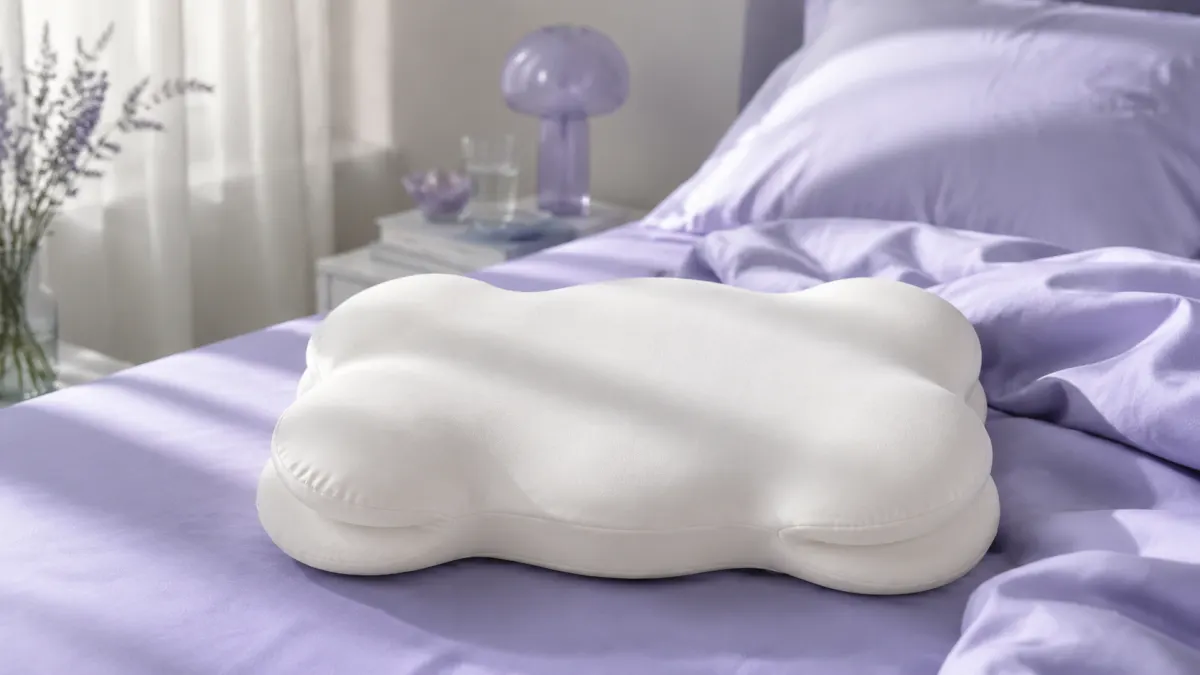
Buying brief
Decide before you shop.
Best fit
Best fit: sleepers who rotate and need the pillow to recover after turns without a full rebuild.
Skip if
Skip it if you need an ultra-firm contour pillow, an extremely low pillow, or a medical recommendation rather than a comfort trial.
Primary job
Name the job first: turn recovery, side/back compromise, and whether the pillow needs constant reshaping.
Sleep position
Side, back, stomach, and combination sleepers should not buy from the same checklist.
Heat and care
A pillow has to feel good after hours and be realistic to maintain.
Trial risk
Use the policy as part of the buying decision, not an afterthought.
Try the Lumuwala fit
Cloud Pillow is the product this guide points back to.
Lumuwala fits when the shopper wants one Cloud Pillow to test for comfort, support, heat, and care instead of building a complicated pillow stack.
See if Cloud Pillow fits your sleepCluster links
Keep reading in this sleep path.
A combination sleeper needs two tests
A firm mattress makes the side-sleeper part of the night more demanding because the shoulder sinks less. The pillow usually needs enough height to fill that larger shoulder gap. The same height can be too much when the sleeper rolls onto the back. That is the combination-sleeper problem in one sentence.
Do not judge the pillow by the first position only. Test the side position, then roll onto the back without resetting the pillow. If side sleeping needs folding and back sleeping tucks the chin, the pillow is trying to cover too much ground. The right compromise should feel acceptable in both positions, even if neither position feels perfect.
What the research can support
Combination sleepers are not usually isolated in pillow studies, so the honest advice has to be built from related evidence. A 2025 side-sleeper study tied individualized pillow height to shoulder width and absolute pillow height. A pillow-height biomechanics study found that height changes head-neck pressure and cervical alignment mechanics.
A mattress-stiffness study looked at how mattress hardness changes spinal curvature and disc stress. A pillow-design systematic review found that pillow design can affect neck pain, waking symptoms, sleep quality, satisfaction, and alignment. Together, those sources support testing the pillow across both positions on the actual firm mattress.
Try the Lumuwala fit
Cloud Pillow is the product this guide points back to.
Lumuwala fits when the shopper wants one Cloud Pillow to test for comfort, support, heat, and care instead of building a complicated pillow stack.
Use the guide, then test the fitPick the position that gets priority
Most combination sleepers are not split perfectly between side and back. One position usually takes more hours, causes fewer symptoms, or matters more for comfort. Start there. If side sleeping is the position that prevents shoulder or breathing issues, the pillow may need to serve the side first. If back sleeping is where the neck feels best, the pillow may need a lower profile.
A firm mattress often pushes the choice toward more side-sleeper height because the shoulder has less sink. That can be correct for a side-first combination sleeper. It can be wrong for someone who only spends a few minutes on the side before sleeping mostly on the back.
Write down the real split for a week if you are guessing. Waking position is not perfect evidence, but it is better than buying for an identity label. Combination sleeper is a pattern, not a pillow size.
Test the side-to-back roll
Lie on your side for several minutes. Check head level. Then roll onto the back without fluffing, folding, or moving the pillow. If the pillow edge jams under the skull or the chin tucks, it is too tall or too shaped for the back portion. If the side position makes the head drop, it is too low or too soft for the firm mattress.
The best compromise often has stable medium loft with a surface that gives. A very tall side-sleeper block can make back sleeping harsh. A flat back-sleeper pillow can fail the side portion. The winner is often the pillow that creates the least adjustment.
Notice whether the pillow follows the head during the roll. A slick case or unstable fill can make the pillow move away from the neck. That makes the sleeper blame height when the real issue is movement.
Check the roll after the mattress has had time to push back against the shoulder. A firm mattress may feel level at first, then create shoulder pressure that makes the sleeper roll sooner. If the pillow works only while the shoulder is tense, it is not a real solution. The setup should let the shoulder relax without making the head fall.
Also check the pillow edge after the roll. Some pillows have a good center but a steep edge that catches under the skull when the sleeper turns onto the back. A smoother edge can make the same height easier to use across positions.
A seven-night firm-mattress test
Use seven nights because combination-sleeper data is noisier. Track side head level, back chin angle, pillow movement, shoulder pressure, ear pressure, jaw pressure, heat, and how often you wake to adjust the pillow. Keep the mattress and bedding steady.
Nights one and two: current pillow. Nights three and four: a stable medium-loft pillow. Night five: lower height if back sleeping tucks the chin. Night six: add a thin support layer only if side sleeping drops the head. Night seven: repeat the least annoying setup.
The result should reduce interventions. Fewer folds, fewer pillow flips, fewer hand-under-pillow moves, and fewer wake-ups matter more than a perfect label. A combination sleeper needs a pillow that stays out of the way during movement.
If every side-friendly pillow ruins back sleeping, decide whether a body pillow or position training is part of the answer. Sometimes the pillow is telling you which sleep position it can support on that firm bed.
What to look for
Look for medium-to-full loft, stable support, surface give, a shape that does not trap the head, breathable materials, and a return policy. Firm-mattress combination sleepers should be cautious with extreme contours and very low back-sleeper pillows.
Adjustable fill can work if the fill stays put during rolls. Solid foam can work if the profile is not too steep. Down-like pillows can work for some sleepers, but a firm mattress can expose collapse quickly in the side position.
A useful product page should explain tradeoffs. If it claims the pillow is perfect for side, back, and stomach sleeping without explaining height compromise, keep reading with suspicion. Combination sleepers pay for vague copy with wake-ups.
The case matters. A grippy but breathable case can help the pillow stay aligned during rolling. A thick case can add height. A slick case can turn a good pillow into a moving target.
If the pillow is adjustable, make changes in small steps. Remove or add a little fill, then repeat the side-to-back roll. Big changes make the firm-bed side test and the back chin test trade places, and the shopper ends up chasing symptoms instead of solving them.
The best shopping clue is boring repeatability. If the pillow works only after careful placement, it will probably fail at 3am. A firm-bed combination sleeper needs support that survives ordinary rolling.
Where Lumuwala fits
Lumuwala Cloud Pillow is a strong candidate for side-first combination sleepers on firm mattresses who need stable medium-firm height and sleep warm. The 6 inch profile can fill a larger side-sleeper shoulder gap, and the foam core resists collapse during the night.
The back-sleeping test is the limiting factor. Roll from side to back after several minutes. If the chin tucks or the pillow edge feels like a ramp, Lumuwala is too full for the back portion of your night. If the chin stays calm, the pillow may be a useful compromise.
Do not stack another pillow under Lumuwala during the first trial. A firm mattress already makes the side gap larger, but extra layers can make the back roll fail. Test the pillow by itself with the case you plan to use.
The cooling cover helps because combination sleepers can mistake heat-driven movement for position preference. If you roll because the pillow gets warm, the fit test gets messy. Cooler head-level comfort can make the side/back tradeoff easier to read.
A firm mattress can make Lumuwala feel more side-sleeper-oriented than it would on a soft bed. That is good if side sleeping is the main event. It is less useful if back sleeping is where most of the night happens. Let the hour split decide the verdict.
Keep Lumuwala if it gives a clear result: side head level, back chin calm, no jaw pressure, no hard ear pressure, and fewer adjustment wake-ups. If side sleeping is excellent and back sleeping is poor, decide whether you are willing to make side sleeping the priority.
Where Cloud Pillow does and does not fit
Good fit
Lumuwala fits when the shopper wants one Cloud Pillow to test for comfort, support, heat, and care instead of building a complicated pillow stack.
Not the fit
Lumuwala is not the right fit for every pillow for combination sleepers on firm mattress shopper. Do not buy it as a substitute for medical care, as a rigid prescription contour, or as a promise that a pillow alone can fix the room, mattress, or health factors behind poor sleep.
Questions shoppers ask
What is the quick answer for pillow for combination sleepers on firm mattress?
Focus on turn recovery, side/back compromise, and whether the pillow needs constant reshaping. The right pillow should solve that main job while keeping height, heat, care, and return risk in balance.
Where does Lumuwala Cloud Pillow fit in pillow for combination sleepers on a firm mattress?
It fits when you want a soft support pillow to test at home with the current policy details in view and you are not looking for a rigid medical contour.
How should I test a new pillow?
Use your normal pillowcase, keep bedding stable, and track heat, height, turns, and morning comfort for several nights before deciding.
How many nights should I test the pillow?
Use several normal nights, not one nap or one showroom squeeze. Keep the same pillowcase, mattress, and bedding so the pillow is the main variable.
What should I write down during the test?
Track heat timing, pillow flips, folds, stacking, pressure at the jaw or ear, shoulder load, neck angle, and morning comfort.
Is a higher pillow always better?
No. Side sleepers often need more loft than stomach sleepers, but too much height can tilt the neck upward or push a back sleeper's chin down.
When should I stop self-testing?
Stop and get medical guidance if symptoms are persistent, worsening, nerve-like, tied to injury, or include weakness, numbness, dizziness, or breathing concerns.
What makes an article trustworthy for pillow shopping?
Trust pages that separate fit guidance from medical claims, cite real sources, disclose evidence limits, and avoid invented review counts, ratings, or lab measurements.
Sources
- Tian S, Yao C, Wang Y, et al. Individualized optimal pillow height and neck support design for side sleepers. PubMed PMID: 39412632.
- Ren S, Wong DW, Yang H, et al. Effect of pillow height on the biomechanics of the head-neck complex. PubMed PMID: 27635354.
- Hong TTH, Wang Y, Wong DW, et al. The influence of mattress stiffness on spinal curvature and intervertebral disc stress. PubMed PMID: 36101411.
- Chun-Yiu JP, Man-Ha ST, Chak-Lun AF. Effects of pillow designs on neck pain, waking symptoms, sleep quality and spinal alignment. PubMed PMID: 33895703.