Sleep position guide
Best pillow for combination sleepers on a soft mattress
A soft mattress can shrink the side-sleeper shoulder gap and make back sleeping more sensitive to chin tuck. Combination sleepers need a lower, steadier compromise.
Quick answer
For pillow for combination sleepers on soft mattress, the useful answer is to solve turn recovery, side/back compromise, and whether the pillow needs constant reshaping without creating a worse tradeoff. Best fit: sleepers who rotate and need the pillow to recover after turns without a full rebuild. Lumuwala Cloud Pillow is worth considering when you want a plush support feel, cooler sleep surface, and a current-policy home trial. Skip it if you need an ultra-firm contour pillow, an extremely low pillow, or a medical recommendation rather than a comfort trial.
Founder and primary Lumuwala byline
Edited by Anya for editorial content editor
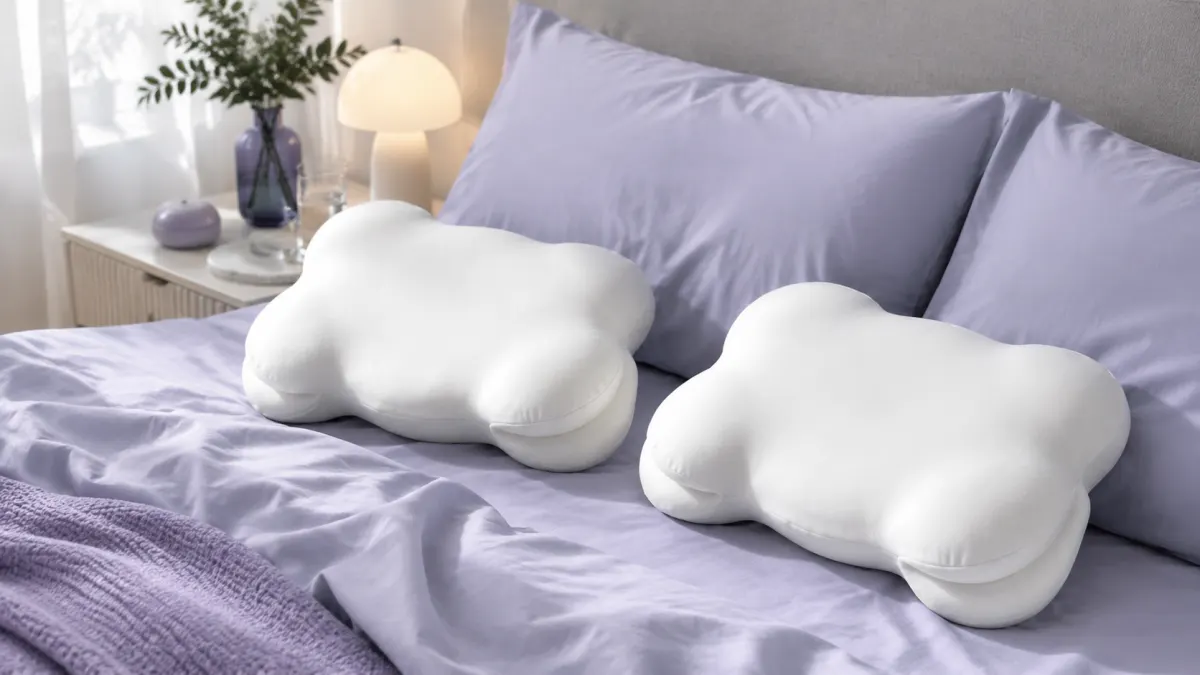
Buying brief
Decide before you shop.
Best fit
Best fit: sleepers who rotate and need the pillow to recover after turns without a full rebuild.
Skip if
Skip it if you need an ultra-firm contour pillow, an extremely low pillow, or a medical recommendation rather than a comfort trial.
Primary job
Name the job first: turn recovery, side/back compromise, and whether the pillow needs constant reshaping.
Sleep position
Side, back, stomach, and combination sleepers should not buy from the same checklist.
Heat and care
A pillow has to feel good after hours and be realistic to maintain.
Trial risk
Use the policy as part of the buying decision, not an afterthought.
Try the Lumuwala fit
Cloud Pillow is the product this guide points back to.
Lumuwala fits when the shopper wants one Cloud Pillow to test for comfort, support, heat, and care instead of building a complicated pillow stack.
See if Cloud Pillow fits your sleepCluster links
Keep reading in this sleep path.
Soft beds shrink the compromise window
Combination sleepers on soft mattresses have a smaller margin for error. In side sleeping, the shoulder sinks and the head sits closer to the mattress. In back sleeping, the upper back may sink enough that a tall pillow tucks the chin. The same pillow can feel too high in both positions for different reasons.
The answer is usually not the flattest pillow. A pillow still has to support the neck when the sleeper rolls. The better target is lower stable support: enough structure to avoid collapse, but less total lift than the same person might choose on a firm bed.
What the research can support
A 2025 side-sleeper study tied individualized pillow height to shoulder width and absolute pillow height. A pillow-height biomechanics study found that height changes pressure and cervical alignment mechanics. Those papers do not directly study combination sleepers, but they explain why height changes matter when the sleeper rolls.
Mattress research adds the bed side of the story. A mattress-stiffness study examined spinal curvature and disc stress under different hardness conditions. A review of mattress choice reported that medium-firm beds often support comfort, sleep quality, and spinal alignment. For a soft mattress, the safe claim is simple: test pillow height with the mattress, not away from it.
Try the Lumuwala fit
Cloud Pillow is the product this guide points back to.
Lumuwala fits when the shopper wants one Cloud Pillow to test for comfort, support, heat, and care instead of building a complicated pillow stack.
Use the guide, then test the fitWait for the mattress to settle
Soft beds keep changing after the first minute. The shoulder sinks, the hip settles, and the upper back may drop. A combination sleeper should wait before judging the pillow, then roll through the normal positions. If the side position starts level and becomes crowded, the pillow is too high after the mattress settles.
If the back position starts comfortable and then the chin tucks, the pillow and mattress are working together in the wrong direction. Lower head height may help. If lowering the pillow creates neck emptiness, choose a lower shape with more neck support rather than adding height under the whole head.
Sag matters. A soft supportive mattress is not the same as an old mattress with a valley. If the torso rolls forward or the upper back falls into one spot, a pillow may improve symptoms but cannot restore the bed surface.
Use a side-back-side roll test
Start on the side and let the shoulder settle. Check whether the nose points straight ahead or upward. Roll onto the back without moving the pillow and check the chin. Then roll back to the side. A good soft-mattress compromise should survive that sequence without folding, sliding, or crowding the jaw.
If the pillow is too tall, both positions may complain: the side position crowds the jaw and the back position tucks the chin. If the pillow is too low, the side position drops the head while the back position may feel fine. That contrast tells you which direction to adjust.
Pillow movement is a separate clue. Soft mattresses can let the body sink while the pillow stays on top, so the pillow may drift away from the neck during rolls. A case with a little more grip can help, as long as it does not add too much height.
Give the soft mattress a longer pause than you would give a firm bed. The shoulder, hip, and upper back may keep settling after the first few minutes. A pillow that passes the first roll can still fail once the body has dropped deeper into the surface. Repeat the roll after the bed has warmed under you.
If the pillow feels high in both positions, resist the urge to keep breaking it in for weeks. Soft mattresses can make height problems obvious early. The useful question is whether a smaller height change improves both positions, not whether the neck can learn to tolerate the mismatch.
A seven-night soft-mattress test
Track seven nights: side head angle, back chin angle, jaw pressure, ear pressure, neck support, pillow movement, shoulder sink, hip sink, heat, and adjustment wake-ups. Keep the topper, protector, and sheet unchanged.
Nights one and two: current pillow. Nights three and four: lower loft or remove fill. Night five: test a lower pillow with more neck structure if the first low setup collapses. Night six: change only the case if height is close but surface pressure is wrong. Night seven: repeat the cleanest setup.
The useful result is fewer corrections. A combination sleeper on a soft mattress should not need to pull the pillow away from the shoulder on the side, then shove it back under the neck on the back. The pillow should move less than the sleeper does.
If every pillow feels too tall, the mattress may be sinking the shoulder and upper back so much that a standard side/back pillow category no longer fits. If every low pillow collapses, the shopper needs more structure, not more loft.
What to look for
Look for lower adjustable loft, stable fill, a forgiving surface, breathable materials, and return terms. Soft-mattress combination sleepers should be cautious with high side-sleeper blocks and steep contours.
Adjustable fill is useful only if the fill stays under the neck through rolls. Solid foam is useful only if the profile is low enough after the shoulder settles. Down-like fills can work when they hold shape; if they migrate to the edges, the sleeper wakes up rebuilding the pillow.
A good product page should admit tradeoffs for soft mattresses. It should not treat side/back combination sleeping as a magic category. The mattress changes the geometry, and the trial has to happen on the real bed.
Heat matters because soft foam beds can trap warmth. If the sleeper rolls because the pillow and mattress feel stale, the position notes become hard to read. Solve local head-level heat separately from full-bed heat.
Look for clear return terms because this problem cannot be solved in a store aisle. The pillow has to meet the mattress after the bed warms up, the shoulder sinks, and the sleeper rolls naturally. A short or vague return window turns the test into a guess.
Where Lumuwala fits
Lumuwala Cloud Pillow can work for soft-mattress combination sleepers who still need stable medium-firm support and sleep warm. It is most likely to fit when the sleeper is side-first, has a moderate shoulder gap after settling, and does not need a very low back-sleeper profile.
It may be too tall for narrow-shouldered sleepers, deeply plush mattresses, or back-first combination sleepers. The 6 inch profile should be tested after the mattress settles. If the side position crowds the jaw and the back position tucks the chin, the pillow is too high for that bed.
If Lumuwala almost works, change the case before changing the pillow. A thick protector can add height and surface firmness. A thinner breathable case can make the trial cleaner. If the head angle stays wrong, return the pillow rather than trying to adapt your neck.
Cooling is a real benefit when the head and neck are the hot zone. It is not a cure for a warm soft mattress. If the back and hips feel trapped too, the mattress, protector, topper, sheet, and duvet deserve attention.
Soft-bed combination sleepers should test Lumuwala without extra pillow layers first. If the head drops on the side, the issue may be fill stability. If the chin tucks on the back, adding another layer will make the problem worse. One pillow gives the cleanest answer.
Keep the result plain: side position level enough, back chin calm enough, no jaw crowding, no hard ear pressure, fewer adjustment wake-ups, and heat low enough that movement is not forced. If the pillow cannot pass both positions, choose the position that protects sleep best.
Where Cloud Pillow does and does not fit
Good fit
Lumuwala fits when the shopper wants one Cloud Pillow to test for comfort, support, heat, and care instead of building a complicated pillow stack.
Not the fit
Lumuwala is not the right fit for every pillow for combination sleepers on soft mattress shopper. Do not buy it as a substitute for medical care, as a rigid prescription contour, or as a promise that a pillow alone can fix the room, mattress, or health factors behind poor sleep.
Questions shoppers ask
What is the quick answer for pillow for combination sleepers on soft mattress?
Focus on turn recovery, side/back compromise, and whether the pillow needs constant reshaping. The right pillow should solve that main job while keeping height, heat, care, and return risk in balance.
Where does Lumuwala Cloud Pillow fit in pillow for combination sleepers on a soft mattress?
It fits when you want a soft support pillow to test at home with the current policy details in view and you are not looking for a rigid medical contour.
How should I test a new pillow?
Use your normal pillowcase, keep bedding stable, and track heat, height, turns, and morning comfort for several nights before deciding.
How many nights should I test the pillow?
Use several normal nights, not one nap or one showroom squeeze. Keep the same pillowcase, mattress, and bedding so the pillow is the main variable.
What should I write down during the test?
Track heat timing, pillow flips, folds, stacking, pressure at the jaw or ear, shoulder load, neck angle, and morning comfort.
Is a higher pillow always better?
No. Side sleepers often need more loft than stomach sleepers, but too much height can tilt the neck upward or push a back sleeper's chin down.
When should I stop self-testing?
Stop and get medical guidance if symptoms are persistent, worsening, nerve-like, tied to injury, or include weakness, numbness, dizziness, or breathing concerns.
What makes an article trustworthy for pillow shopping?
Trust pages that separate fit guidance from medical claims, cite real sources, disclose evidence limits, and avoid invented review counts, ratings, or lab measurements.
Sources
- Tian S, Yao C, Wang Y, et al. Individualized optimal pillow height and neck support design for side sleepers. PubMed PMID: 39412632.
- Ren S, Wong DW, Yang H, et al. Effect of pillow height on the biomechanics of the head-neck complex. PubMed PMID: 27635354.
- Hong TTH, Wang Y, Wong DW, et al. The influence of mattress stiffness on spinal curvature and intervertebral disc stress. PubMed PMID: 36101411.
- Caggiari G, Talesa GR, Toro G, et al. What type of mattress should be chosen to avoid back pain and improve sleep quality? PubMed PMID: 34878594.