Cooling pillow guide
Cooling Pillow for Combination Sleepers
Combination sleepers need cooling that survives nightly movement and a height that does not punish side, back, or stomach time. The compromise has to be tested.
Quick answer
For cooling pillow for combination sleepers, the useful answer is to solve turn recovery, side/back compromise, and whether the pillow needs constant reshaping without creating a worse tradeoff. Best fit: sleepers who rotate and need the pillow to recover after turns without a full rebuild. Lumuwala Cloud Pillow is worth considering when you want a plush support feel, cooler sleep surface, and a current-policy home trial. Skip it if you need an ultra-firm contour pillow, an extremely low pillow, or a medical recommendation rather than a comfort trial.
Founder and primary Lumuwala byline
Edited by Anya for editorial content editor
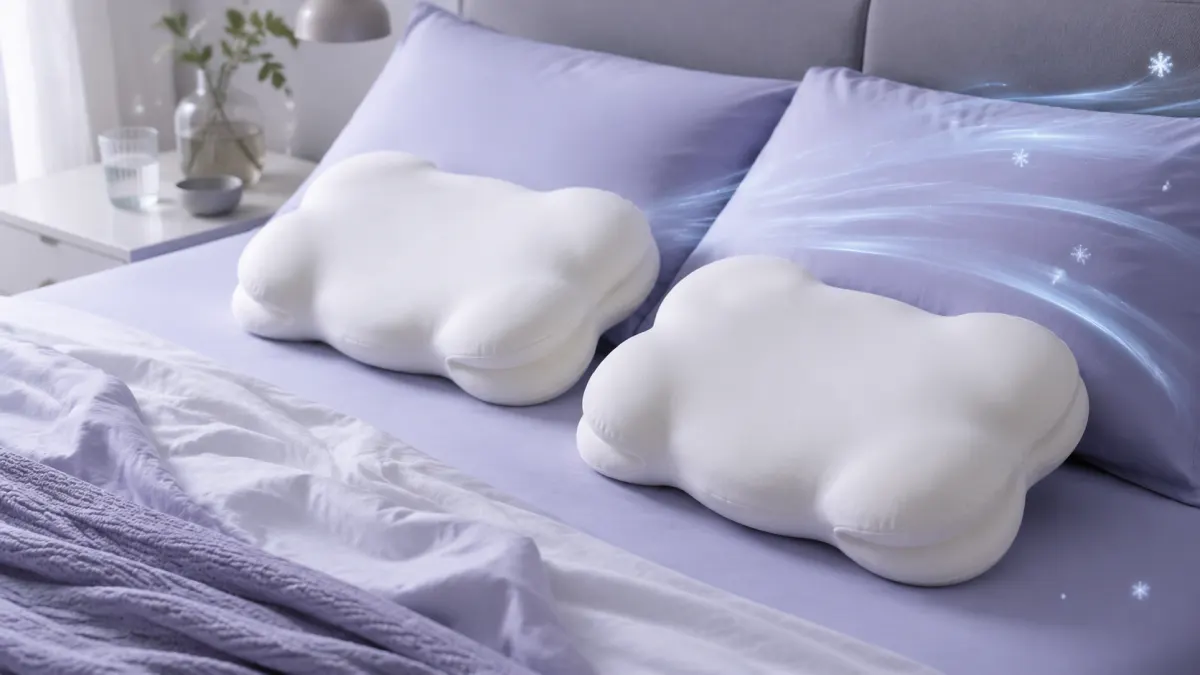
Buying brief
Decide before you shop.
Best fit
Best fit: sleepers who rotate and need the pillow to recover after turns without a full rebuild.
Skip if
Skip it if you need an ultra-firm contour pillow, an extremely low pillow, or a medical recommendation rather than a comfort trial.
Heat source
Decide whether the main problem is turn recovery, side/back compromise, and whether the pillow needs constant reshaping.
Air and moisture path
Look for a breathable cover, lighter case, and less face-burying contact.
Height stability
A cooler pillow still fails if it leaves the head too low or too high.
Home test
Judge after several normal nights when the pillow has warmed up fully.
Try the Lumuwala fit
Cloud Pillow is the product this guide points back to.
Lumuwala fits the cooling pillow for combination sleepers search when the buyer wants cooling comfort tied to pillow height, not just a chilly first touch. It is strongest for shoppers who rotate between side and back sleep and want to test the heat story at home.
See if Cloud Pillow fits hot sleepersCluster links
Keep reading in this sleep path.
Combination sleepers need a cooling compromise
Combination sleepers make pillow advice harder because one night can include side, back, and sometimes stomach time. A pillow that is ideal for side sleeping can feel tall on the back. A pillow that is perfect on the back can collapse on the side. Cooling has to work through all of that movement.
The best cooling pillow for a combination sleeper is rarely the coldest pillow. It is the pillow that stays comfortable enough that the sleeper is not flipping because of heat and stable enough that position changes do not create neck strain.
The test should score the main positions separately. Side comfort, back comfort, stomach tolerance, heat, pressure, and rebuilds all get their own notes. A single bedtime feel is too crude.
What the research supports
Thermal-environment research shows that heat exposure can affect sleep and circadian rhythm. Humid heat exposure research connects warm, humid conditions with sleep stages and body temperature. A systematic review on heat and sleep quality among heat-exposed workers supports taking warm sleep conditions seriously.
Pillow research supports the position side of the problem. A pillow-design review links pillow design with neck pain, waking symptoms, sleep quality, and spinal alignment. Side-sleeper pillow-height work shows why side positions often need more height. Pillow-height muscle-activity work shows why height changes matter beyond comfort.
Those sources do not identify one perfect combination-sleeper pillow. They support a careful compromise test: enough height for the side, low enough for the back, cool enough to reduce restless moves, and stable enough not to need constant rebuilding.
Try the Lumuwala fit
Cloud Pillow is the product this guide points back to.
Lumuwala fits the cooling pillow for combination sleepers search when the buyer wants cooling comfort tied to pillow height, not just a chilly first touch. It is strongest for shoppers who rotate between side and back sleep and want to test the heat story at home.
Test the cooling setup at homeScore each position separately
Side sleeping usually needs the highest support because the pillow has to fill the shoulder-to-neck gap. If the pillow collapses, the head drops and the sleeper may wake with neck, jaw, ear, or shoulder pressure.
Back sleeping usually needs less height. If the same pillow pushes the chin down on the back, the combination sleeper may wake stiff even though the side position looked good.
Stomach time is the hardest part of the compromise. Many stomach sleepers need a very thin setup, so a pillow that works for side sleeping can rotate the neck too far when the sleeper rolls onto the stomach.
Do not average the positions. A pillow can be a strong side-sleeper fit and a poor back-sleeper fit. The position that owns most of the night should carry more weight.
Cooling should be scored by position too. The side position loads one cheek and ear. The back position heats the neck and skull base. Stomach time can bury the face into the surface. Each position warms the pillow differently.
The starting position can mislead. Many combination sleepers start on the side because it feels comfortable, then spend more total time on the back. The morning position and wearable sleep notes, if available, are more useful than bedtime preference.
A pillow can also change the position mix. If a cooler side surface keeps the sleeper on the side longer, the next morning may feel different for the shoulder and jaw. Track the position shift alongside the temperature.
If a partner notices constant flipping, use that as data. Combination sleepers may not remember every turn. The useful clue is whether the new pillow reduces restless pillow handling, not whether the sleeper can recall the exact sequence.
Do not ignore pillow width. A narrow pillow can be fine in one position and annoying during turns. If the head keeps landing near the edge, cooling and support will both vary through the night.
Cooling has to survive movement
A combination sleeper moves more, so the pillow has to recover. If the surface stays warm after each turn, the sleeper may keep hunting for a cooler patch. If the fill shifts or collapses, every turn becomes a rebuild.
A breathable cover helps when it remains breathable under the real case. Moisture movement helps when sweat collects at the cheek or neck. Thermal buffering helps early in the night, but airflow and recovery matter later.
The pillowcase is part of the result. A smooth, breathable case can help the sleeper turn without dragging the pillow. A hot or slippery case can create movement that looks like pillow failure.
Combination sleepers should also watch edge behavior. A pillow can feel good in the center and thinner near the edge. If the sleeper moves across the pillow, edge collapse may decide the morning score.
A pillow that needs punching after every turn is not a good cooling pillow for this use case. Rebuilding wakes the sleeper and often blocks airflow by compacting the fill.
The cover should let the head turn without dragging. If the surface grabs hair or skin, the sleeper may pull the pillow out of shape. If the surface is too slick, the head may slide into a poor angle. Cooling texture is part of fit.
Recovery time matters more here than in a single-position test. A combination sleeper may revisit the same warm area several times. If the pillow never recovers, the sleeper keeps searching for a cooler patch.
A seven-night combination-sleeper test
Use seven nights. Record starting position, waking position, side score, back score, stomach score if relevant, heat, sweat, flips, pillow rebuilds, and morning neck or shoulder symptoms.
Nights one and two use the current setup. Night three changes the case if heat is loud. Night four checks whether height fails on the back. Night five checks whether side support fails after the shoulder settles.
Nights six and seven repeat the best setup. Do not change the whole bed stack at once. Combination sleepers already have enough variables.
A good result is fewer hot-pillow moves, fewer rebuilds, side support that holds, back angle that does not tuck the chin, and no major stomach-sleeping penalty if stomach time is common.
If the pillow works for the main position and is merely acceptable for the secondary position, that can be enough. Combination sleepers are buying a compromise, not perfection.
If the pillow fails the main position, cooling cannot save it. A cool pillow that misaligns the position that owns the night is still wrong.
If stomach time is rare, do not let it dominate the choice. A pillow should not be rejected for a position that lasts ten minutes unless that position causes clear pain.
If stomach time is common, be stricter. A tall cooling pillow can rotate the neck sharply in that position. In that case, a lower compromise may be better than a stronger side-sleeper pillow.
If the pillow is good only after manual fluffing, mark that as a failure for this use case. Combination sleepers need the pillow to recover while half-asleep, not after a full rebuild.
If heat improves but position pain appears, the pillow is not finished. Cooling is allowed to be the reason to try a pillow, but support decides whether it stays.
Common mistakes
The first mistake is choosing from the preferred starting position instead of the position that owns the most hours.
The second mistake is treating cooling and support as separate products. They are experienced together.
The third mistake is ignoring stomach time. Even a small amount can change the neck verdict.
The fourth mistake is buying a pillow that requires constant fluffing. Movement already wakes combination sleepers.
The fifth mistake is testing only the center of the pillow. Combination sleepers use the edges too.
The sixth mistake is blaming the pillow before testing the case and protector.
The seventh mistake is chasing the coldest surface while accepting a bad back-sleeping chin angle.
The eighth mistake is buying for the position you wish you slept in. Buy for the position that actually owns the night.
The ninth mistake is forgetting edge support. A moving sleeper uses more than the center of the pillow, especially after repeated turns across the surface during long restless nights.
Where Lumuwala fits
Lumuwala Cloud Pillow can work for combination sleepers whose nights are mostly side and back. The medium-firm 6 inch profile gives enough side-sleeper support for many bodies, while the breathable cover and gel-infused foam address warm surface contact.
It may be too tall for combination sleepers who spend a lot of time on the stomach or who are petite back sleepers on soft mattresses. Test the back-sleeping chin angle before deciding.
Keep Lumuwala only if the main position improves and the secondary positions remain acceptable. Look for fewer flips, fewer rebuilds, less clammy contact, stable side height, and no new back-sleeping neck strain.
Test the roll from side to back. If Lumuwala stays supportive without needing a hand adjustment, that is a better sign than a perfect frozen side-sleeper pose.
A good Lumuwala result is a cleaner compromise. It does not have to be perfect in every position. It has to be good enough that heat and support stop waking the sleeper up.
Where Cloud Pillow does and does not fit
Good fit
Lumuwala fits the cooling pillow for combination sleepers search when the buyer wants cooling comfort tied to pillow height, not just a chilly first touch. It is strongest for shoppers who rotate between side and back sleep and want to test the heat story at home.
Not the fit
Lumuwala is not the right fit for every cooling pillow for combination sleepers shopper. Do not buy it as a substitute for medical care, as a rigid prescription contour, or as a promise that a pillow alone can fix the room, mattress, or health factors behind poor sleep.
Questions shoppers ask
What is the quick answer for cooling pillow for combination sleepers?
Focus on turn recovery, side/back compromise, and whether the pillow needs constant reshaping. The right pillow should solve that main job while keeping height, heat, care, and return risk in balance.
Where does Lumuwala Cloud Pillow fit in cooling pillow for combination sleepers?
It fits when you want a soft support pillow to test at home with the current policy details in view and you are not looking for a rigid medical contour.
Will a cooling pillow stay cold all night?
No honest pillow stays cold all night. A better goal is slower heat buildup, better moisture handling, and fewer wakeups to flip or rebuild the pillow.
How many nights should I test the pillow?
Use several normal nights, not one nap or one showroom squeeze. Keep the same pillowcase, mattress, and bedding so the pillow is the main variable.
What should I write down during the test?
Track heat timing, pillow flips, folds, stacking, pressure at the jaw or ear, shoulder load, neck angle, and morning comfort.
Is a higher pillow always better?
No. Side sleepers often need more loft than stomach sleepers, but too much height can tilt the neck upward or push a back sleeper's chin down.
When should I stop self-testing?
Stop and get medical guidance if symptoms are persistent, worsening, nerve-like, tied to injury, or include weakness, numbness, dizziness, or breathing concerns.
What makes an article trustworthy for pillow shopping?
Trust pages that separate fit guidance from medical claims, cite real sources, disclose evidence limits, and avoid invented review counts, ratings, or lab measurements.
Sources
- Okamoto-Mizuno K, Mizuno K. Effects of thermal environment on sleep and circadian rhythm. PubMed PMID: 22738673.
- Chun-Yiu JP, Man-Ha ST, Chak-Lun AF. Effects of pillow designs on neck pain, waking symptoms, sleep quality and spinal alignment. PubMed PMID: 33895703.
- Tian S, Yao C, Wang Y, et al. Individualized optimal pillow height and neck support design for side sleepers. PubMed PMID: 39412632.
- Sacco IC, Pereira IL, Dinato RC, et al. Pillow height, neck and mid-upper-back muscle activity, and comfort. PubMed PMID: 26209581.