Sleep science
Cooling Pillow for Menopause and Night Sweats
Menopause heat can involve hot flashes, night sweats, sleep disruption, room conditions, and health context. A cooling pillow can help comfort, not hormones.
Quick answer
For cooling pillow for menopause, the useful answer is to solve heat spikes, sweat management, and quick surface recovery without creating a worse tradeoff. Best fit: shoppers who want a soft, supportive Cloud Pillow feel while still checking height, heat, care, and trial fit. Lumuwala Cloud Pillow is worth considering when you want a plush support feel, cooler sleep surface, and a current-policy home trial. Skip it if you need an ultra-firm contour pillow, an extremely low pillow, or a medical recommendation rather than a comfort trial.
Founder and primary Lumuwala byline
Edited by Anya for editorial content editor
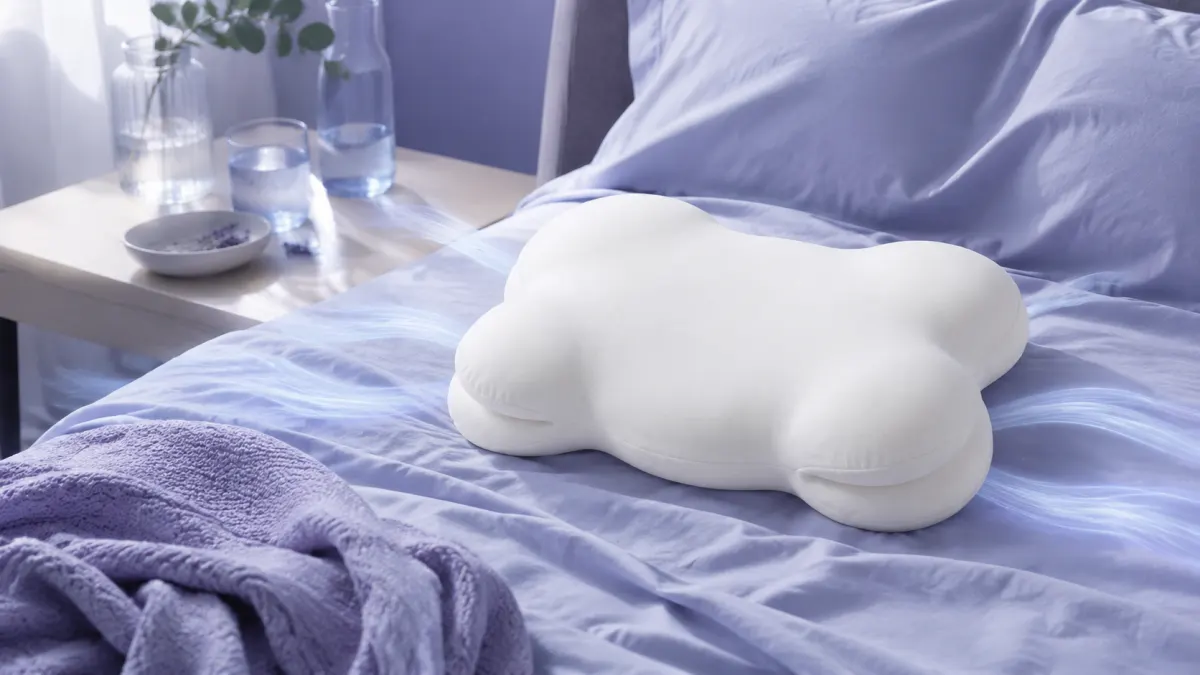
Buying brief
Decide before you shop.
Best fit
Best fit: shoppers who want a soft, supportive Cloud Pillow feel while still checking height, heat, care, and trial fit.
Skip if
Skip it if you need an ultra-firm contour pillow, an extremely low pillow, or a medical recommendation rather than a comfort trial.
Heat source
Decide whether the main problem is heat spikes, sweat management, and quick surface recovery.
Air and moisture path
Look for a breathable cover, lighter case, and less face-burying contact.
Height stability
A cooler pillow still fails if it leaves the head too low or too high.
Home test
Judge after several normal nights when the pillow has warmed up fully.
Try the Lumuwala fit
Cloud Pillow is the product this guide points back to.
Lumuwala fits the cooling pillow for menopause search when the buyer wants cooling comfort tied to pillow height, not just a chilly first touch. It is strongest for shoppers who rotate between side and back sleep and want to test the heat story at home.
See if Cloud Pillow fits hot sleepersCluster links
Keep reading in this sleep path.
Separate menopause symptoms from pillow comfort
Menopause heat is not the same as a pillow that sleeps warm. Hot flashes and night sweats can involve thermoregulation, hormones, stress, medication, alcohol, bedding, room temperature, illness, and individual physiology. A cooling pillow can make the surface under the head and neck feel less clammy. It cannot treat hot flashes, change hormones, or explain new symptoms.
If sweating is new, drenching, paired with fever, weight change, chest symptoms, faintness, severe fatigue, or other unusual signs, do not start with a pillow purchase. Get medical advice. If the pattern is familiar and already understood, then bedding comfort is fair to test. The order matters: health context first, surface comfort second.
What hot-flash research can and cannot say
A concise review describes menopausal hot flashes as transient sensations of heat, sweating, flushing, anxiety, and chills. A separate review on mechanisms and treatment links hot flashes with thermoregulatory and endocrine changes and notes that hot flashes account for some, but not all, sleep disturbance reported during menopause. That last phrase matters. Sleep can be disrupted for more than one reason.
Research on menopause and subjective sleep disturbance reports higher sleep-disturbance prevalence around menopause, while newer work continues to examine how hot flashes, sleep disruption, and psychological factors interact. None of this turns a pillow into treatment. It does support a practical comfort question: can the pillow reduce heat buildup enough that the sleeper settles faster after a warm episode?
Try the Lumuwala fit
Cloud Pillow is the product this guide points back to.
Lumuwala fits the cooling pillow for menopause search when the buyer wants cooling comfort tied to pillow height, not just a chilly first touch. It is strongest for shoppers who rotate between side and back sleep and want to test the heat story at home.
Test the cooling setup at homeFirst-touch coolness is a small part of the night
A pillow can feel cool for the first minute and still trap warmth after an hour. Menopause-related wake-ups make that difference more obvious because the sleeper may return to the pillow already warm or sweaty. The useful test is not the showroom squeeze. It is what the surface feels like after body heat, hair, skin oils, pillowcase fabric, and room humidity have had time to matter.
Look for airflow, moisture handling, cover breathability, and a core that does not hold heat in one dense block. Gel can help the first contact feel, but gel alone is not a full cooling plan. The pillowcase and protector can help or ruin the result. A thick waterproof layer may make the pillow feel warmer even if the core is decent.
The after-wake-up test is more useful than the first-touch test. When you wake warm, leave the pillow in place for a minute before flipping it. Notice whether the surface clears dampness, whether the cover feels sticky, and whether the pillow still supports the neck when you settle back down. That moment is the real menopause use case.
Washability matters more during night sweats
A menopause use case puts more demand on the cover. Sweat, hair product, skincare, and repeated pillow flips can build up quickly. A breathable washable cover is not a cosmetic detail. It is part of whether the pillow stays usable over time.
Check care rules before trusting any cooling claim. If the cover cannot be removed, if the washing instructions are vague, or if the pillow needs a bulky protector to survive normal use, the cooling story may fall apart in the real bed. Cleanability and cooling belong together for this use case.
The room can overpower the pillow
A cooling pillow cannot beat a heavy duvet, warm foam mattress, thick synthetic case, high room temperature, and closed airflow. It can help the head and neck surface, but the rest of the sleep system still matters. Menopause heat often makes sleepers notice every weak link.
Before buying, run a simple audit: pillowcase fabric, mattress protector, duvet weight, room temperature, fan or airflow, humidity, alcohol timing, and whether the same pillow feels worse on certain nights. That does not replace care. It keeps the product test honest.
A seven-night menopause cooling test
Track seven nights because heat symptoms vary. Write down surface heat, damp cover, number of pillow flips, how fast you settle again after waking, neck support, and whether the pillow still feels usable late in the night. Do not turn this into a full medical diary unless a clinician asked for that. Keep the pillow test limited to what a pillow can change.
Change one bedding variable at a time. Use the same pillowcase for the first few nights. If the pillow is too warm, switch to a thinner breathable case before replacing the pillow. If the case helps, the core may not be the main problem. If the case does nothing, the pillow core or room system may be the louder variable.
Keep the test away from obvious confounders when you can. A late heavy meal, alcohol, a new medication, a warmer room, or a different blanket can all change the night. You do not need a laboratory. You do need enough ordinary nights that the pillow is judged against the same bed instead of a different sleep environment every time.
A useful result is specific: fewer flips, less dampness against the face, easier settling after a wake-up, or stable neck support despite movement. A vague result is still a result. It means the pillow did not clearly move the heat problem.
What to look for
Look for a breathable removable cover, clear care instructions, a core with airflow or heat-spread features, stable support, and a return policy. Avoid pages that promise to stop night sweats or treat hot flashes. Better copy will say what the pillow can do: reduce heat buildup at the surface, handle moisture better, and keep support when the sleeper moves.
Also read the height guidance. A cooler pillow that puts the neck in a bad position is still a failed pillow. Menopause sleep disruption can already be noisy. The pillow should reduce one source of discomfort without adding jaw pressure, neck strain, or shoulder drop.
Where Lumuwala fits
Lumuwala Cloud Pillow is a reasonable candidate when the current pillow sleeps warm, collapses after a few hours, or needs constant flipping. The gel-infused foam and breathable cover are aimed at heat buildup, while the medium-firm core keeps a steadier shape than soft fill that drifts away from the neck.
The fit still depends on height. At 6 inches, Lumuwala may be too tall for some back sleepers, especially petite sleepers or anyone on a soft mattress. For menopause-related heat, do not let the cooling story hide the neck-angle test. A pillow has to pass both comfort lanes: temperature and support.
Use the trial window with clear notes. Night one: first-touch feel is allowed to be nice, but it is not proof. Nights two through seven: check whether the surface gets clammy, whether you flip less, whether the pillow holds shape after a warm wake-up, and whether your neck feels neutral in the position you actually use.
If the pillow helps heat but creates jaw pressure, return it. If it supports the neck but still feels damp after an hour, test a breathable case before deciding. If both heat and support improve, the fit is meaningful even though the pillow has not changed the underlying menopause symptom pattern.
This is the honest product boundary. Lumuwala can support a cooler, steadier sleep surface. It cannot treat vasomotor symptoms. It cannot explain why a symptom changed. It can make one part of the night less irritating, and for some sleepers that is enough to be worth keeping.
Do not judge from the easiest night. Menopause heat can swing with weather, stress, meals, alcohol, and cycle timing. Keep the pillow only if it helps across mixed nights, including a night when the room or body runs warmer than usual.
Also watch morning cleanup. If the cover dries quickly, washes easily, and does not hold odor, the pillow is easier to live with during hot-flash seasons. If the care routine feels fussy by the second week, that friction matters. A cooling pillow that is hard to keep fresh will lose the trial in normal use.
If symptoms worsen or feel medically different, stop the pillow experiment and get care.
Where Cloud Pillow does and does not fit
Good fit
Lumuwala fits the cooling pillow for menopause search when the buyer wants cooling comfort tied to pillow height, not just a chilly first touch. It is strongest for shoppers who rotate between side and back sleep and want to test the heat story at home.
Not the fit
Lumuwala is not the right fit for every cooling pillow for menopause shopper. Do not buy it as a substitute for medical care, as a rigid prescription contour, or as a promise that a pillow alone can fix the room, mattress, or health factors behind poor sleep.
Questions shoppers ask
What is the quick answer for cooling pillow for menopause?
Focus on heat spikes, sweat management, and quick surface recovery. The right pillow should solve that main job while keeping height, heat, care, and return risk in balance.
Where does Lumuwala Cloud Pillow fit in cooling pillow for menopause?
It fits when you want a soft support pillow to test at home with the current policy details in view and you are not looking for a rigid medical contour.
Will a cooling pillow stay cold all night?
No honest pillow stays cold all night. A better goal is slower heat buildup, better moisture handling, and fewer wakeups to flip or rebuild the pillow.
How many nights should I test the pillow?
Use several normal nights, not one nap or one showroom squeeze. Keep the same pillowcase, mattress, and bedding so the pillow is the main variable.
What should I write down during the test?
Track heat timing, pillow flips, folds, stacking, pressure at the jaw or ear, shoulder load, neck angle, and morning comfort.
Is a higher pillow always better?
No. Side sleepers often need more loft than stomach sleepers, but too much height can tilt the neck upward or push a back sleeper's chin down.
When should I stop self-testing?
Stop and get medical guidance if symptoms are persistent, worsening, nerve-like, tied to injury, or include weakness, numbness, dizziness, or breathing concerns.
What makes an article trustworthy for pillow shopping?
Trust pages that separate fit guidance from medical claims, cite real sources, disclose evidence limits, and avoid invented review counts, ratings, or lab measurements.
Sources
- Bansal R, Aggarwal N. Menopausal hot flashes: a concise review. PubMed PMID: 31001050.
- Freedman RR. Menopausal hot flashes: mechanisms, endocrinology, treatment. PubMed PMID: 24012626.
- Xu Q, Lang CP. Relationship between subjective sleep disturbance and menopause. PubMed PMID: 24800878.
- An S, Ren S, Zhang Y. Hot flashes and sleep disruption in menopausal women. PubMed PMID: 40169115.