Cooling pillow guide
Cooling Pillow for Hot Flashes
A cooling pillow cannot treat hot flashes. It can make the head-and-neck surface easier to settle back onto when heat, sweat, and interrupted sleep are already part of the night.
Quick answer
For cooling pillow for hot flashes, the useful answer is to solve heat spikes, sweat management, and quick surface recovery without creating a worse tradeoff. Best fit: shoppers who want a soft, supportive Cloud Pillow feel while still checking height, heat, care, and trial fit. Lumuwala Cloud Pillow is worth considering when you want a plush support feel, cooler sleep surface, and a current-policy home trial. Skip it if you need an ultra-firm contour pillow, an extremely low pillow, or a medical recommendation rather than a comfort trial.
Founder and primary Lumuwala byline
Edited by Anya for editorial content editor
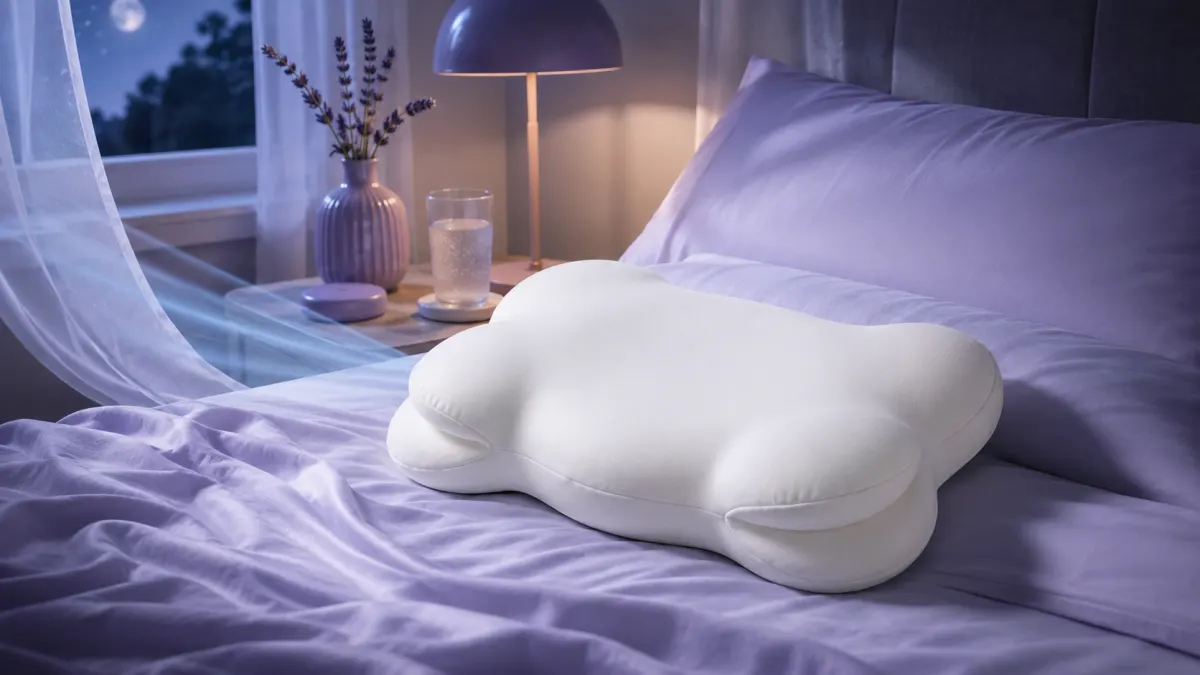
Buying brief
Decide before you shop.
Best fit
Best fit: shoppers who want a soft, supportive Cloud Pillow feel while still checking height, heat, care, and trial fit.
Skip if
Skip it if you need an ultra-firm contour pillow, an extremely low pillow, or a medical recommendation rather than a comfort trial.
Heat source
Decide whether the main problem is heat spikes, sweat management, and quick surface recovery.
Air and moisture path
Look for a breathable cover, lighter case, and less face-burying contact.
Height stability
A cooler pillow still fails if it leaves the head too low or too high.
Home test
Judge after several normal nights when the pillow has warmed up fully.
Try the Lumuwala fit
Cloud Pillow is the product this guide points back to.
Lumuwala fits the cooling pillow for hot flashes search when the buyer wants cooling comfort tied to pillow height, not just a chilly first touch. It is strongest for shoppers who rotate between side and back sleep and want to test the heat story at home.
See if Cloud Pillow fits hot sleepersCluster links
Keep reading in this sleep path.
Start with the health boundary
Hot flashes are not a pillow problem. They can involve vasomotor symptoms, menopause transition, medications, stress, illness, alcohol, room heat, and other health patterns. A pillow can support comfort at the head and neck. It cannot diagnose the cause or stop the episode.
If sweating is new, drenching, persistent, paired with fever, weight change, chest symptoms, faintness, worsening fatigue, or any unusual symptom, get medical advice instead of starting with bedding. If the hot-flash pattern is already understood, then it is reasonable to improve the surface you return to after waking.
That line matters. The purchase goal is not treatment. The purchase goal is a cooler-feeling, cleaner, more supportive landing place when a hot night has already happened.
What the literature can support
A concise review describes menopausal hot flashes as transient heat, sweating, flushing, anxiety, and chills, and links them to thermoregulatory changes. A narrative review on perimenopause sleep disturbance describes sleep disruption during the transition and connects it with vasomotor, cognitive, psychiatric, and hormonal factors.
A systematic review and meta-analysis found higher subjective sleep disturbance prevalence in perimenopausal, postmenopausal, and surgical menopausal women than in premenopausal women. Another review on hot flashes and sleep warns against assigning every midlife sleep complaint to hot flashes or menopause. Both points are useful: the pattern is real, and the explanation still needs care.
For pillow shopping, the research supports humility. A cooling pillow can work on local heat, moisture, cleanability, and support. It should not be sold as a way to change vasomotor symptoms.
Try the Lumuwala fit
Cloud Pillow is the product this guide points back to.
Lumuwala fits the cooling pillow for hot flashes search when the buyer wants cooling comfort tied to pillow height, not just a chilly first touch. It is strongest for shoppers who rotate between side and back sleep and want to test the heat story at home.
Test the cooling setup at homeWhat the pillow can actually change
A hot flash can leave the pillow surface warm, damp-feeling, or hard to settle back onto. A cooling pillow can try to reduce that local discomfort. The cover can dry faster. The case can feel less sticky. The core can avoid holding warmth near the face. The pillow can hold height even after repeated wake-ups and turns.
Those are comfort outcomes. They are still worth testing because repeated wake-ups can make small contact problems feel much larger. A pillow that stays usable after the first hot episode may help the sleeper return to a calmer position. A pillow that gets clammy or collapses can make the wake-up more frustrating.
Judge the pillow by recovery, not by whether a hot flash happens. The fair question is: after heat and sweat show up, is this surface easier to use than the old one?
The surface stack matters more than one material
Gel, foam, latex, fibers, covers, protectors, and pillowcases all sit between the sleeper and the core. A gel-infused pillow under a dense protector can feel warmer than expected. A breathable cover under a heavy polyester case may not get a fair test. A soft fill can feel cozy and still hold dampness near the face.
For hot flashes, cleanability and surface recovery are central. A removable washable cover helps. A spare breathable pillowcase near the bed can help. A protector may be necessary, but it should be chosen for breathability instead of just waterproofing. The stack should dry, feel clean, and avoid trapping heat against the cheek and neck.
Do not judge a cooling pillow while hiding it under the warmest case in the drawer. Test the pillow in the setup you can repeat on hard nights.
A spare-case plan is practical. If a wake-up leaves the surface damp, changing only the case may be enough to resettle without rebuilding the bed. The pillow still needs to recover underneath, but the case is the fastest layer to swap at 3am.
The stack should also avoid scratchy or noisy layers. A sleeper already waking hot does not need a crinkly protector or a rough case adding another reason to stay awake. Comfort details that seem small in daylight can matter after repeated wake-ups.
Room and bedding can overpower the pillow
A pillow works at one contact point. Heavy bedding, a warm room, humidity, foam mattress heat, and poor airflow can make the whole bed feel hot. If the torso, legs, and mattress are warm too, the pillow may still help the head but it will not make the bed cool.
Use a layered response. Keep bedding lighter when possible. Aim fan airflow so the pillow surface can dry without making the throat uncomfortable. Keep the case clean. If the room stays warm after midnight, the pillow is fighting the apartment or house as much as the episode.
This is not a reason to ignore the pillow. It is a reason to judge it fairly. A pillow can be a partial win inside a larger heat problem.
A seven-night hot-flash comfort test
Use seven nights because symptoms vary. Track only what the pillow can affect: surface warmth, damp feel, flips, ability to resettle, neck support, and whether the cover feels clean enough by morning. Keep the notes short so the test does not become another chore.
Keep the first week stable. Same case style, same blanket weight, same fan direction, same approximate room target if possible. If you change every cooling layer at once, comfort may improve but the pillow decision gets blurry.
A good result is practical: the pillow feels less clammy, recovers after a flip, holds the neck better during interrupted sleep, and does not add jaw, ear, or shoulder pressure. A bad result is also useful. If the pillow surface still feels stale and the support does not improve, move the next test to bedding, room heat, or clinical guidance.
Mark harder nights separately from easier nights. A pillow may not make a severe episode comfortable, but it may still make the recovery faster. If it helps only on easy nights, the benefit is weaker. If it helps on mixed nights, the result is more trustworthy.
Do not let one failed night erase every other note. Hot flashes vary too much for that. Look for a pattern across the week: fewer surface complaints, fewer case changes, fewer support problems, or no meaningful change.
Shopping checks that matter
Read the care instructions before the adjectives. Hot-flash sleepers may need more frequent case changes and a cover that does not become fussy. If the cover cannot be removed or the cleaning rules are vague, the pillow may be harder to live with than it looks online.
Check height and sleeper type next. A pillow that is too tall can create chin tuck or jaw pressure. A pillow that is too low can let the head fall and make the neck guard. Heat makes sleepers move more, so a fragile height fit becomes more obvious during disrupted nights.
Finally, check the trial window. Hot flashes are variable enough that one or two nights can mislead. A real trial lets the sleeper test easier nights, harder nights, and normal nights without forcing a decision from a single episode.
Look for plain return language. If the product needs several nights to judge, the return window should allow several nights. A hot-flash use case is too variable for a no-return or unopened-only policy to feel shopper-friendly.
Avoid copy that treats every sweaty wake-up as a bedding failure. Better guidance admits the health boundary, then explains the smaller comfort job. That is the tone you want from the pillow too: useful, specific, and honest about its limits.
Check the bed partner and laundry reality too. A pillow that needs special handling after every hard night may be a poor fit for a tired household. The better choice is boring to maintain: easy case changes, a cover that can be washed on a normal cadence, and a surface that does not require a ritual to feel usable again.
If you use cooling pads, cold packs, or other add-ons, test them separately from the pillow. Those tools can change the first hour and hide whether the pillow itself recovers. For a keep-or-return decision, give the pillow at least a few nights without extra help.
Where Lumuwala fits
Lumuwala Cloud Pillow is worth testing when hot flashes leave the old pillow warm, damp-feeling, or too flat to resettle on. The gel-infused foam addresses local heat buffering, the breathable cover helps the surface feel cleaner, and the 6 inch medium-firm profile keeps support in the decision.
Use it with a clean breathable case. Avoid burying it under a thick protector during the first read unless a protector is medically or practically necessary. Judge the same signals every morning: surface feel, flips, recovery, support, and new pressure.
Keep Lumuwala if several ordinary and harder nights show less clammy contact, better recovery after wake-ups, and stable head-and-neck support. Return it if the height is wrong, the surface still feels stale, or the room and bedding are clearly the louder problem.
If the result is mixed, trust the notes over the hope. Better surface recovery matters, but a pillow that adds neck or jaw pressure is still the wrong trade.
Where Cloud Pillow does and does not fit
Good fit
Lumuwala fits the cooling pillow for hot flashes search when the buyer wants cooling comfort tied to pillow height, not just a chilly first touch. It is strongest for shoppers who rotate between side and back sleep and want to test the heat story at home.
Not the fit
Lumuwala is not the right fit for every cooling pillow for hot flashes shopper. Do not buy it as a substitute for medical care, as a rigid prescription contour, or as a promise that a pillow alone can fix the room, mattress, or health factors behind poor sleep.
Questions shoppers ask
What is the quick answer for cooling pillow for hot flashes?
Focus on heat spikes, sweat management, and quick surface recovery. The right pillow should solve that main job while keeping height, heat, care, and return risk in balance.
Where does Lumuwala Cloud Pillow fit in cooling pillow for hot flashes?
It fits when you want a soft support pillow to test at home with the current policy details in view and you are not looking for a rigid medical contour.
Will a cooling pillow stay cold all night?
No honest pillow stays cold all night. A better goal is slower heat buildup, better moisture handling, and fewer wakeups to flip or rebuild the pillow.
How many nights should I test the pillow?
Use several normal nights, not one nap or one showroom squeeze. Keep the same pillowcase, mattress, and bedding so the pillow is the main variable.
What should I write down during the test?
Track heat timing, pillow flips, folds, stacking, pressure at the jaw or ear, shoulder load, neck angle, and morning comfort.
Is a higher pillow always better?
No. Side sleepers often need more loft than stomach sleepers, but too much height can tilt the neck upward or push a back sleeper's chin down.
When should I stop self-testing?
Stop and get medical guidance if symptoms are persistent, worsening, nerve-like, tied to injury, or include weakness, numbness, dizziness, or breathing concerns.
What makes an article trustworthy for pillow shopping?
Trust pages that separate fit guidance from medical claims, cite real sources, disclose evidence limits, and avoid invented review counts, ratings, or lab measurements.
Sources
- Bansal R, Aggarwal N. Menopausal hot flashes: a concise review. PubMed PMID: 31001050.
- Troia L, Garassino M, Volpicelli AI, et al. Sleep disturbance and perimenopause. PubMed PMID: 40094961.
- Xu Q, Lang CP. Relationship between subjective sleep disturbance and menopause. PubMed PMID: 24800878.
- Freedman RR. Hot flashes: behavioral treatments, mechanisms, and relation to sleep. PubMed PMID: 16414337.