Sleep science
Sleep Stages and Pillow Choice: What a Pillow Can Actually Help
A pillow cannot control your sleep stages, but it can change the comfort signals that make stage shifts noisier than they need to be.
Quick answer
For sleep stages and pillow choice, the useful answer is to solve feel, support, heat, care, and trial risk without creating a worse tradeoff. Best fit: shoppers who want a soft, supportive Cloud Pillow feel while still checking height, heat, care, and trial fit. Lumuwala Cloud Pillow is worth considering when you want a plush support feel, cooler sleep surface, and a current-policy home trial. Skip it if you need an ultra-firm contour pillow, an extremely low pillow, or a medical recommendation rather than a comfort trial.
Founder and primary Lumuwala byline
Edited by Anya for editorial content editor
Buying brief
Decide before you shop.
Best fit
Best fit: shoppers who want a soft, supportive Cloud Pillow feel while still checking height, heat, care, and trial fit.
Skip if
Skip it if you need an ultra-firm contour pillow, an extremely low pillow, or a medical recommendation rather than a comfort trial.
Primary job
Name the job first: feel, support, heat, care, and trial risk.
Sleep position
Side, back, stomach, and combination sleepers should not buy from the same checklist.
Heat and care
A pillow has to feel good after hours and be realistic to maintain.
Trial risk
Use the policy as part of the buying decision, not an afterthought.
Try the Lumuwala fit
Cloud Pillow is the product this guide points back to.
Lumuwala fits when the shopper wants one Cloud Pillow to test for comfort, support, heat, and care instead of building a complicated pillow stack.
See if Cloud Pillow fits your sleepCluster links
Keep reading in this sleep path.
Start with the honest limit
Your pillow does not decide whether you enter light sleep, deep sleep, or REM sleep. Those stages are regulated by brain circuits, circadian timing, homeostatic sleep pressure, breathing, temperature, hormones, health, and the history of the day. A pillow is far downstream from that machinery. It is bedding, not a sleep-stage controller.
That limit matters because pillow pages love to borrow sleep-science language and then make the product sound more powerful than it is. The useful claim is smaller and more practical. A pillow can reduce some physical irritants that fragment the night: neck strain, jaw pressure, heat buildup, face sink, and constant flipping. Less irritation does not guarantee deeper sleep. It can make the bedroom less likely to interrupt sleep that your body is already trying to build.
Think of the pillow as a friction check. If you wake up because your ear hurts, the pillow has joined the sleep problem. If you wake up because you are hot and need the cold side again, the pillow has joined the sleep problem. If you wake up because your neck is tilted and you need to punch the fill back into shape, the pillow has joined the sleep problem. Those are physical interruptions, not proof of a stage change. The distinction keeps the advice useful.
Sleep architecture is a pattern, not a switch
Sleep is usually described as non-REM and REM sleep. In modern staging, non-REM includes N1, N2, and N3, with N3 often called slow-wave or deep sleep. REM is the dream-heavy stage most people know by name. A night normally cycles through these states several times, with more deep sleep earlier and more REM later, although age, sleep debt, alcohol, stress, illness, and breathing problems can change that pattern.
Fuller, Gooley, and Saper describe sleep-wake regulation as a balance between arousal-promoting and sleep-promoting systems, shaped by circadian and homeostatic pressure. Le Bon's review of REM and NREM makes the same broader point: the relationship between states is still debated, and it is regulated at a level much deeper than bedding. That is why the pillow question has to stay humble.
Try the Lumuwala fit
Cloud Pillow is the product this guide points back to.
Lumuwala fits when the shopper wants one Cloud Pillow to test for comfort, support, heat, and care instead of building a complicated pillow stack.
Use the guide, then test the fitN1 and N2 are easy to disturb
N1 is the lightest step into sleep. N2 is more stable, but it is still where small annoyances can keep pulling you back toward wakefulness. This is where pillow comfort is easiest to notice. If the pillow is too high, the chin may drift toward the chest. If it is too low, the head may fall toward the mattress. If the surface is hard, the ear or jaw may complain before the night has even started.
A better pillow does not force N1 or N2 to happen. It removes some reasons to keep checking the pillow. That can be as simple as a stable loft for side sleeping, a gentler surface for jaw pressure, or a cover that does not feel clammy after ten minutes. The best sign is boring: you stop adjusting the pillow and forget it is there.
Deep sleep cares about fewer interruptions
N3 is the stage people usually mean when they say deep sleep. It is not something a pillow can sell directly. The safer way to think about it is that deep sleep benefits from conditions that do not keep waking you. Temperature is one of those conditions. Okamoto-Mizuno and Mizuno's review reports that real-life heat exposure can increase wakefulness and decrease slow-wave sleep and REM sleep. That is not a pillow trial, but it explains why a stale, hot bed can matter.
Togo and colleagues also found that slowly changing the thermal environment within a thermoneutral range increased slow-wave sleep in a small lab study of healthy young men. The sample was tiny, and the setup was not a consumer pillow test. Still, the direction is useful. Temperature does not sit outside sleep quality. A pillow that traps heat near the head can become one more disturbance, especially for sleepers already fighting a warm room.
REM is not the same thermal story
REM sleep has a different relationship with thermoregulation than non-REM sleep. Libert's review and older physiology work both point to stage-specific temperature control. A study of sweating during nocturnal sleep found that local sweating responses varied by sleep stage and were lower in REM for a given core temperature than in slow-wave sleep. That does not mean a cooling pillow creates more REM. It means heat comfort is tied to sleep physiology in a stage-specific way.
This is where claims can get sloppy. A pillow brand should not promise more REM unless it has real sleep-lab evidence for that exact product and outcome. Most do not. What a cooling pillow can claim more safely is comfort support: helping the head and neck avoid a warm, humid surface that makes the sleeper wake, flip, or move out of position.
Position changes the signal your pillow sends
The same pillow can feel invisible in one position and irritating in another. Side sleepers need enough height to fill the shoulder gap. Back sleepers usually need less height and more neck cradle. Stomach sleepers often need a very low setup because the neck is already rotated. Combination sleepers move between those requirements, which is why they often judge pillows by how often they have to wrestle them.
Pillow-design research supports taking height seriously. A 2021 systematic review found that pillow design can affect neck pain, waking symptoms, disability, satisfaction, and spinal alignment outcomes, though effects on sleep quality were less direct. That is the right level of claim. The pillow can change waking comfort and alignment. It should not be treated as a shortcut to a perfect hypnogram.
That also means the best pillow for a sleep-stage-conscious shopper may look boring on paper. It should hold the head in a neutral place, avoid hard pressure under the ear or jaw, keep the face from sinking into a hot pocket, and stay consistent after a few hours of body heat. A pillow that keeps those basics quiet gives the night fewer reasons to restart. That is enough. It does not need a fake neuroscience promise.
A sleep-stage-friendly home test
You cannot measure sleep stages accurately from vibes. A consumer watch can be useful for trends, but it should not be treated like a lab sleep study. The practical home test is simpler: track how often you notice the pillow. Note heat, neck angle, jaw pressure, shoulder pressure, and whether you wake up to flip or fold it. That is the part the pillow can plausibly affect.
Run the test for five nights before you buy anything. Keep the pillowcase, blanket weight, bedtime, caffeine pattern, and room temperature as steady as possible. If you use a new pillow, repeat the same notes. If the new setup reduces awakenings and morning soreness, it is doing a useful job even if you cannot prove which sleep stage changed. If the numbers on your watch improve but your neck feels worse, believe your body before the graph.
Where Lumuwala fits
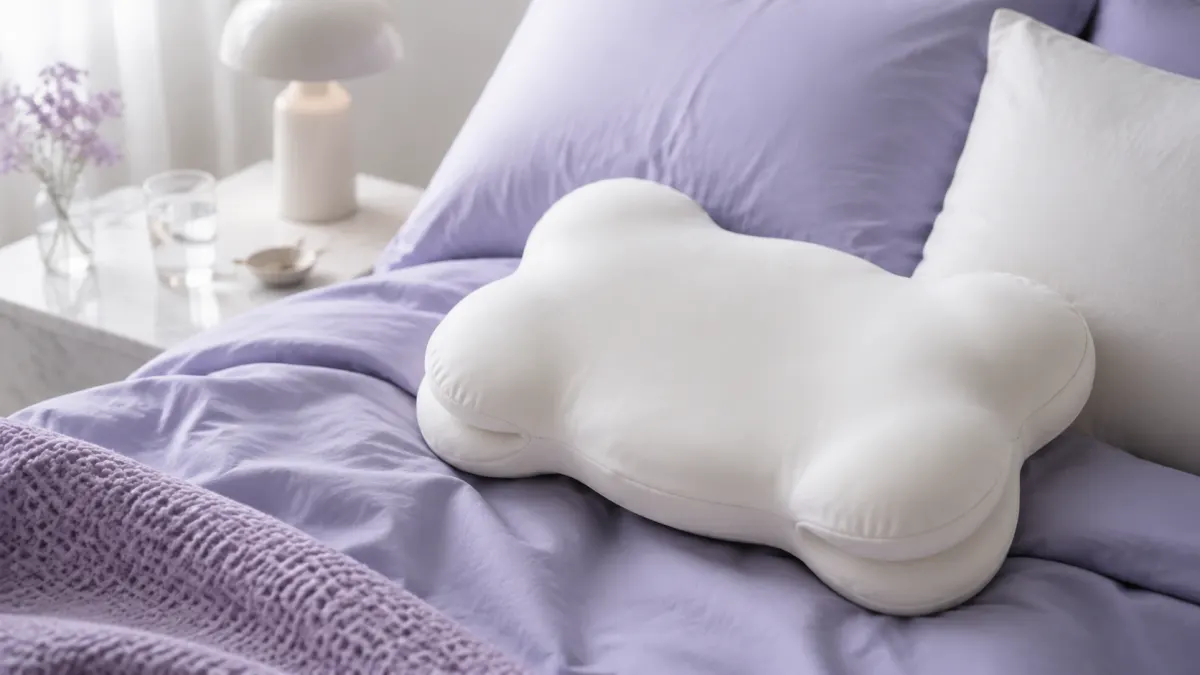
Lumuwala Cloud Pillow is a fit test for the physical side of sleep, not a sleep-stage treatment. The 6 inch medium-firm profile is aimed at sleepers who need stable support through side, back, and combination positions. The gel-infused foam and breathable cover are there for heat and surface comfort, which matter most when a warm pillow keeps waking you up.
That is the honest promise: fewer pillow problems for the sleepers it fits. If your night is being broken by snoring, insomnia, pain that keeps escalating, suspected sleep apnea, or allergy symptoms, the pillow may still matter, but it should not become the whole explanation. Fix the setup where it is obviously wrong, and take medical patterns seriously when they show up.
Where Cloud Pillow does and does not fit
Good fit
Lumuwala fits when the shopper wants one Cloud Pillow to test for comfort, support, heat, and care instead of building a complicated pillow stack.
Not the fit
Lumuwala is not the right fit for every sleep stages and pillow choice shopper. Do not buy it as a substitute for medical care, as a rigid prescription contour, or as a promise that a pillow alone can fix the room, mattress, or health factors behind poor sleep.
Questions shoppers ask
What is the quick answer for sleep stages and pillow choice?
Focus on feel, support, heat, care, and trial risk. The right pillow should solve that main job while keeping height, heat, care, and return risk in balance.
Where does Lumuwala Cloud Pillow fit in the 4 stages of sleep, and what your pillow has to do with each?
It fits when you want a soft support pillow to test at home with the current policy details in view and you are not looking for a rigid medical contour.
How should I test a new pillow?
Use your normal pillowcase, keep bedding stable, and track heat, height, turns, and morning comfort for several nights before deciding.
How many nights should I test the pillow?
Use several normal nights, not one nap or one showroom squeeze. Keep the same pillowcase, mattress, and bedding so the pillow is the main variable.
What should I write down during the test?
Track heat timing, pillow flips, folds, stacking, pressure at the jaw or ear, shoulder load, neck angle, and morning comfort.
Is a higher pillow always better?
No. Side sleepers often need more loft than stomach sleepers, but too much height can tilt the neck upward or push a back sleeper's chin down.
When should I stop self-testing?
Stop and get medical guidance if symptoms are persistent, worsening, nerve-like, tied to injury, or include weakness, numbness, dizziness, or breathing concerns.
What makes an article trustworthy for pillow shopping?
Trust pages that separate fit guidance from medical claims, cite real sources, disclose evidence limits, and avoid invented review counts, ratings, or lab measurements.
Sources
- Fuller PM, Gooley JJ, Saper CB. Neurobiology of the sleep-wake cycle. PubMed PMID: 17107938.
- Le Bon O. Relationships between REM and NREM in the NREM-REM sleep cycle. PubMed PMID: 32179430.
- Okamoto-Mizuno K, Mizuno K. Effects of thermal environment on sleep and circadian rhythm. PubMed PMID: 22738673.
- Lei F, Ren W, Zhang Y, et al. Effects of pillow designs on neck pain, sleep quality and spinal alignment. PubMed PMID: 33895703.