Sleep position guide
Best Pillow for Petite Back Sleepers
Petite back sleepers usually need less pillow height than broad-shouldered side sleepers. The right pillow keeps the chin neutral without flattening the neck.
Quick answer
For pillow for petite back sleepers, the useful answer is to solve medium loft, chin angle, and support under the neck without creating a worse tradeoff. Best fit: back or back/side sleepers who want a medium support target without a tall wedge feeling. Lumuwala Cloud Pillow is worth considering when you want a plush support feel, cooler sleep surface, and a current-policy home trial. Skip it if you need an ultra-firm contour pillow, an extremely low pillow, or a medical recommendation rather than a comfort trial.
Founder and primary Lumuwala byline
Edited by Anya for editorial content editor
Buying brief
Decide before you shop.
Best fit
Best fit: back or back/side sleepers who want a medium support target without a tall wedge feeling.
Skip if
Skip it if you need an ultra-firm contour pillow, an extremely low pillow, or a medical recommendation rather than a comfort trial.
Primary job
Name the job first: medium loft, chin angle, and support under the neck.
Sleep position
Side, back, stomach, and combination sleepers should not buy from the same checklist.
Heat and care
A pillow has to feel good after hours and be realistic to maintain.
Trial risk
Use the policy as part of the buying decision, not an afterthought.
Try the Lumuwala fit
Cloud Pillow is the product this guide points back to.
Lumuwala fits when the shopper wants one Cloud Pillow to test for comfort, support, heat, and care instead of building a complicated pillow stack.
Try Cloud Pillow for back/side supportCluster links
Keep reading in this sleep path.
Petite back sleepers need a smaller height target
Back sleeping is often described as the easy position for pillows: choose medium loft, support the neck curve, avoid pushing the chin forward. That advice is a start, but it is too broad for petite sleepers. A smaller frame usually means less shoulder mass, less upper-back bulk, and a different head-to-mattress relationship. A pillow that feels medium to a tall sleeper can feel tall to someone petite.
The goal is not a dramatic cradle. It is a neutral line: forehead, chin, and chest should not feel forced into a tuck, and the neck should not feel unsupported. If the pillow pushes the chin toward the chest, it is too high or too firm for that setup. If the neck feels hollow and the head tips back, it is too low or too flat. Petite back sleepers often live in the narrow middle.
What pillow-height research can tell us
A biomechanical study on pillow height found that pillow height changed cranio-cervical pressure and cervical spine alignment. A systematic review of pillow designs found effects on neck pain, waking symptoms, disability, satisfaction, and alignment outcomes, while sleep-quality effects were less direct. The research does not hand us a petite-sleeper formula, but it supports the idea that height is not cosmetic.
Pillow-use research also links pillow behavior with cervical stiffness, headache, scapular and arm pain, and sleep quality measures. That does not mean a pillow is the cause of every morning symptom. It means pillow setup is a reasonable variable to test when back sleepers wake with neck strain. For petite sleepers, the test should start lower than the usual side-sleeper advice.
Try the Lumuwala fit
Cloud Pillow is the product this guide points back to.
Lumuwala fits when the shopper wants one Cloud Pillow to test for comfort, support, heat, and care instead of building a complicated pillow stack.
Use the guide, then test the fitThe chin angle is the fastest check
Lie on your back with the pillow in your normal position. If your chin feels pushed toward your chest, the pillow is probably too high. If your mouth falls open because the head tips back, the pillow may be too low or the neck support may be missing. If your face points straight up and the neck feels quietly held, you are closer.
Use your body before a measuring tape. Petite back sleepers can get misled by inch numbers because the mattress changes the distance. A soft mattress lets the upper back sink, which can make a pillow feel taller. A firm mattress holds the upper back higher, which can make the same pillow feel lower. The pillow height is always being judged against the bed.
- Chin tucked: try less height or a softer neck cradle.
- Head tipped back: try gentle neck support without raising the whole head.
- Jaw or ear pressure: suspect surface firmness before you blame height.
- Neck feels hollow: suspect a flat pillow with no cervical support.
Support is not the same as height
Petite sleepers often hear that they need a thin pillow. Sometimes that is true. But thin and supportive are different. A flat pillow can let the neck hang without support. A tall pillow can support the neck but force the chin down. The better target is low-to-medium height with enough shape under the neck curve.
This is where a contour can help some people and annoy others. A pronounced ridge may feel too aggressive on a smaller frame. A soft adjustable fill may feel calmer but drift overnight. A foam pillow can hold shape, but only if the height fits. The pillow has to solve the neck curve without turning into a wedge under the whole head.
Back-and-side sleepers are harder
Many petite sleepers do not stay on their back. They start there, then roll to one side. That creates a tradeoff. The pillow that is low enough for back sleeping may be too low for side sleeping. The pillow that fills the side-sleeper shoulder gap may be too tall on the back. Combination sleeping is where the perfect pillow often does not exist.
Pick the position that causes the biggest problem. If neck strain shows up after back sleeping, keep the pillow lower and add side support another way, such as hugging a small blanket or changing mattress surface. If side sleeping creates shoulder pressure and the back portion is fine, a slightly fuller pillow may be worth the tradeoff. Do not let one position ruin the whole night.
A five-night petite back-sleeper test
Start with your current pillow. For five nights, track chin angle, neck hollow, jaw pressure, heat, and whether you wake on your back or side. Keep the pillowcase and blanket steady. If the chin feels tucked, remove height before buying a new pillow: use a thinner pillow, remove fill if adjustable, or try the flatter edge. If the neck feels unsupported, add a small towel under the neck rather than raising the whole head.
The towel test is useful because it separates neck support from head height. If a little support under the neck helps without lifting the head, you need shape more than loft. If it makes the chin feel cramped, the setup is already too high. Test gently. A pillow experiment should not create soreness to prove a point.
Do not judge from one morning. Back sleepers can be sensitive to small changes, and the first night on a lower pillow may feel unfamiliar. Look for the pattern after several normal nights. Better means less neck checking, less chin tuck, and no new jaw or upper-back pressure.
What to look for
Look for a lower or medium-low profile, gentle neck support, a surface that does not push the head forward, and a return policy. Adjustable fill is useful if you are between sizes. Foam can work if the height is right. Shredded fill can work if it does not migrate away from the neck. Down-like fill can feel soft but may flatten too far by morning.
Read the product page for actual height and fit guidance. A pillow that only says supportive is not saying much. A good page should tell you who may find it too tall, too low, too firm, or too soft. Petite back sleepers need that honesty because they are often outside the default body that pillow copy imagines.
Where Lumuwala fits
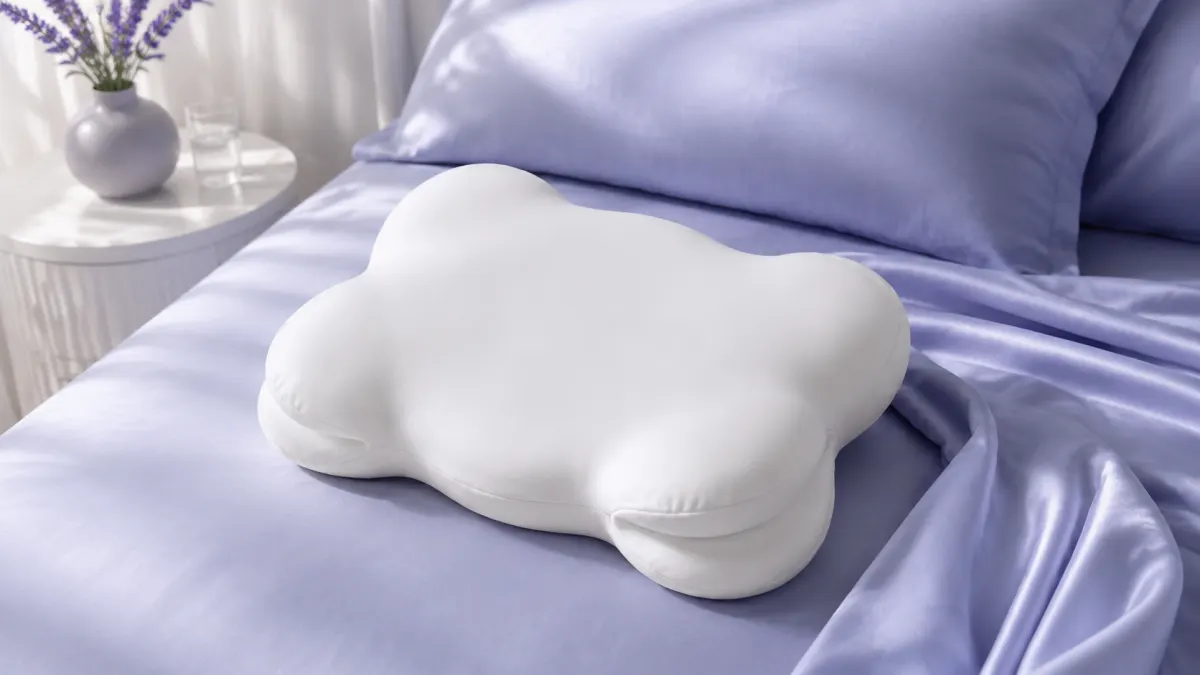
Lumuwala Cloud Pillow is a better candidate for petite sleepers who rotate between back and side or who like a fuller medium-firm support. The 6 inch profile may be too tall for a pure petite back sleeper on a soft mattress. That should be said plainly. If your main issue is chin tuck on medium pillows, Lumuwala may not be the first test.
It makes more sense if your current pillow collapses, sleeps warm, or fails when you roll to your side. The gel-infused foam and breathable cover address heat, and the stable shape can help combination sleepers avoid folding the pillow all night. Use the trial window carefully: on-back chin angle first, side-sleeping shoulder gap second, heat third. If all three are acceptable, the fit is real.
If the back-sleeping check fails on night one, do not force the trial for weeks. A too-tall pillow usually announces itself quickly in this use case: chin down, throat crowded, upper back tense, or a need to slide the pillow away from the shoulders. If the first night is unfamiliar but not strained, keep testing. If it is clearly strained, the height mismatch is probably real.
Petite sleepers should also test the pillow after it warms up. Some foam feels lower after body heat softens the surface, while some pillows stay exactly where they started. The right fit should still keep the chin neutral at 3am, after the lights-out check has passed. That is where a few ordinary nights beat a showroom squeeze.
If the pillow almost works, change the case before you abandon the trial. A thick quilted protector can make a borderline pillow feel taller. A slick case can let the head drift. A thinner breathable case can lower the feel slightly without changing the core. Small changes matter more when the sleeper is petite.
Where Cloud Pillow does and does not fit
Good fit
Lumuwala fits when the shopper wants one Cloud Pillow to test for comfort, support, heat, and care instead of building a complicated pillow stack.
Not the fit
Lumuwala is not the right fit for every pillow for petite back sleepers shopper. Do not buy it as a substitute for medical care, as a rigid prescription contour, or as a promise that a pillow alone can fix the room, mattress, or health factors behind poor sleep.
Questions shoppers ask
What is the quick answer for pillow for petite back sleepers?
Focus on medium loft, chin angle, and support under the neck. The right pillow should solve that main job while keeping height, heat, care, and return risk in balance.
Where does Lumuwala Cloud Pillow fit in pillow for petite back sleepers?
It fits when you want a soft support pillow to test at home with the current policy details in view and you are not looking for a rigid medical contour.
How should I test a new pillow?
Use your normal pillowcase, keep bedding stable, and track heat, height, turns, and morning comfort for several nights before deciding.
How many nights should I test the pillow?
Use several normal nights, not one nap or one showroom squeeze. Keep the same pillowcase, mattress, and bedding so the pillow is the main variable.
What should I write down during the test?
Track heat timing, pillow flips, folds, stacking, pressure at the jaw or ear, shoulder load, neck angle, and morning comfort.
Is a higher pillow always better?
No. Side sleepers often need more loft than stomach sleepers, but too much height can tilt the neck upward or push a back sleeper's chin down.
When should I stop self-testing?
Stop and get medical guidance if symptoms are persistent, worsening, nerve-like, tied to injury, or include weakness, numbness, dizziness, or breathing concerns.
What makes an article trustworthy for pillow shopping?
Trust pages that separate fit guidance from medical claims, cite real sources, disclose evidence limits, and avoid invented review counts, ratings, or lab measurements.
Sources
- Ren S, Wong DW, Yang H, et al. Effect of pillow height on the biomechanics of the head-neck complex. PubMed PMID: 27635354.
- Lei F, Ren W, Zhang Y, et al. Effects of pillow designs on neck pain, sleep quality and spinal alignment. PubMed PMID: 33895703.
- Gordon SJ, Grimmer-Somers KA, Trott PH. Pillow use and cervical symptoms. PubMed PMID: 21197317.
- Gordon S, Grimmer-Somers K, Trott P. Time to stabilisation of the cervical spine in side lying. PubMed PMID: 23875624.