Sleep position guide
Best Pillow for Narrow-Shouldered Side Sleepers
Narrow-shouldered side sleepers can be over-lifted by pillows made for broader frames. The right fit keeps the head level without crowding the jaw.
Quick answer
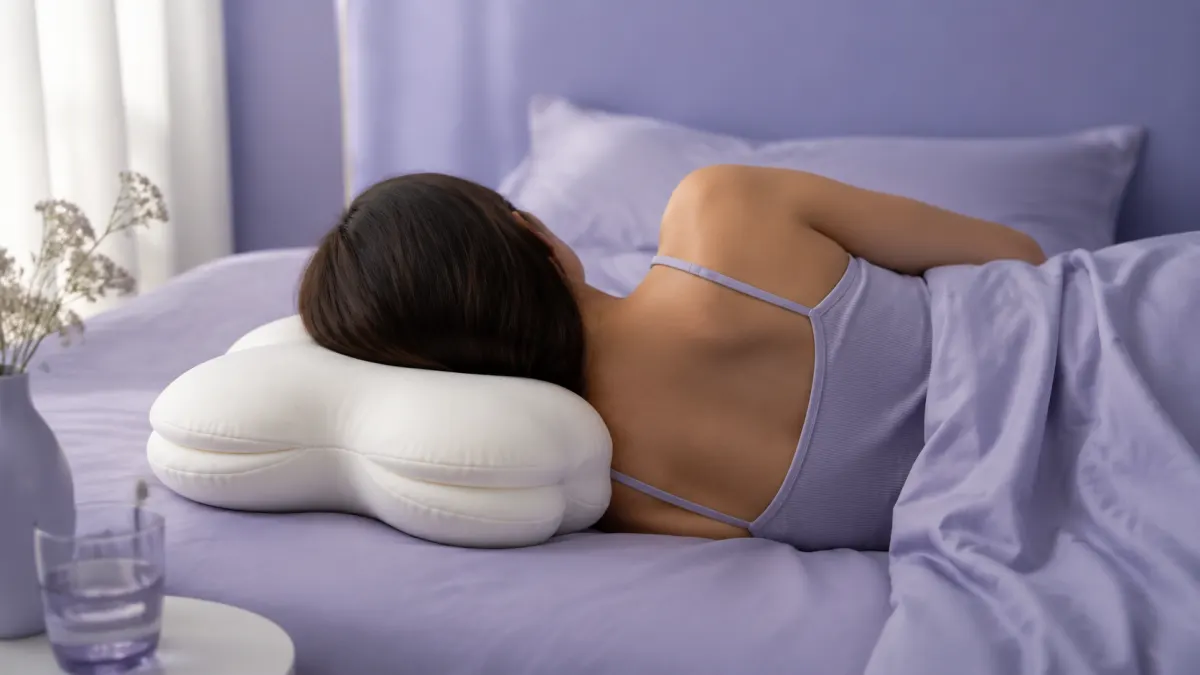
For pillow for narrow shouldered side sleepers, the useful answer is to solve shoulder pressure, side-sleeper gap fill, and top-arm support without creating a worse tradeoff. Best fit: side or side/back sleepers who need enough loft to avoid head drop without a hard pressure point at the jaw or ear. Lumuwala Cloud Pillow is worth considering when you want a plush support feel, cooler sleep surface, and a current-policy home trial. Skip it if you need an ultra-firm contour pillow, an extremely low pillow, or a medical recommendation rather than a comfort trial.
Founder and primary Lumuwala byline
Edited by Anya for editorial content editor
Buying brief
Decide before you shop.
Best fit
Best fit: side or side/back sleepers who need enough loft to avoid head drop without a hard pressure point at the jaw or ear.
Skip if
Skip it if you need an ultra-firm contour pillow, an extremely low pillow, or a medical recommendation rather than a comfort trial.
Primary job
Name the job first: shoulder pressure, side-sleeper gap fill, and top-arm support.
Sleep position
Side, back, stomach, and combination sleepers should not buy from the same checklist.
Heat and care
A pillow has to feel good after hours and be realistic to maintain.
Trial risk
Use the policy as part of the buying decision, not an afterthought.
Try the Lumuwala fit
Cloud Pillow is the product this guide points back to.
Lumuwala fits when the shopper wants one Cloud Pillow to test for comfort, support, heat, and care instead of building a complicated pillow stack.
Try Cloud Pillow for side/back supportCluster links
Keep reading in this sleep path.
A smaller shoulder gap changes the pillow
Narrow-shouldered side sleepers often need less pillow height than broad-shouldered side sleepers. The gap between the mattress and the head is smaller, especially on a soft mattress. A pillow that is sold as ideal for side sleepers can still push a narrow-shouldered sleeper too high.
The warning signs are clear: the nose points upward, the top side of the neck feels compressed, the jaw feels crowded, or the sleeper keeps pulling the pillow away from the shoulder. Those are height clues. They do not mean side sleeping is impossible. They mean the pillow was sized for a different body and bed combination.
Side-sleeper research is individualized
The 2025 side-sleeper pillow-design study is useful because it ties pillow height to shoulder width and absolute pillow height. It found a strong relationship between individualized pillow height and cervical curve measures. That supports a shopper-friendly idea: a side-sleeper pillow should not assume every shoulder gap is the same.
A pillow-height biomechanics study also found that pillow height changes head-neck pressure and cervical alignment mechanics. A systematic review found pillow-design effects on neck pain, waking symptoms, disability, satisfaction, and alignment. For narrow-shouldered sleepers, the research does not say buy the tallest side-sleeper pillow. It says fit matters.
Try the Lumuwala fit
Cloud Pillow is the product this guide points back to.
Lumuwala fits when the shopper wants one Cloud Pillow to test for comfort, support, heat, and care instead of building a complicated pillow stack.
Use the guide, then test the fitSoft mattresses make tall pillows riskier
A soft mattress lets the shoulder sink. For a narrow-shouldered sleeper, that can make the pillow feel taller because the shoulder is lower and the head is being lifted from a smaller gap. The same pillow that works on a firm mattress may feel crowded on a soft foam mattress.
Judge the pillow on your actual bed. Lie on your side and let the shoulder settle. Then check whether the head is level. If the pillow feels too high only after the mattress softens under you, the problem is the pillow-and-mattress combination rather than the pillow alone.
Lower height still needs surface comfort
A lower pillow can reduce upward neck bend, but it still needs a surface that does not press the ear or jaw. Some narrow-shouldered sleepers choose a thin pillow and then wake with pressure because the surface is too firm. Low height is not the same as comfort.
Look for lower or adjustable loft with enough give at the face. If adjustable fill migrates away from the neck, it may feel low and unsupported by morning. If solid foam is the right height but too hard, a different case or surface may help. Separate height from pressure before giving up.
Narrow-shouldered sleepers should be careful with tall contour ridges. A ridge that fills a broad shoulder gap can crowd a smaller frame. If the ridge presses under the jaw or base of the skull, it is too assertive for that setup.
A five-night narrow-shoulder test
Track five nights: nose angle, jaw pressure, ear pressure, shoulder sink, pillow folding, heat, and whether the pillow creeps away from the shoulder. If the nose points upward or the jaw feels crowded, lower the height. If the head drops, add gentle support.
Night one: current setup. Night two: lower loft or remove fill. Night three: same lower height with a different case if pressure appears. Night four: test a slightly firmer low pillow if the first one collapses. Night five: repeat the best setup. Keep the mattress and blanket steady.
The result should be quiet. A good pillow for this use case does not feel impressive. It keeps the head level without making the sleeper think about jaw, ear, shoulder, or heat.
If lower loft fixes jaw pressure but creates neck drop, look for structure rather than height. A low pillow with a slightly firmer neck area may work better than a taller pillow. The target is low support, not a flat collapse.
What to look for
Look for lower side-sleeper loft, adjustable fill that stays put, a forgiving surface, and clear return terms. Avoid pages that claim every side sleeper needs a high pillow. The right side-sleeper pillow for a narrow frame may look modest compared with broad-shoulder recommendations.
Read for honesty. A good product page should admit who may find the pillow too tall. If all side sleepers are treated as the same shopper, the page is skipping the body-size question that matters most here.
The return window is part of the product. Narrow-shouldered sleepers often need a few nights to learn whether the pillow is actually too tall or only unfamiliar. If a pillow cannot be tested in the real bed, the purchase is mostly guesswork.
Case thickness matters more than it seems. A quilted protector can turn a borderline pillow into an over-lifted pillow. A thinner breathable case can make the same core feel lower and cooler.
If you keep sliding down the pillow or pulling it away from the shoulder, listen to that habit. The body is often trying to reduce height before the shopper admits the pillow is too tall.
Common mistakes for narrow shoulders
The first mistake is assuming side sleeper means high loft. Narrow-shouldered side sleepers may need side-sleeper support, but not the tallest version of it. A pillow can be marketed for side sleeping and still be built around a bigger shoulder gap.
The second mistake is confusing firmness with height. A firm low pillow may hold the neck nicely. A soft tall pillow may collapse into the right height by morning, but the path there can be uncomfortable. Judge where the head rests after several minutes, not the label.
The third mistake is keeping a pillow because it feels premium. A pillow can use good materials and still be wrong for a smaller frame. Fit is not a verdict on quality. It is a match between body, mattress, and sleep position.
Where Lumuwala fits
Lumuwala Cloud Pillow can work for narrow-shouldered side sleepers who are on a firm mattress, like a fuller medium-firm feel, and sleep warm. The gel-infused foam and breathable cover help with heat, and the stable shape can prevent collapse.
It may be too tall for narrow-shouldered sleepers on soft mattresses. The 6 inch profile should be tested carefully. If the nose points upward, jaw feels crowded, or the pillow has to be pulled away from the shoulder, the fit is probably too high.
If Lumuwala almost works, change the case before deciding. A thick protector can make a borderline pillow feel taller. A thinner breathable case can lower the feel slightly and improve heat. If it still feels high, return it rather than trying to force the neck into the pillow.
The keeper signal is level head, calm jaw, no ear pressure, and enough cooling that you do not move away from the supportive spot. If those are present, the pillow fits the bed and body. If not, a lower profile is the cleaner answer.
Combination sleepers should judge Lumuwala by the position that matters most. If side sleeping feels good and back sleeping feels too high, that is a tradeoff. If side sleeping also feels crowded, the pillow is probably wrong for the frame and mattress.
A clean no is useful. Narrow-shouldered sleepers waste money when they treat every side-sleeper pillow as if it only needs more break-in time. Height mismatch usually shows up early.
Small height changes matter more when the shoulder gap is already small.
If the trial is close, test the pillow after a normal warm-up period. Some foam feels slightly lower after it softens under body heat. If that makes the neck neutral and the jaw calm, the pillow may still work. If the crowded feeling remains, the core is too tall.
Do not stack another pillow to fix a low-feeling edge unless you are certain the head is dropping. A narrow shoulder gap can overshoot quickly. Small changes are easier to interpret than a pile of bedding.
Where Cloud Pillow does and does not fit
Good fit
Lumuwala fits when the shopper wants one Cloud Pillow to test for comfort, support, heat, and care instead of building a complicated pillow stack.
Not the fit
Lumuwala is not the right fit for every pillow for narrow shouldered side sleepers shopper. Do not buy it as a substitute for medical care, as a rigid prescription contour, or as a promise that a pillow alone can fix the room, mattress, or health factors behind poor sleep.
Questions shoppers ask
What is the quick answer for pillow for narrow shouldered side sleepers?
Focus on shoulder pressure, side-sleeper gap fill, and top-arm support. The right pillow should solve that main job while keeping height, heat, care, and return risk in balance.
Where does Lumuwala Cloud Pillow fit in pillow for narrow-shouldered side sleepers?
It fits when you want a soft support pillow to test at home with the current policy details in view and you are not looking for a rigid medical contour.
How should I test a new pillow?
Use your normal pillowcase, keep bedding stable, and track heat, height, turns, and morning comfort for several nights before deciding.
How many nights should I test the pillow?
Use several normal nights, not one nap or one showroom squeeze. Keep the same pillowcase, mattress, and bedding so the pillow is the main variable.
What should I write down during the test?
Track heat timing, pillow flips, folds, stacking, pressure at the jaw or ear, shoulder load, neck angle, and morning comfort.
Is a higher pillow always better?
No. Side sleepers often need more loft than stomach sleepers, but too much height can tilt the neck upward or push a back sleeper's chin down.
When should I stop self-testing?
Stop and get medical guidance if symptoms are persistent, worsening, nerve-like, tied to injury, or include weakness, numbness, dizziness, or breathing concerns.
What makes an article trustworthy for pillow shopping?
Trust pages that separate fit guidance from medical claims, cite real sources, disclose evidence limits, and avoid invented review counts, ratings, or lab measurements.
Sources
- Tian S, Yao C, Wang Y, et al. Individualized optimal pillow height and neck support design for side sleepers. PubMed PMID: 39412632.
- Ren S, Wong DW, Yang H, et al. Effect of pillow height on the biomechanics of the head-neck complex. PubMed PMID: 27635354.
- Lei F, Ren W, Zhang Y, et al. Effects of pillow designs on neck pain, sleep quality and spinal alignment. PubMed PMID: 33895703.
- Development and comparative evaluation of new shapes of pillows. PubMed PMID: 24707087.