Sleep pain guide
Back Sleeper Pillow Guide for Tension Headaches
A pillow cannot diagnose tension headaches, but back sleepers can test whether chin angle, neck support, and pillow pressure are adding morning strain.
Quick answer
For pillow for back sleepers with tension headaches, the useful answer is to solve medium loft, chin angle, and support under the neck without creating a worse tradeoff. Best fit: back or back/side sleepers who want a medium support target without a tall wedge feeling. Lumuwala Cloud Pillow is worth considering when you want a plush support feel, cooler sleep surface, and a current-policy home trial. Skip the self-test and talk to a clinician if symptoms are persistent, worsening, one-sided, nerve-like, or linked to injury.
Founder and primary Lumuwala byline
Edited by Anya for editorial content editor
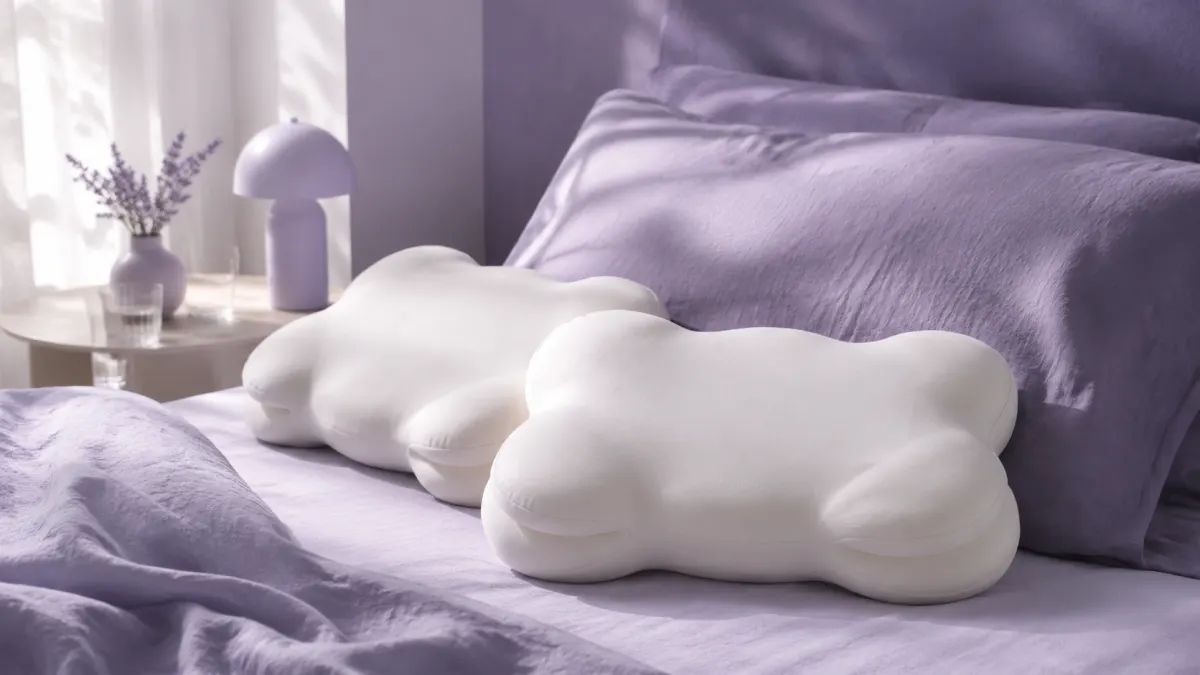
Buying brief
Decide before you shop.
Best fit
Best fit: back or back/side sleepers who want a medium support target without a tall wedge feeling.
Skip if
Skip the self-test and talk to a clinician if symptoms are persistent, worsening, one-sided, nerve-like, or linked to injury.
Pattern
Map the complaint to medium loft, chin angle, and support under the neck; do not treat the pillow as a diagnosis.
Position fit
Check side, back, or stomach height separately because each changes neck angle.
Pressure points
Notice jaw, ear, shoulder, skull-base, and arm pressure after several hours.
Care boundary
Persistent or worsening symptoms deserve medical advice before product testing.
Try the Lumuwala fit
Cloud Pillow is the product this guide points back to.
Lumuwala fits when the issue looks like a comfort setup problem: pillow collapse, unstable height, heat-driven turning, or pressure from an old pillow. It should be judged as a comfort product, not a treatment.
Try Cloud Pillow for back/side supportCluster links
Keep reading in this sleep path.
Put headache safety before pillow testing
A tension headache label should not be guessed from a pillow purchase. Sudden severe headache, neurologic symptoms, fever, head trauma, vision changes, new headache pattern, jaw or chest symptoms, or a headache that keeps worsening needs medical advice. A pillow test is for mild, familiar morning strain, not diagnosis.
Back sleepers can still learn something useful from the pillow. A tall pillow can push the chin down. A low pillow can leave the neck hollow. A hard ridge can irritate the skull base. Those setup issues can make a sensitive head and neck feel worse by morning.
Keep the question narrow: did the pillow reduce neck strain and morning pressure, or did it add to the pattern? If the headache pattern stays the same after a clean pillow test, the next step is not a more dramatic pillow. It is a broader look at care, stress, desk load, vision, jaw tension, and sleep quality.
What the sources can support
A Journal of Pain Research study on pillow use followed cervical stiffness, headache, and scapular or arm pain. A 2024 randomized trial studied cervical stabilization training in patients with headache, and a case series looked at clinical Pilates exercises for tension-type headaches. A systematic review on pillow designs links pillow design with neck pain, waking symptoms, sleep quality, and spinal alignment.
Those sources do not make a pillow a headache treatment. They do support a neck-and-sleep setup view. Headache, neck stiffness, upper-back tension, and pillow fit can show up together, but the pillow is only one variable.
For back sleepers, that variable is mainly angle. The pillow should let the head rest without forcing the chin down, stretching the throat, or pressing hard into the skull base. If it cannot do that, the pillow may be adding strain even if the headache has other causes.
The sources also argue against dramatic claims. A pillow page should not promise fewer headaches. It can promise a careful way to test whether the sleep surface is adding neck load, skull-base pressure, or restless movement.
Try the Lumuwala fit
Cloud Pillow is the product this guide points back to.
Lumuwala fits when the issue looks like a comfort setup problem: pillow collapse, unstable height, heat-driven turning, or pressure from an old pillow. It should be judged as a comfort product, not a treatment.
Use the guide, then test the fitBack sleepers should read chin angle and skull-base pressure
The first check is chin angle. Lie on the back, let the shoulders settle, and notice whether the chin moves toward the chest. A pillow can feel supportive while awake and still hold the neck in flexion for hours.
The second check is skull-base pressure. If the pillow ridge or edge presses into the back of the head, the sleeper may wake with a band-like pressure feeling or stiffness at the top of the neck. That does not prove the pillow caused a headache, but it is worth testing.
The third check is throat stretch. If the pillow is too low, the head can tip back and the front of the neck can feel open or strained. Some sleepers respond by sliding down the pillow or tucking a hand under the neck. Those habits change the test.
Use small changes first. Remove a thick protector. Try a flatter case. Add a thin towel under the neck instead of stacking a second pillow. The goal is direction, not a perfect final answer in one night.
A useful back-sleeper pillow feels quiet. The chin is neutral, the skull base is not loaded, and the neck does not need a rescue fold. That calm setup makes the headache verdict cleaner.
Separate the day load from the pillow
Tension-type headaches can be tied to stress, posture, muscle sensitivity, sleep disruption, jaw habits, and many other factors. A long screen day can make any pillow look guilty. Write down the day before judging the night.
If the head and neck already feel tight at bedtime, the pillow is entering a loaded system. If the head feels calm at bedtime and pressure appears only after back sleeping, the pillow deserves more attention.
Test after a normal workday and after a lighter day. If the pillow helps only after the lighter day, daytime load is probably louder. If it helps across both, the night setup may be removing a real strain.
Do not test while propped high reading or scrolling. That can preload the neck and jaw before sleep. For a back-sleeper headache test, the pillow should be judged in the final sleep position.
Also check jaw and shoulder tension at bedtime. A clenched jaw or shrugged shoulders can make the pillow look wrong before the head even settles. Take ten seconds to let the shoulders drop, then score the pillow angle.
Morning timing is useful. Pressure that is present in the first minute after waking points toward the overnight setup. Pressure that appears after the first hour of work may be less about the pillow and more about the day restarting the pattern.
Keep caffeine, alcohol, training, and bedtime routine steady when possible. Headache patterns are noisy. The cleaner the week, the more useful the pillow verdict becomes.
A seven-night headache-aware pillow test
Use seven nights only for mild, familiar symptoms. Record bedtime head tension, sleep position, chin tuck, skull-base pressure, neck stiffness, heat, and morning headache score. The note should be short enough to keep doing.
Nights one and two use the current setup. Night three lowers the stack if chin tuck is obvious. Night four adds gentle neck fill if the neck feels hollow. Night five changes only heat variables if warmth is causing movement.
Nights six and seven repeat the best setup. Do not add a new stretching routine, massage tool, eye exam, pillow, and mattress change in the same week if the goal is to judge the pillow.
A helpful result is less skull-base pressure, less morning neck stiffness, fewer pillow folds, and no worse headache pattern. The pillow does not have to erase every headache to be the right sleep setup.
Stop the test if the headache changes character, worsens sharply, or brings symptoms outside the usual pattern. That is no longer a pillow experiment.
If one small height change helps, hold it for at least two nights. A single better morning can come from sleep length, stress, or luck. Repeatability is what makes the pillow verdict worth trusting.
If lower height helps the headache but leaves the neck hollow, the answer may be neck fill rather than a thinner pillow. If neck fill helps but the skull base gets sore, the support may be too hard or too narrow. Name the tradeoff.
Use repeatability as the final filter. One good morning can be random. Two or three similar mornings after ordinary days carry more weight.
Common mistakes
The first mistake is treating tension headaches as a pillow diagnosis. The pillow is only a setup variable.
The second mistake is choosing the highest contour because the headache feels serious. More height can mean more chin tuck.
The third mistake is ignoring skull-base pressure. A pillow can be the right height and still press in the wrong spot.
The fourth mistake is changing the entire routine at once. Headache testing needs fewer variables, not more.
The fifth mistake is judging from one night. Headaches vary with stress, food, screen time, sleep length, and hormones. Repeat the setup.
The sixth mistake is ignoring heat. A warm pillow can make the sleeper leave a good position and wake in a worse angle.
The seventh mistake is keeping a pillow because it feels corrective. Back-sleeping fit is quiet angle and low pressure, not a dramatic shape.
The eighth mistake is treating a partial improvement as a cure. Less neck pressure is useful, but headache care may still need other work outside bedding, especially when symptoms change or intensify at night unexpectedly.
Where Lumuwala fits
Lumuwala Cloud Pillow can work for back sleepers with mild, familiar tension-headache patterns when the current pillow collapses, traps heat, or leaves the neck unsupported. The medium-firm 6 inch profile gives a stable shape, and the breathable cover can reduce heat-driven movement.
It may be too tall for strict low-loft back sleepers or petite sleepers on soft mattresses. The first Lumuwala check is chin angle. The second is skull-base pressure. If either fails clearly, do not force the fit.
If the neck feels filled without chin tuck and the surface stays quiet under the head, test several normal nights. Keep Lumuwala only if morning notes show less neck stiffness, less skull-base pressure, fewer rebuilds, and no worse headache pattern.
Combination sleepers should be strict here. If Lumuwala works on the back but feels too tall on the side, or works on the side but tucks the chin on the back, count which position owns most of the night. The main position should decide.
A partial win is still useful. Lumuwala may improve the back-sleeping setup while the headache pattern needs stress, vision, jaw, or medical attention. Keep those answers separate so the pillow is judged fairly.
Where Cloud Pillow does and does not fit
Good fit
Lumuwala fits when the issue looks like a comfort setup problem: pillow collapse, unstable height, heat-driven turning, or pressure from an old pillow. It should be judged as a comfort product, not a treatment.
Not the fit
Lumuwala is not the right fit for every pillow for back sleepers with tension headaches shopper. Do not buy it as a substitute for medical care, as a rigid prescription contour, or as a promise that a pillow alone can fix the room, mattress, or health factors behind poor sleep.
Questions shoppers ask
What is the quick answer for pillow for back sleepers with tension headaches?
Focus on medium loft, chin angle, and support under the neck. The right pillow should solve that main job while keeping height, heat, care, and return risk in balance.
Where does Lumuwala Cloud Pillow fit in pillow for back sleepers with tension headaches?
It fits when you want a soft support pillow to test at home with the current policy details in view and you are not looking for a rigid medical contour.
Can a pillow treat pain or numbness?
No. A pillow may reduce one comfort variable, such as height, pressure, or heat, but persistent or nerve-like symptoms should be discussed with a clinician.
How many nights should I test the pillow?
Use several normal nights, not one nap or one showroom squeeze. Keep the same pillowcase, mattress, and bedding so the pillow is the main variable.
What should I write down during the test?
Track heat timing, pillow flips, folds, stacking, pressure at the jaw or ear, shoulder load, neck angle, and morning comfort.
Is a higher pillow always better?
No. Side sleepers often need more loft than stomach sleepers, but too much height can tilt the neck upward or push a back sleeper's chin down.
When should I stop self-testing?
Stop and get medical guidance if symptoms are persistent, worsening, nerve-like, tied to injury, or include weakness, numbness, dizziness, or breathing concerns.
What makes an article trustworthy for pillow shopping?
Trust pages that separate fit guidance from medical claims, cite real sources, disclose evidence limits, and avoid invented review counts, ratings, or lab measurements.
Sources
- Gordon SJ, Grimmer-Somers KA, Trott PH. Pillow use and cervical stiffness, headache and scapular/arm pain. PubMed PMID: 21197317.
- Altmis Kacar H, Ozkul C, Baran A, et al. Cervical stabilization training in patients with headache. PubMed PMID: 37970662.
- Leite A, Matignon A, Marlot L, et al. Clinical Pilates exercises and tension-type headaches. PubMed PMID: 36829334.
- Chun-Yiu JP, Man-Ha ST, Chak-Lun AF. Effects of pillow designs on neck pain, waking symptoms, sleep quality and spinal alignment. PubMed PMID: 33895703.