Sleep science
Pillow for Back Sleepers with Snoring
A pillow can support back-sleeper comfort, but snoring can point to airway issues. Treat the pillow as position support, not treatment.
Quick answer
For pillow for back sleepers with snoring, the useful answer is to solve medium loft, chin angle, and support under the neck without creating a worse tradeoff. Best fit: back or back/side sleepers who want a medium support target without a tall wedge feeling. Lumuwala Cloud Pillow is worth considering when you want a plush support feel, cooler sleep surface, and a current-policy home trial. Skip it if you need an ultra-firm contour pillow, an extremely low pillow, or a medical recommendation rather than a comfort trial.
Founder and primary Lumuwala byline
Buying brief
Decide before you shop.
Best fit
Best fit: back or back/side sleepers who want a medium support target without a tall wedge feeling.
Skip if
Skip it if you need an ultra-firm contour pillow, an extremely low pillow, or a medical recommendation rather than a comfort trial.
Pattern
Map the complaint to medium loft, chin angle, and support under the neck; do not treat the pillow as a diagnosis.
Position fit
Check side, back, or stomach height separately because each changes neck angle.
Pressure points
Notice jaw, ear, shoulder, skull-base, and arm pressure after several hours.
Care boundary
Persistent or worsening symptoms deserve medical advice before product testing.
Try the Lumuwala fit
Cloud Pillow is the product this guide points back to.
Lumuwala fits when the issue looks like a comfort setup problem: pillow collapse, unstable height, heat-driven turning, or pressure from an old pillow. It should be judged as a comfort product, not a treatment.
Try Cloud Pillow for back/side supportCluster links
Keep reading in this sleep path.
Snoring needs a wider read than the pillow
Snoring can be harmless, annoying, or a sign of sleep-disordered breathing. Loud snoring, witnessed pauses, gasping, morning headaches, high blood pressure, daytime sleepiness, or suspected sleep apnea deserve medical evaluation. A pillow should not be used to self-treat those patterns.
That boundary still leaves room for pillow setup. Back sleeping can change airway mechanics for some people, and pillow height can change head and neck posture. A pillow may help a sleeper stay comfortable in a better position or avoid a chin-tucked posture. It should not be framed as a cure for snoring or obstructive sleep apnea.
Back sleeping can matter
A review of supine-position related obstructive sleep apnea describes supine-related OSA as a common phenotype and notes that airway obstruction is observed more often in the supine position, especially at the soft palate and epiglottis. That is medical territory, not pillow marketing. The important shopper takeaway is narrower: back position can be relevant when snoring or breathing symptoms show up.
Research on positional therapy for positional OSA has studied devices that reduce time spent on the back. A systematic review of vibrotactile positional therapy found reductions in apnea-hypopnea index and percentage of time spent supine in positional OSA patients. That is therapy research, not a pillow claim. It shows why position should be taken seriously and why suspected OSA belongs with a clinician.
Try the Lumuwala fit
Cloud Pillow is the product this guide points back to.
Lumuwala fits when the issue looks like a comfort setup problem: pillow collapse, unstable height, heat-driven turning, or pressure from an old pillow. It should be judged as a comfort product, not a treatment.
Use the guide, then test the fitPillow height can help or hurt posture
For back sleepers, too much pillow height can push the chin toward the chest. Too little can let the head tip back and leave the neck unsupported. Neither posture is automatically a snoring cause, but both can make sleep feel worse. A pillow should support the neck curve without forcing the head into an exaggerated angle.
The easiest check is the chin. Lie on your back. If the chin feels jammed down, reduce height. If the throat feels stretched and the neck is hollow, add gentle neck support without lifting the whole head too much. If snoring is the main concern, ask a partner what they notice across several nights instead of relying on one memory.
The pillow may need to support side sleeping too
Some back sleepers with snoring try to spend more time on their side. If that is the plan, the pillow has a harder job. A low back-sleeper pillow may be too low for side sleeping. A tall side-sleeper pillow may be too high on the back. The right answer depends on which position you are trying to make more comfortable.
A dedicated positional therapy device is not the same as a pillow. A pillow can make side sleeping more comfortable, but it usually cannot reliably keep someone off their back all night. If a clinician recommends positional therapy, follow that plan. If you are just testing comfort, choose a pillow that does not punish the position you are trying to use more often.
When the pillow test should stop
Stop treating this as a bedding issue if snoring is loud and regular, if anyone observes pauses in breathing, if you wake choking or gasping, or if daytime sleepiness is affecting driving, work, or mood. Morning headaches and high blood pressure also deserve attention. The pillow may still be uncomfortable, but it is not the main question anymore.
A pillow test is appropriate only for low-risk comfort clues: chin tucked, neck unsupported, waking with a sore neck, heat causing position changes, or side sleeping feeling too awkward to maintain. Keep those notes separate from health symptoms. Mixing them together is how a product page starts pretending to be care.
A seven-night back-sleeper test
Track seven nights because snoring varies with alcohol, congestion, sleep debt, allergies, room humidity, and body position. Use a simple note: back or side, chin tucked, neck hollow, partner noticed snoring, woke dry-mouthed, pillow folded, heat. If you use a snore app, treat it as a rough trend, not a diagnosis.
Change one variable. If the chin is tucked, lower the pillow. If the neck is hollow, add gentle neck support. If side sleeping is the goal, test whether the pillow fills the shoulder gap without creating jaw pressure. Do not add mouth tape, new supplements, a wedge, and a pillow at the same time. That creates noise, and some interventions are not low-risk for everyone.
If snoring improves but sleep feels worse, do not call it a win. If neck comfort improves but loud snoring continues, do not call it solved. The useful result is a clearer picture: pillow posture improved, side sleeping became easier, or the pattern looks medical enough to stop guessing.
What to look for
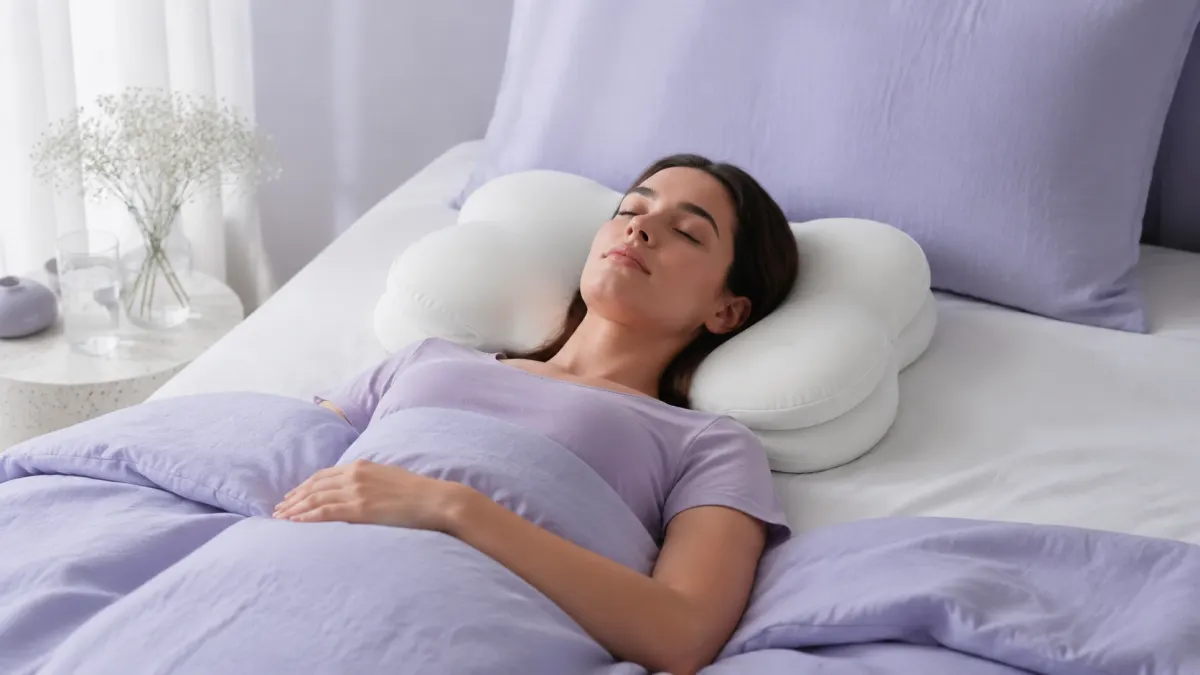
Look for a pillow that keeps the chin neutral, supports the neck curve, and stays comfortable if you roll to the side. Back sleepers often need less height than side sleepers. Combination sleepers may need a compromise. Cooling matters too because hot sleepers roll more, which can undo any position plan.
Be wary of pillows sold as anti-snore without clear clinical evidence and without medical boundaries. A better product page will say support, comfort, position, and trial. It will not promise to treat apnea or stop snoring for everyone. That honesty matters because snoring is a symptom, not a personality flaw or a simple bedding defect.
Where Lumuwala fits
Lumuwala Cloud Pillow can be a reasonable test for back sleepers who also roll to the side and need a stable medium-firm shape. The 6 inch profile may be too much for some pure back sleepers, especially petite sleepers or people on soft mattresses. For them, the first check is chin angle.
It is a better fit when the current pillow collapses, traps heat, or makes side sleeping uncomfortable. The gel-infused foam and breathable cover address heat, while the stable core can make back-to-side rotation less chaotic. Use it as a comfort and support test. If snoring is loud, persistent, or paired with breathing symptoms, the right next step is medical evaluation, not another pillow claim.
A good Lumuwala trial for this use case has two lanes. First, judge posture: chin neutral on the back, no hollow neck, and enough side support if you roll. Second, judge the snoring context without pretending to diagnose it: partner reports, dry mouth, wake-ups, and whether symptoms continue even when posture feels better. If posture improves and snoring remains concerning, the pillow has answered the comfort question and left the health question open.
That is still a useful result. Many sleepers blur comfort and breathing into one complaint because both happen at night. Separating them keeps the purchase honest. Keep the pillow only if it improves support without creating a new problem. Take the snoring pattern seriously if it points beyond bedding.
A wedge pillow is a separate decision. Elevating the torso can change reflux, breathing comfort, and neck angle, but it is not interchangeable with a normal pillow. Do not stack random pillows into a steep ramp and call it a test. If elevation is being considered because breathing symptoms are serious, that belongs in a clinical conversation.
For a normal pillow trial, keep the experiment modest. Try neutral chin angle first. Try side support second. Keep the room and alcohol pattern steady enough that one loud night does not get blamed on the pillow. The result should be a clearer setup, not a homemade treatment plan.
If the sleeper shares a bed, ask the other person for plain observations rather than verdicts. Quieter, louder, more gasping, fewer back-sleeping stretches, more side sleeping. Those notes help separate pillow comfort from the breathing question.
If nobody shares the bed, write down dry mouth, wake-ups, and morning fog instead.
Those are still rough clues, but they are better than guessing from memory after coffee.
Bring repeated concerning clues to a clinician.
Do not bury that signal under pillow optimism or product hope.
Where Cloud Pillow does and does not fit
Good fit
Lumuwala fits when the issue looks like a comfort setup problem: pillow collapse, unstable height, heat-driven turning, or pressure from an old pillow. It should be judged as a comfort product, not a treatment.
Not the fit
Lumuwala is not the right fit for every pillow for back sleepers with snoring shopper. Do not buy it as a substitute for medical care, as a rigid prescription contour, or as a promise that a pillow alone can fix the room, mattress, or health factors behind poor sleep.
Questions shoppers ask
What is the quick answer for pillow for back sleepers with snoring?
Focus on medium loft, chin angle, and support under the neck. The right pillow should solve that main job while keeping height, heat, care, and return risk in balance.
Where does Lumuwala Cloud Pillow fit in pillow for back sleepers with snoring?
It fits when you want a soft support pillow to test at home with the current policy details in view and you are not looking for a rigid medical contour.
Can a pillow treat pain or numbness?
No. A pillow may reduce one comfort variable, such as height, pressure, or heat, but persistent or nerve-like symptoms should be discussed with a clinician.
How many nights should I test the pillow?
Use several normal nights, not one nap or one showroom squeeze. Keep the same pillowcase, mattress, and bedding so the pillow is the main variable.
What should I write down during the test?
Track heat timing, pillow flips, folds, stacking, pressure at the jaw or ear, shoulder load, neck angle, and morning comfort.
Is a higher pillow always better?
No. Side sleepers often need more loft than stomach sleepers, but too much height can tilt the neck upward or push a back sleeper's chin down.
When should I stop self-testing?
Stop and get medical guidance if symptoms are persistent, worsening, nerve-like, tied to injury, or include weakness, numbness, dizziness, or breathing concerns.
What makes an article trustworthy for pillow shopping?
Trust pages that separate fit guidance from medical claims, cite real sources, disclose evidence limits, and avoid invented review counts, ratings, or lab measurements.
Sources
- Landry SA, Beatty C, Thomson LDJ, et al. Supine position related obstructive sleep apnea. PubMed PMID: 37722317.
- Vibrotactile positional therapy devices for positional obstructive sleep apnoea. PubMed PMID: 37344178.
- Jackson M, Collins A, Berlowitz D, et al. Sleep position modification for positional obstructive sleep apnea. PubMed PMID: 25771294.
- Permut I, Diaz-Abad M, Chatila W, et al. Positional therapy compared with CPAP in positional obstructive sleep apnea. PubMed PMID: 20572416.