Cooling pillow guide
Best Cooling Pillow for Hot Sleepers in Summer
Summer heat makes weak cooling claims obvious. The pillow has to manage surface heat, humidity, and support after the room warms up.
Quick answer
For cooling pillow for hot sleepers summer, the useful answer is to solve feel, support, heat, care, and trial risk without creating a worse tradeoff. Best fit: shoppers who want a soft, supportive Cloud Pillow feel while still checking height, heat, care, and trial fit. Lumuwala Cloud Pillow is worth considering when you want a plush support feel, cooler sleep surface, and a current-policy home trial. Skip it if you need an ultra-firm contour pillow, an extremely low pillow, or a medical recommendation rather than a comfort trial.
Founder and primary Lumuwala byline
Edited by Anya for editorial content editor
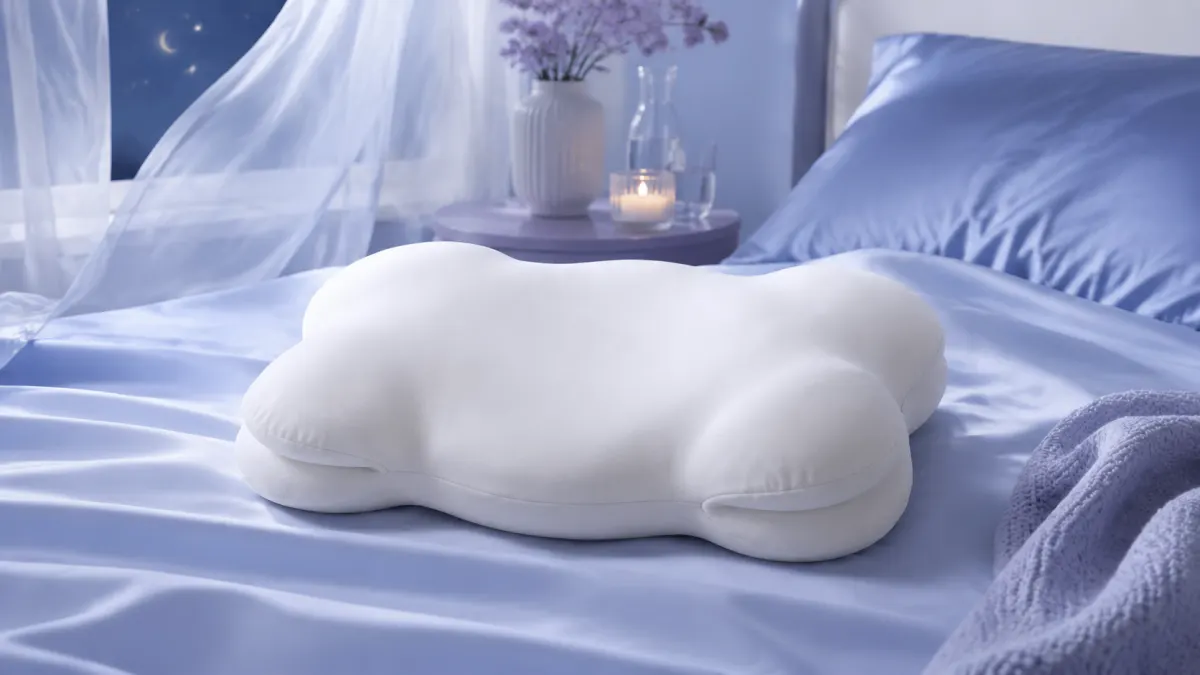
Buying brief
Decide before you shop.
Best fit
Best fit: shoppers who want a soft, supportive Cloud Pillow feel while still checking height, heat, care, and trial fit.
Skip if
Skip it if you need an ultra-firm contour pillow, an extremely low pillow, or a medical recommendation rather than a comfort trial.
Heat source
Decide whether the main problem is feel, support, heat, care, and trial risk.
Air and moisture path
Look for a breathable cover, lighter case, and less face-burying contact.
Height stability
A cooler pillow still fails if it leaves the head too low or too high.
Home test
Judge after several normal nights when the pillow has warmed up fully.
Try the Lumuwala fit
Cloud Pillow is the product this guide points back to.
Lumuwala fits the cooling pillow for hot sleepers summer search when the buyer wants cooling comfort tied to pillow height, not just a chilly first touch. It is strongest for shoppers who rotate between side and back sleep and want to test the heat story at home.
See if Cloud Pillow fits hot sleepersCluster links
Keep reading in this sleep path.
Summer exposes weak pillow design
A pillow that feels fine in February can feel stale in July. The room starts warmer, humidity is higher, the mattress holds more heat, and the pillow has less room to shed what your head and neck put into it. The cold-side flip still works for a minute, but summer makes the warmed-up state arrive faster.
That is why hot sleepers should judge a summer pillow by the second half of the night, not by the first touch. First-touch coolness is pleasant. It is not enough. A good summer pillow needs a cover that does not feel clammy, a core that does not trap warm air too quickly, and a height that keeps the face from sinking into one damp spot.
The practical question is simple: when the bedroom is warm, does the pillow keep you from waking up to flip, fold, or move away from heat? That is the job. It is smaller than a promise to make the bed cold, and it is much easier to test honestly.
What thermal sleep research says
Sleep-temperature research supports taking heat seriously, but it does not rank consumer pillows. Okamoto-Mizuno and Mizuno's review reports that real-life heat exposure can increase wakefulness and decrease slow-wave sleep and REM sleep. Humid heat adds thermal load. Bedding and clothing change the effect, which matters because the pillow is only one part of the bed climate.
Libert's review of thermal regulation during sleep gives the physiology side: sleep and temperature control are linked, and the relationship changes by stage. A pillow brand should not stretch that into a stage-improvement claim. The safer takeaway is that heat discomfort can become a real sleep disruptor, especially when the surface under the head holds warmth and moisture.
Try the Lumuwala fit
Cloud Pillow is the product this guide points back to.
Lumuwala fits the cooling pillow for hot sleepers summer search when the buyer wants cooling comfort tied to pillow height, not just a chilly first touch. It is strongest for shoppers who rotate between side and back sleep and want to test the heat story at home.
Test the cooling setup at homeSeparate the surface problem from the core problem
A summer pillow can fail in two different ways. The surface can feel warm or sticky almost immediately. That points to the pillowcase, cover fabric, surface coating, or hair and skin products sitting on the fabric. The core can fail later, after hours of contact. That points to heat storage, density, poor airflow, or a pillow that lets the face settle too deeply.
The fix depends on timing. If the first ten minutes feel bad, start with the case and cover. Use a clean breathable case, avoid heavy protectors, and check whether the cover can actually move moisture. If the pillow fails at 3am, look at airflow and height. Gel can help at first contact, but it needs a path for heat to leave after the gel and surrounding foam warm up.
- Warm in minutes: suspect pillowcase, cover, and surface material.
- Warm after hours: suspect dense core, humidity, low airflow, or face sink.
- Warm with neck strain: suspect a pillow that is too low, too high, or collapsing.
- Warm every night regardless of pillow: suspect room temperature, bedding weight, or humidity.
Humidity is the quiet summer problem
A room can be the same temperature and feel worse when humidity rises. Sweat does not evaporate as easily, fabric feels heavier, and the pillow surface can feel damp even when it is not visibly wet. This is why summer cooling advice that only talks about cold gel misses half the story. Moisture movement matters.
Candas, Libert, and Muzet measured sweating responses and body temperatures during sleep and found stage-related differences in sweating control. The study was physiology work, not pillow testing, but it is a useful reminder that sweating is part of the night. A pillow surface that keeps moisture against the face can make the sleeper feel hotter even if the room temperature has not changed much.
Cooling still has to fit your neck
Hot sleepers often chase the coolest material and forget height. That is understandable, but it backfires. If a pillow is too low for side sleeping, the face may press harder into the pillow and the neck may tighten. If it is too high, the jaw and ear may take more pressure. Either way, more contact can make heat feel worse.
A summer pillow should hold enough shape that you do not bury your face chasing support. For side sleepers, that usually means filling the shoulder gap without folding. For back sleepers, it means supporting the neck curve without pushing the chin forward. For combination sleepers, it means staying usable after several position changes. Cooling and support are the same purchase once the room gets warm.
A five-night summer test
Test the current pillow before buying. For five nights, keep the blanket, case, bedtime, and thermostat as steady as possible. Write one line each morning: warm right away, warm after hours, flipped pillow, neck strain, sweaty case, or no issue. The pattern will tell you whether the problem is surface, core, support, or bedroom climate.
Then test a new pillow the same way. Do not change sheets, blankets, fan settings, and pillow all at once unless the goal is comfort only and you do not care what worked. If the pillow is the thing you are judging, keep the rest of the setup boring. Summer sleep is noisy enough without adding more variables.
Do not use one heroic cool night as proof. A thunderstorm, lower humidity, or later bedtime can change the result. Look for consistency across several warm nights. A good pillow should make the bad nights less annoying, not require perfect weather to feel usable.
Also note what your hands do before your brain explains it away. If you keep sliding a hand under the pillow, you may be creating airflow or adding height. If you keep pulling the case tight, the surface may be wrinkling or feeling damp. If you keep moving to the edge, the center may be holding heat. Those little habits are useful because they happen before the product-page story gets involved.
What to look for before buying
Look for a cooling mechanism that survives the product page. A breathable cover is a mechanism. Gel infusion is a mechanism if the rest of the pillow can vent heat. Perforations or a less dense core can help if support is still stable. A removable washable cover is useful because summer pillows collect sweat, hair product, and skin oils faster.
Be wary of words that do not explain the heat path. Cool, fresh, airy, and breathable can mean something or nothing. The page should tell you where heat and moisture go after the first few minutes. It should also tell you the height, feel, return policy, and care rules. A cooling pillow is still a pillow. If it fails support or cleaning, the cool surface will not save it.
Where Lumuwala fits
Lumuwala Cloud Pillow is built for the summer hot sleeper who still needs structure. The gel-infused memory foam targets first-contact and local heat buffering. The breathable cover gives the surface a better shot at avoiding the clammy feel. The 6 inch medium-firm shape keeps side, back, and combination sleepers from chasing height by folding the pillow.
It will not cool a hot room by itself. No pillow will. Pair it with lighter bedding, a clean case, and a realistic room-temperature target. Use the 60-night trial like a real test: several warm nights, stable bedding, and notes on heat timing. If the pillow reduces flipping and morning neck complaints, it has done the summer job.
The best fit is the sleeper whose current pillow has two problems at once: it gets stale and it loses shape. If the only problem is a bedroom that never cools below a comfortable range, fix the room first. If the only problem is a pillowcase that traps sweat, change the case first. Lumuwala makes the most sense when cooling and support are both part of the failure.
That is the summer use case worth testing.
Where Cloud Pillow does and does not fit
Good fit
Lumuwala fits the cooling pillow for hot sleepers summer search when the buyer wants cooling comfort tied to pillow height, not just a chilly first touch. It is strongest for shoppers who rotate between side and back sleep and want to test the heat story at home.
Not the fit
Lumuwala is not the right fit for every cooling pillow for hot sleepers summer shopper. Do not buy it as a substitute for medical care, as a rigid prescription contour, or as a promise that a pillow alone can fix the room, mattress, or health factors behind poor sleep.
Questions shoppers ask
What is the quick answer for cooling pillow for hot sleepers summer?
Focus on feel, support, heat, care, and trial risk. The right pillow should solve that main job while keeping height, heat, care, and return risk in balance.
Where does Lumuwala Cloud Pillow fit in cooling pillow for hot sleepers in summer?
It fits when you want a soft support pillow to test at home with the current policy details in view and you are not looking for a rigid medical contour.
Will a cooling pillow stay cold all night?
No honest pillow stays cold all night. A better goal is slower heat buildup, better moisture handling, and fewer wakeups to flip or rebuild the pillow.
How many nights should I test the pillow?
Use several normal nights, not one nap or one showroom squeeze. Keep the same pillowcase, mattress, and bedding so the pillow is the main variable.
What should I write down during the test?
Track heat timing, pillow flips, folds, stacking, pressure at the jaw or ear, shoulder load, neck angle, and morning comfort.
Is a higher pillow always better?
No. Side sleepers often need more loft than stomach sleepers, but too much height can tilt the neck upward or push a back sleeper's chin down.
When should I stop self-testing?
Stop and get medical guidance if symptoms are persistent, worsening, nerve-like, tied to injury, or include weakness, numbness, dizziness, or breathing concerns.
What makes an article trustworthy for pillow shopping?
Trust pages that separate fit guidance from medical claims, cite real sources, disclose evidence limits, and avoid invented review counts, ratings, or lab measurements.
Sources
- Okamoto-Mizuno K, Mizuno K. Effects of thermal environment on sleep and circadian rhythm. PubMed PMID: 22738673.
- Libert JP. Thermal regulation during sleep. PubMed PMID: 14646797.
- Togo F, Aizawa S, Arai J, et al. Influence on human sleep patterns of changes in the thermal environment. PubMed PMID: 17580602.
- Candas V, Libert JP, Muzet A. Sweating responses and body temperatures during nocturnal sleep in humans. PubMed PMID: 3826411.