Sleep pain guide
Pillow for Upper Back Pain After Sleeping
Upper back pain after sleeping can come from pillow height, neck angle, shoulder position, mattress pressure, or daytime strain. Test the pattern before buying another pillow.
Quick answer
For pillow for upper back pain after sleeping, the useful answer is to solve feel, support, heat, care, and trial risk without creating a worse tradeoff. Best fit: back or back/side sleepers who want a medium support target without a tall wedge feeling. Lumuwala Cloud Pillow is worth considering when you want a plush support feel, cooler sleep surface, and a current-policy home trial. Skip the self-test and talk to a clinician if symptoms are persistent, worsening, one-sided, nerve-like, or linked to injury.
Founder and primary Lumuwala byline
Edited by Anya for editorial content editor
Buying brief
Decide before you shop.
Best fit
Best fit: back or back/side sleepers who want a medium support target without a tall wedge feeling.
Skip if
Skip the self-test and talk to a clinician if symptoms are persistent, worsening, one-sided, nerve-like, or linked to injury.
Pattern
Map the complaint to feel, support, heat, care, and trial risk; do not treat the pillow as a diagnosis.
Position fit
Check side, back, or stomach height separately because each changes neck angle.
Pressure points
Notice jaw, ear, shoulder, skull-base, and arm pressure after several hours.
Care boundary
Persistent or worsening symptoms deserve medical advice before product testing.
Try the Lumuwala fit
Cloud Pillow is the product this guide points back to.
Lumuwala fits when the issue looks like a comfort setup problem: pillow collapse, unstable height, heat-driven turning, or pressure from an old pillow. It should be judged as a comfort product, not a treatment.
Try Cloud Pillow for back/side supportCluster links
Keep reading in this sleep path.
Upper back pain is rarely pillow-only
Upper back pain after sleeping can feel like a pillow failure, but the pillow is only one suspect. The neck may be bent, the shoulder may be compressed, the upper back may be loaded by a soft or firm mattress, or the pain may come from desk posture and show up when the body finally rests.
Start with timing. Pain that is worst on waking and improves with movement makes the sleep setup worth testing. Pain that builds during the workday, worsens with breathing, follows trauma, spreads, or comes with numbness, weakness, fever, chest symptoms, or severe headache needs medical care rather than pillow shopping.
For ordinary morning stiffness, keep the question narrow: is the pillow pushing the head, neck, and shoulder blades into a position that the upper back dislikes for hours?
What pillow research can support
A 2015 study found that pillow height changed neck and mid-upper-back muscle activity and patient comfort. A 2021 study examined neck and back muscle activity across pillow designs in people with forward head posture. These are not shopping formulas, but they support the idea that pillow shape and height can change muscle load.
Pillow-use research has also examined cervical stiffness, headache, scapular or arm pain, sleep quality, and comfort. A systematic review of pillow designs found effects on neck pain, waking symptoms, disability, satisfaction, and spinal alignment in adults. The research is stronger for neck-related outcomes than for every form of upper back pain.
That distinction matters. A pillow can plausibly affect upper-back symptoms through neck angle, shoulder position, and muscle activity. It cannot explain every thoracic or shoulder-blade pain pattern.
Try the Lumuwala fit
Cloud Pillow is the product this guide points back to.
Lumuwala fits when the issue looks like a comfort setup problem: pillow collapse, unstable height, heat-driven turning, or pressure from an old pillow. It should be judged as a comfort product, not a treatment.
Use the guide, then test the fitPillow height changes the upper-back load
Back sleepers should check chin angle first. If the pillow pushes the chin toward the chest, the upper back may feel rounded and tight by morning. If the pillow is too low, the neck may feel unsupported and the area between the shoulder blades may tense up to compensate.
Side sleepers should check whether the head drops toward the mattress. A low pillow can pull the neck and upper shoulder downward. A high pillow can lift the head and crowd the top shoulder. Either pattern can make the upper back feel like it worked all night.
The right height is the one that looks boring in the real sleep position. No hard tuck, no drop, no folded pillow, no hand under the neck to create missing support.
Small height changes matter here. A thin towel under the pillow can show whether more height helps a side sleeper. Removing a thick protector or folded layer can show whether less height helps a back sleeper. These tests are temporary, but they reveal direction before a purchase turns into another guess.
Mattress and shoulder position can be louder
A firm mattress can keep the shoulder high and make a side sleeper need more pillow height. A soft mattress can let the shoulder sink and make the same pillow too tall. If the upper back pain sits near one shoulder blade, the bottom shoulder and top arm position deserve a separate check.
Back sleepers should notice whether the upper back sinks while the head is lifted. That can make the pillow look guilty when the mattress or topper is the larger mismatch. The pillow may still need a height change, but the bed surface is part of the angle.
For side sleepers, the top arm matters. If it falls forward across the chest, the upper back can rotate. Hugging a small pillow or blanket can reduce that pull for some sleepers. If that helps without changing the pillow, the pain pattern was not pillow-only.
Combination sleepers should check the position where the pain starts, not the position used at bedtime. A person may start on the back and wake on the side with one shoulder blade sore. That waking position deserves more weight than bedtime intention.
Heat can confuse this read. If the sleeper leaves the supported spot because the pillow feels warm, the final position may be the painful one. A cooler surface does not treat upper-back pain, but it can help keep the test position stable enough to judge.
A seven-night upper-back test
Use seven nights. Record sleep position, pillow fold, hand-under-neck habit, chin tuck, head drop, shoulder-blade pain side, heat, and morning stiffness. Keep the note short enough to repeat when half awake.
Nights one and two: current setup. Night three: correct obvious chin tuck or head drop with a small height change. Night four: change only the case or cover if heat is causing movement. Night five: change top-arm support if side sleeping rotates the upper back. Nights six and seven: repeat the best low-risk setup.
Do not change pillow, mattress topper, stretching routine, chair setup, and workout plan at the same time. Upper back pain has too many inputs. A clean test is slower, but it tells you whether the pillow earns a keep, return, or no-change verdict.
Use a simple pain map. Base of neck, between shoulder blades, one shoulder blade, both shoulders, or jaw pressure are different clues. A pillow-height issue often shows up with neck angle. A mattress or arm-position issue may sit more locally around one shoulder blade.
Compare workdays and lighter days. If the upper back is calmer after a lighter desk day with the same pillow, daytime load has a vote. If the morning problem repeats even after a lighter day, the sleep setup gets a stronger vote.
Know when to stop testing
Stop treating this as pillow fit if pain is severe, traumatic, spreading, paired with numbness or weakness, linked with chest symptoms, or getting worse. The upper back can be a simple stiffness area, but it can also be a place where non-pillow problems show up.
A pillow test should feel low-risk and reversible. Small height changes, case changes, and arm-position changes are reasonable. Forcing a painful position to prove a product point is not reasonable.
If seven nights show no morning pattern, the next step may be daytime posture, strength work, mattress evaluation, or care. Buying another pillow without a pattern usually adds noise.
Common mistakes after upper-back mornings
The first mistake is stacking pillows. Stacking can feel supportive while awake and then push the chin forward for hours. It also slides, bunches, and changes height through the night.
The second mistake is blaming firmness alone. A softer pillow can reduce local pressure and still let the head drop. A firmer pillow can hold height and still create jaw or neck pressure. Height, surface feel, and stability have to be read together.
The third mistake is skipping heat. A hot sleeper may leave the supported spot and wake in a worse angle. Cooling is not upper-back treatment, but it can make the fit test more stable by reducing restless moves.
The fourth mistake is ignoring the top arm. A side sleeper with the arm falling forward may feel upper-back pull even when pillow height is good. Arm support can be a simple clue.
The fifth mistake is judging while sitting up in bed. A pillow that feels good for reading can be too tall for sleeping. Test in the actual sleep position with the shoulders settled.
The sixth mistake is replacing the pillow before checking the case and protector. A thick cover stack can change height, surface feel, and heat. Remove that noise before deciding the core is wrong.
The seventh mistake is treating upper-back pain as one location. Pain at the base of the neck, between the shoulder blades, and under one shoulder blade can point to different setup problems. Name the exact spot before changing the pillow. Vague notes lead to vague fixes.
Where Lumuwala fits
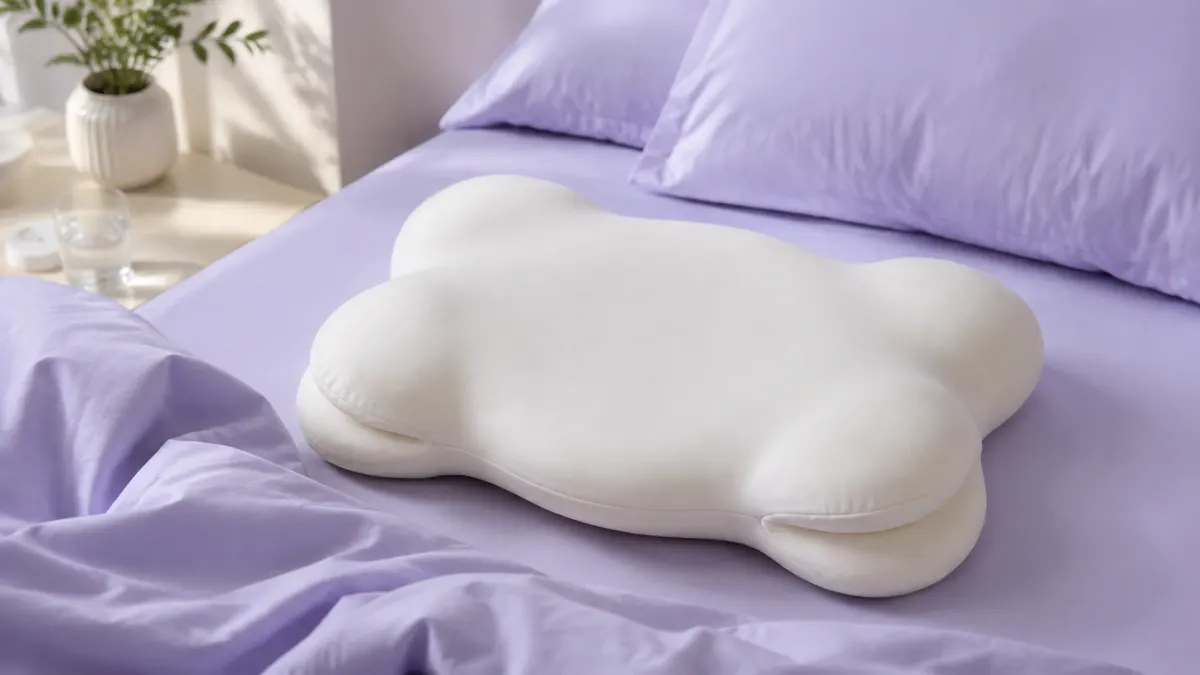
Lumuwala Cloud Pillow is worth testing when upper-back pain seems tied to pillow collapse, side-sleeper head drop, heat-driven movement, or a need for steadier height. The medium-firm 6 inch profile gives a stable support target, and the breathable cover can reduce hot-pillow moves that break position.
It may be too tall for strict back sleepers, petite sleepers, stomach-heavy sleepers, or people on soft mattresses. The first read should be chin angle on the back and head level on the side. If either angle is clearly wrong, do not force the pillow because the cooling feels good.
Keep Lumuwala only if several ordinary nights show less morning upper-back checking, stable neck support, fewer folds or hand-under-neck moves, and no new jaw or shoulder pressure. If the mattress, top arm, or daytime posture is louder, keep the pillow verdict narrow and work upstream.
A useful improvement should repeat after a normal workday and a lighter day. If the pillow helps only after an easy day, it may be making the setup nicer without solving the main morning pattern. Repetition matters.
Where Cloud Pillow does and does not fit
Good fit
Lumuwala fits when the issue looks like a comfort setup problem: pillow collapse, unstable height, heat-driven turning, or pressure from an old pillow. It should be judged as a comfort product, not a treatment.
Not the fit
Lumuwala is not the right fit for every pillow for upper back pain after sleeping shopper. Do not buy it as a substitute for medical care, as a rigid prescription contour, or as a promise that a pillow alone can fix the room, mattress, or health factors behind poor sleep.
Questions shoppers ask
What is the quick answer for pillow for upper back pain after sleeping?
Focus on feel, support, heat, care, and trial risk. The right pillow should solve that main job while keeping height, heat, care, and return risk in balance.
Where does Lumuwala Cloud Pillow fit in pillow for upper back pain after sleeping?
It fits when you want a soft support pillow to test at home with the current policy details in view and you are not looking for a rigid medical contour.
Can a pillow treat pain or numbness?
No. A pillow may reduce one comfort variable, such as height, pressure, or heat, but persistent or nerve-like symptoms should be discussed with a clinician.
How many nights should I test the pillow?
Use several normal nights, not one nap or one showroom squeeze. Keep the same pillowcase, mattress, and bedding so the pillow is the main variable.
What should I write down during the test?
Track heat timing, pillow flips, folds, stacking, pressure at the jaw or ear, shoulder load, neck angle, and morning comfort.
Is a higher pillow always better?
No. Side sleepers often need more loft than stomach sleepers, but too much height can tilt the neck upward or push a back sleeper's chin down.
When should I stop self-testing?
Stop and get medical guidance if symptoms are persistent, worsening, nerve-like, tied to injury, or include weakness, numbness, dizziness, or breathing concerns.
What makes an article trustworthy for pillow shopping?
Trust pages that separate fit guidance from medical claims, cite real sources, disclose evidence limits, and avoid invented review counts, ratings, or lab measurements.
Sources
- Kiatkulanusorn S, Suato BP, Werasirirat P. Neck and back muscle activity during application of various pillow designs. PubMed PMID: 33492272.
- Sacco IC, Pereira IL, Dinato RC, et al. Pillow height, neck and mid-upper-back muscle activity, and comfort. PubMed PMID: 26209581.
- Gordon SJ, Grimmer-Somers KA, Trott PH. Pillow use and cervical stiffness, headache, scapular and arm pain. PubMed PMID: 21197317.
- Chun-Yiu JP, Man-Ha ST, Chak-Lun AF. Effects of pillow designs on neck pain, waking symptoms, sleep quality and spinal alignment. PubMed PMID: 33895703.