Sleep pain guide
Best Pillow for Shoulder Blade Pain After Sleep
Shoulder-blade pain after sleeping can come from neck angle, upper-back muscle load, arm position, or the mattress. The pillow test needs a clean pain map.
Quick answer
For pillow for shoulder blade pain after sleeping, the useful answer is to solve shoulder pressure, side-sleeper gap fill, and top-arm support without creating a worse tradeoff. Best fit: shoppers who want a soft, supportive Cloud Pillow feel while still checking height, heat, care, and trial fit. Lumuwala Cloud Pillow is worth considering when you want a plush support feel, cooler sleep surface, and a current-policy home trial. Skip the self-test and talk to a clinician if symptoms are persistent, worsening, one-sided, nerve-like, or linked to injury.
Founder and primary Lumuwala byline
Edited by Anya for editorial content editor
Buying brief
Decide before you shop.
Best fit
Best fit: shoppers who want a soft, supportive Cloud Pillow feel while still checking height, heat, care, and trial fit.
Skip if
Skip the self-test and talk to a clinician if symptoms are persistent, worsening, one-sided, nerve-like, or linked to injury.
Pattern
Map the complaint to shoulder pressure, side-sleeper gap fill, and top-arm support; do not treat the pillow as a diagnosis.
Position fit
Check side, back, or stomach height separately because each changes neck angle.
Pressure points
Notice jaw, ear, shoulder, skull-base, and arm pressure after several hours.
Care boundary
Persistent or worsening symptoms deserve medical advice before product testing.
Try the Lumuwala fit
Cloud Pillow is the product this guide points back to.
Lumuwala fits when the issue looks like a comfort setup problem: pillow collapse, unstable height, heat-driven turning, or pressure from an old pillow. It should be judged as a comfort product, not a treatment.
See if Cloud Pillow fits your sleepCluster links
Keep reading in this sleep path.
Map the pain before changing pillows
Shoulder-blade pain after sleeping is vague until it is mapped. Is the pain at the top of the shoulder blade, between the blade and spine, under the blade, or closer to the neck? Does it fade after movement, or stay through the day? Does it come with arm symptoms, chest symptoms, weakness, trauma, or worsening pain? Red flags need care before pillow shopping.
The pillow can still matter. Neck angle can pull into the upper trapezius and shoulder blade area. Side sleeping can load the lower shoulder. Back sleeping can leave the neck hollow. Arm position can tug the shoulder blade forward for hours.
A clean pain map keeps the test honest. If the pain is really neck-driven, pillow height matters. If it is pressure-driven, the mattress and shoulder position may matter more. If it is persistent or spreading, the pillow is not the right first answer.
Use a fingertip map, not a vague complaint. Mark whether the sore point is closer to the neck, the inner border of the blade, the outer shoulder, or the ribs. A better map makes the pillow test less guessy and easier to repeat across ordinary mornings.
What pillow sources can support
A pillow-use study tracked cervical stiffness, headache, and scapular or arm pain. Sacco and colleagues found pillow height changed neck and mid-upper-back muscle activity and comfort. A pilot randomized trial studied pillow preferences in people with neck pain and spinal degeneration. A systematic review linked pillow design with neck pain, waking symptoms, sleep quality, and spinal alignment.
Those sources do not prove a pillow fixes shoulder-blade pain. They support a more modest claim: pillow height, pillow design, neck symptoms, mid-upper-back muscle activity, and scapular or arm pain can be related enough to test carefully.
That makes the home question practical. Does the pillow reduce upper-back load without creating neck, jaw, ear, or shoulder pressure? If not, the next test may be mattress pressure, arm support, desk load, or care.
Try the Lumuwala fit
Cloud Pillow is the product this guide points back to.
Lumuwala fits when the issue looks like a comfort setup problem: pillow collapse, unstable height, heat-driven turning, or pressure from an old pillow. It should be judged as a comfort product, not a treatment.
Use the guide, then test the fitNeck angle can travel into the shoulder blade area
When the pillow is too low, the head can drop and the side of the neck can stay stretched. When it is too high, the neck can tip or rotate. Either direction can leave the upper-back muscles working when they should be quiet.
Back sleepers should check chin angle and neck fill. Side sleepers should check head level after the shoulder settles. Combination sleepers should check the roll between positions, because the pillow can be right on the side and wrong on the back.
Morning timing matters. Pain that is sharp right away when lying down may point to pressure. Pain that appears after a full night may point to position, muscle load, or movement. Pain that worsens through the day may have a daytime driver.
Heat can move the sleeper out of a good angle. If a warm pillow makes the sleeper turn, shrug, or fold the pillow, shoulder-blade pain can show up even when bedtime alignment looked fine.
Side matters too. Pain on the bottom-sleeping side may be pressure or shoulder compression. Pain on the top side may follow the top arm falling forward. Pain centered between the shoulder blades may involve neck angle or upper-back load. The map guides the next test.
Do not chase the deepest stretch before bed and then blame the pillow. Aggressive stretching can make the area sore enough to confuse the morning score. Keep the evening routine steady while the pillow is being tested.
Do not treat one muscle knot as proof. The shoulder blade area is a crossroads for neck, shoulder, upper-back, and rib mechanics. The pillow is one lever, not the whole machine.
Arm position and mattress feel can be louder
For side sleepers, the top arm falling forward can pull the shoulder blade around the rib cage. A small hug pillow can reduce that pull. If shoulder-blade pain improves with top-arm support and no pillow change, the main pillow may be getting blamed unfairly.
For back sleepers, arms overhead can change shoulder-blade position and neck tension. Arms pinned straight down can feel different from arms resting on the torso. The arm position belongs in the note.
The mattress changes the pillow too. A firm mattress keeps the shoulder higher and may require more pillow height for side sleeping. A soft mattress lets the shoulder sink and can make the same pillow act tall.
A topper can reduce shoulder pressure but change head height. If a topper enters the test, retest the pillow instead of assuming the old height still fits.
Desk load can be the hidden variable. If the shoulder blade area already feels tight before bed, write that down. A pillow may reduce overnight strain and still leave the workday problem intact.
Breathing room around the shoulder matters. A pillow that forces the head toward the chest can crowd the upper back. A pillow that lets the head fall can pull the side of the neck. Both can show up near the shoulder blade.
Use the simplest change first. Arm support, case change, protector removal, and small height tests are cheaper and cleaner than buying three pillows in a row.
A seven-night shoulder-blade test
Use seven nights for mild, stable symptoms. Record pain location, sleep position, waking position, neck angle, arm position, mattress pressure, heat, and how long the pain takes to fade after moving.
Nights one and two use the current setup. Night three changes pillow height only if the head drops or chin tucks. Night four adds top-arm support for side sleeping. Night five changes heat or case variables only.
Nights six and seven repeat the best setup. Do not add new workouts, stretches, desk changes, mattress topper, and pillow changes at the same time if the pillow needs a fair verdict.
A useful result is less morning shoulder-blade pain, less neck stiffness, fewer pillow rebuilds, and no new jaw, ear, or shoulder pressure. If only one variable improves, name it.
Stop if pain spreads, weakness appears, chest symptoms appear, or pain stops behaving like a mild sleep-position issue. Bedding tests are not for escalating symptoms.
If side sleeping is the main position, repeat the best setup on both sides if possible. One shoulder may tolerate the mattress differently from the other. If only one side hurts, the answer may be position-specific.
If back sleeping is the main position, watch where the pillow starts and ends. A pillow that slides under the shoulders can change upper-back angle, while a pillow too high under the head can pull the shoulder blade area through the neck.
The best result is repeatable across ordinary days. A pillow that works only after a rest day may be helping less than the daytime load is hurting.
Common mistakes
The first mistake is assuming shoulder-blade pain means the pillow is too low. It might be arm position or mattress pressure.
The second mistake is raising the pillow until the neck feels supported, then creating jaw, ear, or upper-neck pressure.
The third mistake is ignoring the top arm. A falling arm can pull the shoulder blade all night.
The fourth mistake is testing after a hard workout and blaming the pillow by morning.
The fifth mistake is changing the mattress and pillow together. That hides which change helped.
The sixth mistake is keeping a pillow that only works when folded. A pillow that needs nightly rebuilding may not be stable enough.
The seventh mistake is treating persistent or spreading pain as a bedding problem. Care comes first when the pattern stops being simple.
The eighth mistake is forgetting the pillowcase and protector. A slippery surface can let the head drift, and a hot protector can make the sleeper leave the best position.
The ninth mistake is changing to a very soft pillow for comfort and losing neck support. Shoulder-blade pain often needs pressure relief and stable angle at the same time.
Where Lumuwala fits
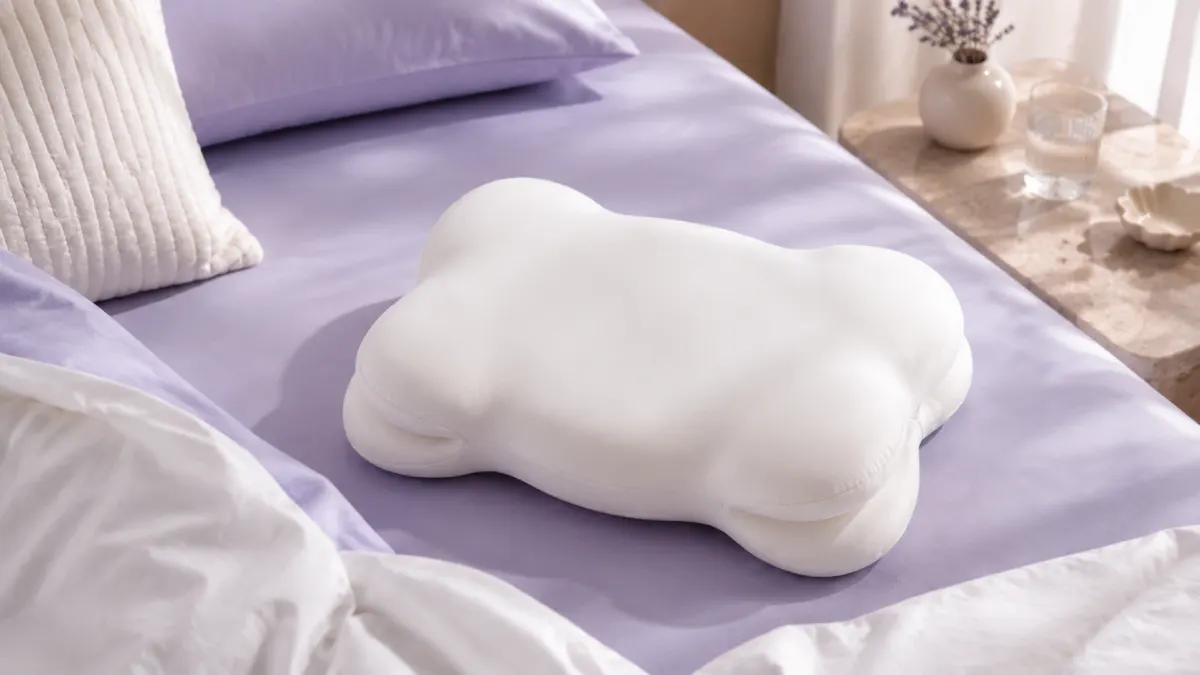
Lumuwala Cloud Pillow can work when shoulder-blade pain after sleeping seems tied to pillow collapse, heat-driven movement, or unstable neck support. The medium-firm 6 inch profile gives side sleepers a stable height target and back sleepers a consistent surface to test.
It may not help if the main driver is top-arm pull, firm-mattress shoulder pressure, a daytime training load, or symptoms that need care. Test arm support and pain location before assigning the whole problem to the pillow.
Keep Lumuwala only if several normal nights show less shoulder-blade soreness, calmer neck stiffness, fewer rebuilds, and no new pressure. If it helps neck angle but the blade pain stays, the next test is probably arm or mattress support.
A good result is not dramatic. The shoulder blade area should stop calling attention to itself in the first hour after waking. Quiet mornings are the whole point.
Where Cloud Pillow does and does not fit
Good fit
Lumuwala fits when the issue looks like a comfort setup problem: pillow collapse, unstable height, heat-driven turning, or pressure from an old pillow. It should be judged as a comfort product, not a treatment.
Not the fit
Lumuwala is not the right fit for every pillow for shoulder blade pain after sleeping shopper. Do not buy it as a substitute for medical care, as a rigid prescription contour, or as a promise that a pillow alone can fix the room, mattress, or health factors behind poor sleep.
Questions shoppers ask
What is the quick answer for pillow for shoulder blade pain after sleeping?
Focus on shoulder pressure, side-sleeper gap fill, and top-arm support. The right pillow should solve that main job while keeping height, heat, care, and return risk in balance.
Where does Lumuwala Cloud Pillow fit in pillow for shoulder blade pain after sleeping?
It fits when you want a soft support pillow to test at home with the current policy details in view and you are not looking for a rigid medical contour.
Can a pillow treat pain or numbness?
No. A pillow may reduce one comfort variable, such as height, pressure, or heat, but persistent or nerve-like symptoms should be discussed with a clinician.
How many nights should I test the pillow?
Use several normal nights, not one nap or one showroom squeeze. Keep the same pillowcase, mattress, and bedding so the pillow is the main variable.
What should I write down during the test?
Track heat timing, pillow flips, folds, stacking, pressure at the jaw or ear, shoulder load, neck angle, and morning comfort.
Is a higher pillow always better?
No. Side sleepers often need more loft than stomach sleepers, but too much height can tilt the neck upward or push a back sleeper's chin down.
When should I stop self-testing?
Stop and get medical guidance if symptoms are persistent, worsening, nerve-like, tied to injury, or include weakness, numbness, dizziness, or breathing concerns.
What makes an article trustworthy for pillow shopping?
Trust pages that separate fit guidance from medical claims, cite real sources, disclose evidence limits, and avoid invented review counts, ratings, or lab measurements.
Sources
- Gordon SJ, Grimmer-Somers KA, Trott PH. Pillow use and cervical stiffness, headache and scapular/arm pain. PubMed PMID: 21197317.
- Sacco IC, Pereira IL, Dinato RC, et al. Pillow height, neck and mid-upper-back muscle activity, and comfort. PubMed PMID: 26209581.
- Gordon SJ, Grimmer KA, Buttner P. Pillow preferences of people with neck pain and known spinal degeneration. PubMed PMID: 31489809.
- Chun-Yiu JP, Man-Ha ST, Chak-Lun AF. Effects of pillow designs on neck pain, waking symptoms, sleep quality and spinal alignment. PubMed PMID: 33895703.