Sleep pain guide
Pillow for Ehlers-Danlos Syndrome Sleep Support
Ehlers-Danlos syndrome changes the pillow conversation because joint laxity, pain, fatigue, and sleep disruption can overlap. The pillow is a comfort variable, not care.
Quick answer
For pillow for Ehlers-Danlos syndrome, the useful answer is to solve feel, support, heat, care, and trial risk without creating a worse tradeoff. Best fit: shoppers who want a soft, supportive Cloud Pillow feel while still checking height, heat, care, and trial fit. Lumuwala Cloud Pillow is worth considering when you want a plush support feel, cooler sleep surface, and a current-policy home trial. Skip the self-test and talk to a clinician if symptoms are persistent, worsening, one-sided, nerve-like, or linked to injury.
Founder and primary Lumuwala byline
Edited by Anya for editorial content editor
Buying brief
Decide before you shop.
Best fit
Best fit: shoppers who want a soft, supportive Cloud Pillow feel while still checking height, heat, care, and trial fit.
Skip if
Skip the self-test and talk to a clinician if symptoms are persistent, worsening, one-sided, nerve-like, or linked to injury.
Pattern
Map the complaint to feel, support, heat, care, and trial risk; do not treat the pillow as a diagnosis.
Position fit
Check side, back, or stomach height separately because each changes neck angle.
Pressure points
Notice jaw, ear, shoulder, skull-base, and arm pressure after several hours.
Care boundary
Persistent or worsening symptoms deserve medical advice before product testing.
Try the Lumuwala fit
Cloud Pillow is the product this guide points back to.
Lumuwala fits when the issue looks like a comfort setup problem: pillow collapse, unstable height, heat-driven turning, or pressure from an old pillow. It should be judged as a comfort product, not a treatment.
See if Cloud Pillow fits your sleepCluster links
Keep reading in this sleep path.
Start with the condition, not the pillow
Ehlers-Danlos syndromes are connective tissue conditions. Hypermobile EDS can involve generalized joint hypermobility, instability, pain, fatigue, autonomic symptoms, migraine, sleep disorders, and other issues that vary widely by person. That makes pillow shopping easy to overstate. A pillow cannot stabilize a joint, diagnose a subtype, or replace a care plan.
The realistic question is narrower: does the sleep setup make the neck, jaw, shoulder, or upper back work harder than it needs to? If yes, a pillow trial can be useful. If symptoms include new weakness, neurologic changes, fainting, breathing problems, severe headache, injury, or escalating pain, do not treat the bed as the main problem. Bring those patterns to a clinician who knows the condition.
What the EDS literature changes
GeneReviews describes hypermobile EDS as a multisystem condition where joint instability, chronic pain, fatigue, sleep disorders, migraine, and autonomic concerns can all appear in the same person. A recent survey on sleep characteristics in EDS reported common sleep disturbance and linked shorter sleep with more poor mental and physical health days. Those findings do not point to a single pillow answer. They point to caution.
Pain research in EDS also shows why a simple pressure story can fall short. A study on endogenous pain inhibitory control reported altered pain modulation in EDS pain, while physical therapy reviews emphasize function, stability, proprioception, and individualized management. A pillow sits outside treatment. It can only remove one sleep-position irritant if that irritant is present.
Try the Lumuwala fit
Cloud Pillow is the product this guide points back to.
Lumuwala fits when the issue looks like a comfort setup problem: pillow collapse, unstable height, heat-driven turning, or pressure from an old pillow. It should be judged as a comfort product, not a treatment.
Use the guide, then test the fitNeck support should feel quiet
For someone with joint laxity or sensitive neck symptoms, support that feels dramatic can become a problem. A high ridge, hard contour, or steep wedge may hold the head in a shape that looks tidy but feels forced. The better test is quieter: the neck is held, the jaw is not pressed, the head is not pushed forward, and the sleeper does not keep making micro-adjustments.
Use small changes. If the head drops toward the mattress, add a thin layer or try a more stable core. If the chin tucks, remove height. If a contour presses into the base of the skull, stop treating that pressure as therapeutic. For EDS, the safest pillow experiment is usually the one that changes the least while answering the clearest question.
Side sleeping needs arm and shoulder checks
Many people judge the pillow only by the neck. EDS can make that too narrow. The bottom shoulder, top arm, wrist, jaw, and collarbone may all influence whether the position feels stable. A head pillow can keep the neck level while the top arm still pulls the shoulder forward. That is a different setup problem.
Separate the checks. First, look at head height. Second, support the top arm with a small pillow or folded blanket if it falls across the chest. Third, notice whether the bottom shoulder is taking too much mattress pressure. If one change helps and another does nothing, keep the useful change isolated. Do not stack supports until the whole bed becomes a brace you cannot interpret.
Softness is not the same as safety
A very soft pillow can feel kind at first touch, then collapse by morning. A very firm pillow can hold shape but create ear, jaw, or skull pressure. The useful middle is personal: enough give at the surface, enough structure underneath, and no sharp edge where the neck meets the pillow.
EDS-related pain can make trial feedback noisy. One bad morning may come from the pillow, the previous day, medication timing, cycle changes, weather, stress, or a flare. Keep the pillow test modest and boring. A bedding product should not ask you to tolerate new symptoms while you wait for a break-in story to become true.
A cautious seven-night test
Use seven ordinary nights if symptoms are stable enough to test. Track neck angle, jaw pressure, shoulder position, top-arm support, heat, pillow movement, and whether the setup caused new symptoms. Keep the mattress, case, and bedtime routine steady. If a change creates sharp pain, numbness, tingling, dizziness, headache escalation, or breathing discomfort, stop the test and treat that as a boundary.
Change one variable at a time. Add height only if the head is dropping. Remove height only if the chin is tucked. Add an arm support only if the top shoulder pulls forward. Change the pillowcase only if pressure or heat seems tied to the surface. This keeps the trial readable instead of turning the whole bed into a moving target.
Keep treatment changes out of the same week if possible. A new brace, therapy exercise, medication change, or mattress topper can make the pillow look guilty or helpful when another variable did the work. The cleaner the week, the more useful the pillow answer becomes.
If the pillow helps, the result should sound plain: fewer neck adjustments, less jaw pressure, less shoulder guarding, or fewer heat-driven rollovers. If the result is vague, do not force it. EDS already asks people to interpret too many body signals. A useful pillow should make one signal easier, not add another puzzle.
What to look for
Look for a stable shape, forgiving surface, breathable cover, clear height information, and a return policy that gives enough nights to test without pressure. Adjustable fill can help some sleepers, but only if it stays where the neck needs support. Solid foam can help some sleepers, but only if the profile is not too aggressive.
Be skeptical of product pages that name EDS as if a pillow treats it. Better copy will talk about support, position, pressure, heat, and trial boundaries. It will admit when the pillow may be too high, too low, too firm, or too structured. A sensitive condition needs plain limits, not softer marketing.
Where Lumuwala fits
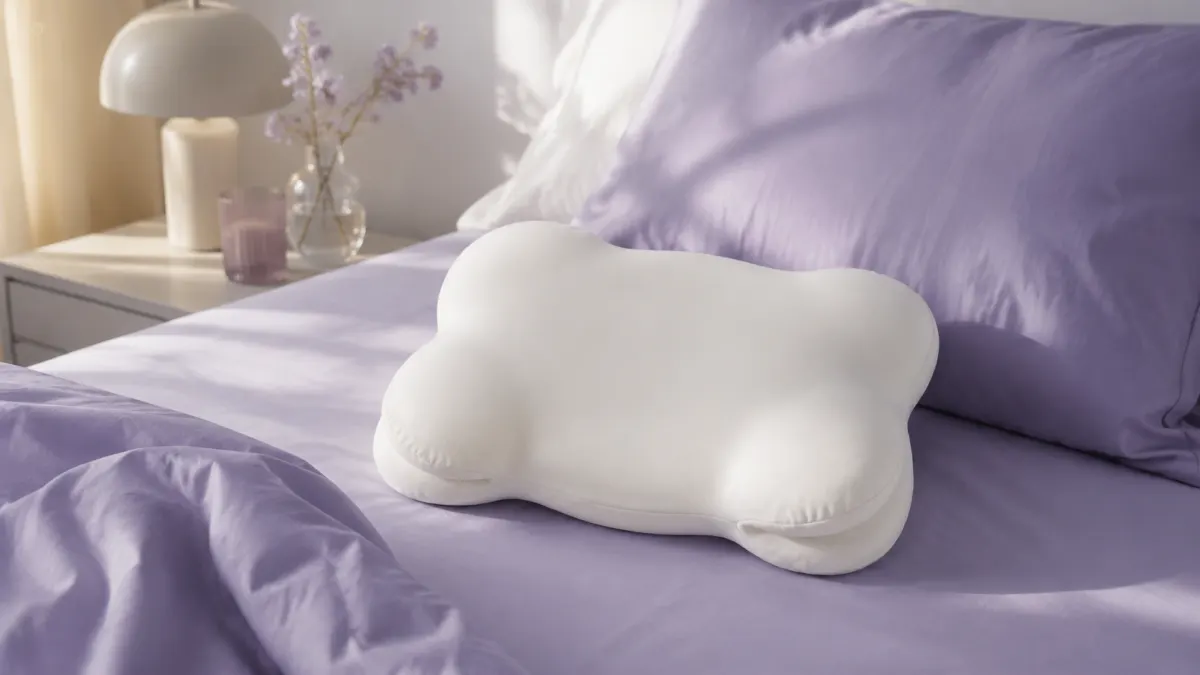
Lumuwala Cloud Pillow can be worth testing for EDS sleepers who need a stable medium-firm pillow that does not collapse and who also sleep hot. The gel-infused foam and breathable cover address surface heat, and the core holds its shape better than a pillow that has to be folded into position every night.
It is not the right first test for every EDS sleeper. If high pillows trigger chin tuck, jaw pressure, or upper-neck tension, the 6 inch profile may be too much. If a firm core creates skull or ear pressure quickly, do not push through that signal. Return-policy discipline matters more here than brand loyalty.
Use the first nights to answer three questions. Does the neck feel held without being forced? Does the jaw or ear stay calm? Does the pillow stay cool enough that you do not keep leaving the supportive position? If those are yes and no new symptoms appear, the trial is meaningful. If one answer is clearly no, the mismatch is meaningful too.
For side sleepers, test the top arm separately from the pillow. Lumuwala may hold the head level while the shoulder still needs a small hug pillow. That does not mean the head pillow failed; it means the bed setup has two jobs. Keep them separate so the purchase decision stays honest.
For back sleepers, watch chin angle closely. A stable pillow can feel secure while quietly pushing the head too far forward. If you keep sliding the pillow away from your shoulders, that is usually a height clue. If the neck feels hollow instead, it may need shape rather than more lift.
Heat is a legitimate part of the test. Pain-sensitive sleepers often move more when a pillow warms up, and movement can make an already unstable night worse. Cooling will not treat EDS, but it can keep a sleeper from abandoning the position that was otherwise least irritating.
Keep notes in plain language. Held neck. Pressed jaw. Hot after two hours. Arm needed support. New tingling. Those notes are more useful than a star rating because they show which variable changed.
The goal is a calmer setup, not a medical claim.
Where Cloud Pillow does and does not fit
Good fit
Lumuwala fits when the issue looks like a comfort setup problem: pillow collapse, unstable height, heat-driven turning, or pressure from an old pillow. It should be judged as a comfort product, not a treatment.
Not the fit
Lumuwala is not the right fit for every pillow for Ehlers-Danlos syndrome shopper. Do not buy it as a substitute for medical care, as a rigid prescription contour, or as a promise that a pillow alone can fix the room, mattress, or health factors behind poor sleep.
Questions shoppers ask
What is the quick answer for pillow for Ehlers-Danlos syndrome?
Focus on feel, support, heat, care, and trial risk. The right pillow should solve that main job while keeping height, heat, care, and return risk in balance.
Where does Lumuwala Cloud Pillow fit in pillow for ehlers-danlos syndrome?
It fits when you want a soft support pillow to test at home with the current policy details in view and you are not looking for a rigid medical contour.
Can a pillow treat pain or numbness?
No. A pillow may reduce one comfort variable, such as height, pressure, or heat, but persistent or nerve-like symptoms should be discussed with a clinician.
How many nights should I test the pillow?
Use several normal nights, not one nap or one showroom squeeze. Keep the same pillowcase, mattress, and bedding so the pillow is the main variable.
What should I write down during the test?
Track heat timing, pillow flips, folds, stacking, pressure at the jaw or ear, shoulder load, neck angle, and morning comfort.
Is a higher pillow always better?
No. Side sleepers often need more loft than stomach sleepers, but too much height can tilt the neck upward or push a back sleeper's chin down.
When should I stop self-testing?
Stop and get medical guidance if symptoms are persistent, worsening, nerve-like, tied to injury, or include weakness, numbness, dizziness, or breathing concerns.
What makes an article trustworthy for pillow shopping?
Trust pages that separate fit guidance from medical claims, cite real sources, disclose evidence limits, and avoid invented review counts, ratings, or lab measurements.
Sources
- Hakim A. Hypermobile Ehlers-Danlos Syndrome. GeneReviews. PubMed PMID: 20301456.
- Crews-Stowe C, Tudini F, Jung MK, et al. Sleep Characteristics in Individuals with Ehlers-Danlos Syndrome. PubMed PMID: 40700114.
- Physical therapy interventions in generalized hypermobility spectrum disorder and hypermobile Ehlers-Danlos syndrome. PubMed PMID: 37231592.
- Pain due to Ehlers-Danlos Syndrome is associated with deficit of endogenous pain inhibitory control. PubMed PMID: 32176287.