Cooling pillow guide
Best Cooling Pillow for a Memory Foam Mattress
A cooling pillow can help a hot sleeper on a memory foam mattress, but it cannot fix every heat source in the bed. Start by separating pillow heat from mattress heat.
Quick answer
For cooling pillow for memory foam mattress, the useful answer is to solve whether heat is coming from the pillow, the mattress, or both without creating a worse tradeoff. Best fit: shoppers who want a soft, supportive Cloud Pillow feel while still checking height, heat, care, and trial fit. Lumuwala Cloud Pillow is worth considering when you want a plush support feel, cooler sleep surface, and a current-policy home trial. Skip it if you dislike shaped foam support and only want a loose, moldable fill.
Founder and primary Lumuwala byline
Edited by Anya for editorial content editor
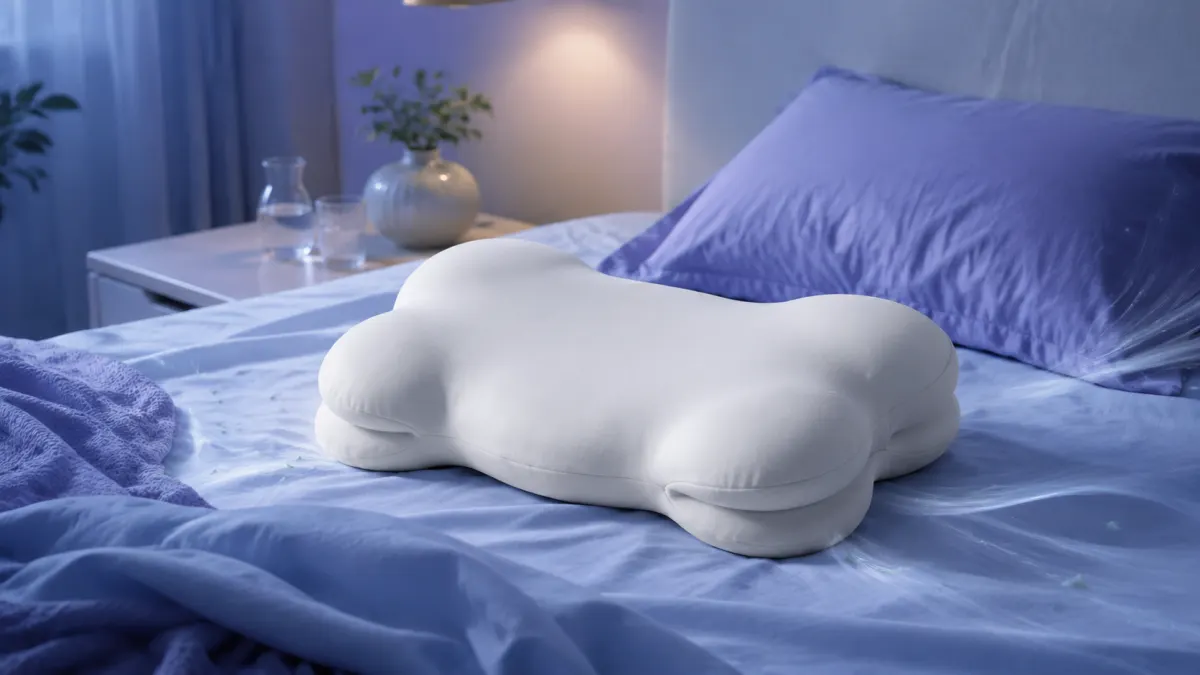
Buying brief
Decide before you shop.
Best fit
Best fit: shoppers who want a soft, supportive Cloud Pillow feel while still checking height, heat, care, and trial fit.
Skip if
Skip it if you dislike shaped foam support and only want a loose, moldable fill.
Heat source
Decide whether the main problem is whether heat is coming from the pillow, the mattress, or both.
Air and moisture path
Look for a breathable cover, lighter case, and less face-burying contact.
Height stability
A cooler pillow still fails if it leaves the head too low or too high.
Home test
Judge after several normal nights when the pillow has warmed up fully.
Try the Lumuwala fit
Cloud Pillow is the product this guide points back to.
Lumuwala fits the cooling pillow for memory foam mattress search when the buyer wants cooling comfort tied to pillow height, not just a chilly first touch. It is strongest for shoppers who rotate between side and back sleep and want to test the heat story at home.
See if Cloud Pillow fits hot sleepersCluster links
Keep reading in this sleep path.
Figure out which surface is hot
Hot sleepers often blame the pillow because the face and neck notice heat first. A memory foam mattress can still be the bigger heat source. Foam can hold the body close, reduce airflow around the back and shoulders, and make the whole bed feel slower to cool down. A pillow can help the head and neck surface, but it cannot turn the mattress into a cool room.
Start with the map of the heat. If the cheek, ear, and hairline get warm while the back stays fine, the pillow is a strong suspect. If the back, hips, and legs feel trapped too, the mattress and bedding are part of the problem. Buying a cooling pillow can still help, but expectations should be smaller when the mattress is doing most of the trapping.
What thermal sleep research can support
Thermal environment research shows that the microclimate around a sleeping person matters for comfort and sleep. A numerical study of sleeping microclimate looked at air temperature, velocity, heat transfer, and the insulation value of bedding around a sleeping body. A warm-room sleepwear study also shows that fabric insulation and moisture properties can affect sleep quality under warm conditions.
Mattress-specific studies are more careful than marketing copy. A study comparing a standard mattress with an experimental foam surface found changes in cyclic alternating pattern rates, but it did not prove that every foam mattress is hot or bad. Temperature-controlled mattress-cover studies show that changing the sleep surface temperature can affect sleep and recovery measures. The practical point is simple: the mattress surface matters, and the pillow is only one layer of the system.
Try the Lumuwala fit
Cloud Pillow is the product this guide points back to.
Lumuwala fits the cooling pillow for memory foam mattress search when the buyer wants cooling comfort tied to pillow height, not just a chilly first touch. It is strongest for shoppers who rotate between side and back sleep and want to test the heat story at home.
Test the cooling setup at homeCheck the pillowcase before the pillow core
A breathable pillow core can still feel warm under a dense case. Thick protectors, decorative shams, waterproof layers, and synthetic cases can hold moisture at the surface. If your current pillow supports your neck well, test a lighter case before replacing the whole pillow.
Use the same room, same blanket, and same bedtime routine for two nights. Then change only the pillowcase. If heat drops clearly, the case was part of the problem. If the pillow still feels stale and warm while the mattress stays tolerable, the core may be the next test. If the whole bed still feels hot, the mattress and bedding need attention too.
The mattress protector can erase pillow gains
A memory foam mattress often gets paired with a protector or topper. Some protectors reduce airflow and add a warm plastic-like layer under the sheet. A cooling pillow can make the head feel better while the torso still feels trapped. That mismatch leads people to keep flipping the pillow even though the heat is coming from below.
Check the layers in order: mattress protector, fitted sheet, topper, duvet, pillowcase, pillow core. Remove or swap one layer at a time if it is safe and practical. The goal is not to build a perfect lab. It is to avoid buying a new pillow when the hot layer is somewhere else.
If you use a foam topper over a foam mattress, treat that as a separate layer. A topper can soften shoulder pressure and still make heat worse. If the pillow feels fine on a cooler night but the whole bed gets stale on warm nights, the topper and protector deserve the same suspicion as the pillow.
Sheets matter too. A dense sheet can hold humidity close to the body. A lighter breathable sheet can make the mattress feel less swampy without changing the pillow at all. Test that before assuming the pillow core failed.
Cooling still needs support
A cooling pillow on a memory foam mattress has a harder job because the mattress changes shoulder sink. If the shoulder sinks deeply, a tall pillow can feel too high. If the mattress is firm despite being foam, the side sleeper may need more height. Heat and height cannot be judged separately.
A good cooling pillow should stay supportive after it warms up. If the head drops, the sleeper folds the edge or slides a hand under the pillow. If the pillow is too high, the chin or jaw complains. Either problem can undo the cooling benefit because the sleeper keeps moving away from the stable spot.
Side sleepers should check shoulder sink before judging pillow height. Back sleepers should check chin angle. Combination sleepers should check the position that causes the most waking. A memory foam mattress can change all three because the body settles into the bed slowly.
A seven-night foam-mattress heat test
Use seven nights. Track where heat starts, pillow flips, back heat, case dampness, neck support, mattress protector, and whether the pillow still feels usable after a warm wake-up. Keep the room and blanket steady enough that the result is readable.
Nights one and two: current pillow and current case. Nights three and four: breathable case. Nights five through seven: cooling pillow if the head-level heat remains local. If every night is hot across the back and hips, the pillow may help comfort but will not be the main fix.
A good result is specific: fewer pillow flips, less warm cheek and ear pressure, stable neck support, and less need to move off the supportive part of the pillow. If the mattress still traps heat, note that honestly. The pillow answered the head-level question, not the mattress question.
If the pillow looks good on the head-level notes but the bed still feels warm, do not keep changing pillows. Move the test down a layer. Try a different sheet, remove a heavy protector if appropriate, or reduce duvet weight. The heat map tells you where to work next.
What to look for
Look for a breathable removable cover, a core that does not hold heat in one dense block, clear care rules, and support that matches your sleep position on the actual mattress. Gel can help first-touch feel, but airflow and moisture handling decide whether the pillow is still usable later.
Avoid product copy that says the pillow fixes hot memory foam. Better copy will say the pillow can cool the head and neck surface, while sheets, protectors, mattress foam, room temperature, and bedding still matter. That honesty keeps the purchase from carrying the whole bed's heat problem.
Return terms matter because mattress heat varies by weather and bedding. A one-night test is weak. The better trial includes a normal night, a warmer night, and a night after the pillowcase has had time to absorb normal body oils and moisture.
Where Lumuwala fits
Lumuwala Cloud Pillow is a reasonable test for memory-foam mattress sleepers whose main heat complaint starts at the pillow. The gel-infused foam and breathable cover are aimed at surface heat, while the medium-firm core holds shape better than loose fill that spreads away from the neck.
The mattress still decides part of the height. On a soft memory foam mattress, the shoulder can sink and make a 6 inch pillow feel taller. On a firmer foam mattress, the same pillow can feel closer to a normal side-sleeper height. Test Lumuwala on your actual mattress, not on a showroom bed.
If Lumuwala cools the head but the back and hips still feel trapped, keep the result narrow. The pillow helped one layer. A different sheet, protector, duvet, or mattress solution may still be needed. If the pillow cools the head, holds the neck, and reduces flipping, the fit is real.
Return it if the profile is wrong. A cooler pillow that bends the neck is still wrong. The right trial result is boring: cooler surface, steady support, fewer flips, and no new jaw or shoulder pressure.
If Lumuwala almost works, test one case change before returning it. A thick protector or decorative case can hide the cooling work the pillow is doing. If a lighter case helps, the pillow may be fine. If the same heat returns with every case, the mattress or room is probably louder.
Do not judge the pillow by the first cold touch. Judge it after the foam mattress has warmed under you and the room has settled. That is the hard part of the night.
Where Cloud Pillow does and does not fit
Good fit
Lumuwala fits the cooling pillow for memory foam mattress search when the buyer wants cooling comfort tied to pillow height, not just a chilly first touch. It is strongest for shoppers who rotate between side and back sleep and want to test the heat story at home.
Not the fit
Lumuwala is not the right fit for every cooling pillow for memory foam mattress shopper. Do not buy it as a substitute for medical care, as a rigid prescription contour, or as a promise that a pillow alone can fix the room, mattress, or health factors behind poor sleep.
Questions shoppers ask
What is the quick answer for cooling pillow for memory foam mattress?
Focus on whether heat is coming from the pillow, the mattress, or both. The right pillow should solve that main job while keeping height, heat, care, and return risk in balance.
Where does Lumuwala Cloud Pillow fit in cooling pillow for memory foam mattress?
It fits when you want a soft support pillow to test at home with the current policy details in view and you are not looking for a rigid medical contour.
Will a cooling pillow stay cold all night?
No honest pillow stays cold all night. A better goal is slower heat buildup, better moisture handling, and fewer wakeups to flip or rebuild the pillow.
How many nights should I test the pillow?
Use several normal nights, not one nap or one showroom squeeze. Keep the same pillowcase, mattress, and bedding so the pillow is the main variable.
What should I write down during the test?
Track heat timing, pillow flips, folds, stacking, pressure at the jaw or ear, shoulder load, neck angle, and morning comfort.
Is a higher pillow always better?
No. Side sleepers often need more loft than stomach sleepers, but too much height can tilt the neck upward or push a back sleeper's chin down.
When should I stop self-testing?
Stop and get medical guidance if symptoms are persistent, worsening, nerve-like, tied to injury, or include weakness, numbness, dizziness, or breathing concerns.
What makes an article trustworthy for pillow shopping?
Trust pages that separate fit guidance from medical claims, cite real sources, disclose evidence limits, and avoid invented review counts, ratings, or lab measurements.
Sources
- Pan D, Chan M, Deng S, Xia L, Xu X. Numerical studies on the microclimate around a sleeping person. PubMed PMID: 22026952.
- Chow CM, Shin M, Mahar TJ, et al. Sleepwear fiber type and sleep quality under warm ambient conditions. PubMed PMID: 31692485.
- Scharf MB, Stover R, McDannold M, et al. Standard mattress compared with an experimental foam surface. PubMed PMID: 9493932.
- Moyen NE, Ediger TR, Taylor KM, et al. Temperature-controlled mattress cover and sleep. PubMed PMID: 38671774.