Sleep science
Hypoallergenic Pillow Guide for Dust Mite Allergies
Hypoallergenic pillow claims are weaker than most shoppers think. Dust-mite control depends on cover, age, humidity, washing, and symptoms.
Quick answer
For allergies and pillows, the useful answer is to solve dust, humidity, washable layers, and allergy-conscious pillow hygiene without creating a worse tradeoff. Best fit: allergy-conscious shoppers who want a cleaner pillow routine and care details before buying. Lumuwala Cloud Pillow is worth considering when you want a plush support feel, cooler sleep surface, and a current-policy home trial. Skip it as an allergy solution if you need medical-grade encasements or a clinician-directed dust-mite plan.
Founder and primary Lumuwala byline
Edited by Anya for editorial content editor
Buying brief
Decide before you shop.
Best fit
Best fit: allergy-conscious shoppers who want a cleaner pillow routine and care details before buying.
Skip if
Skip it as an allergy solution if you need medical-grade encasements or a clinician-directed dust-mite plan.
Hygiene loop
Choose a pillow setup you can actually keep clean with pillowcases and washable layers.
Humidity
Damp rooms and heavy protectors can make both heat and allergen control harder.
Fill behavior
Loose, old, or clumped fill can hold dust and lose support over time.
Expectation
A pillow can support a cleaner routine; it is not an allergy treatment.
Try the Lumuwala fit
Cloud Pillow is the product this guide points back to.
Lumuwala fits when the shopper wants one Cloud Pillow to test for comfort, support, heat, and care instead of building a complicated pillow stack.
Check Cloud Pillow care detailsCluster links
Keep reading in this sleep path.
Hypoallergenic is not a diagnosis
Allergy language gets messy fast. A pillow can be labeled hypoallergenic because the fill is less likely to trigger a reaction for many people, because the cover blocks some particles, because it is washable, or because the brand wants a friendly word on the box. The label does not tell you whether your symptoms are dust mites, pollen, pet dander, mold, fragrance, detergent, or something outside the bedroom.
That is why this guide stays narrow. A pillow can reduce or increase exposure at the sleep surface. It cannot diagnose allergic rhinitis, asthma, eczema, or sinus problems. If symptoms are persistent, severe, new, or linked with wheezing, sleep disruption, or medication changes, the right move is medical advice. The pillow is part of the environment, not the whole health story.
The most useful pillow claim is specific. Washable cover is specific. Allergen encasing compatibility is specific. Breathable, dryable construction is specific. A vague allergy halo is not. If a product page cannot say what exposure it is reducing, the safer assumption is that the word is doing more marketing work than bedroom work.
Dust mites make the pillow question practical
House dust mites live where human skin flakes, warmth, and humidity give them a stable home. Bedding is a common exposure point because the face spends hours close to the pillow, mattress, duvet, and sheets. A PubMed-indexed review notes that pillow and duvet encasings can reduce chronic contact with mite allergens, along with regular linen changes. The boring habits matter.
A household study in allergic rhinitis patients found that mattress and pillow age correlated with allergen concentration, and that high house dust mite exposure correlated with nasal itching severity. That does not mean every old pillow causes allergies. It does mean pillow age is not just an aesthetic issue. Old bedding can become an exposure reservoir, especially in humid rooms.
The pillow is also easier to change than the mattress, which makes it a sensible starting point. A mattress may need an encasing, deep cleaning, or replacement that costs real money. A pillow can be inspected tonight. If it smells stale, holds visible stains, never dries well, or has lost its shape, the allergy question and the comfort question start pointing in the same direction. The replacement is not a cure. It is a cleaner surface and a lower-risk test.
Try the Lumuwala fit
Cloud Pillow is the product this guide points back to.
Lumuwala fits when the shopper wants one Cloud Pillow to test for comfort, support, heat, and care instead of building a complicated pillow stack.
Use the guide, then test the fitEncasings can help, but they are not magic
Allergen-proof encasings are one of the more concrete interventions because they isolate a source rather than just rename the fill. A randomized, double-blind study in children with asthma and house dust mite allergy found that active mattress and pillow encasings reduced house dust mite allergen concentrations over a year, and the active group reduced inhaled steroid dose more than the placebo group under the study protocol.
That is promising, but it does not turn an encasing into a universal cure. Asthma and allergy management is medical care, and trials vary by population and method. For a shopper, the practical point is simpler: if dust mites are the suspected issue, a washable pillow plus a proper encasing is usually a more concrete plan than buying whatever pillow uses the softest allergy wording.
Humidity and ventilation change the result
Dust-mite control goes past laundry. A study of homes in Tianjin linked higher indoor relative humidity, lower air change rate, dampness, and cleaning habits with house dust mite allergen concentration. The authors point to ventilation and cleaning as important controls. That tracks with the everyday bedroom: a pillow in a damp, under-ventilated room has a harder job than the same pillow in a dry, aired-out room.
This is where shoppers can waste money. Replacing the pillow while the room stays humid, the mattress remains uncovered, and the pillowcase is washed rarely may not change much. The better first pass is a system: keep humidity under control, wash cases regularly, use a barrier if dust mites are the target, and retire pillows that are stained, misshapen, or impossible to clean.
A dehumidifier, cracked window, bathroom fan, or HVAC setting may do more for the allergen environment than a premium pillow. That is not exciting advice, but it is the kind of advice that holds up. Bedding touches the face, so it matters. The air around the bedding decides how quickly moisture leaves. A clean pillow in a damp room is still working uphill.
Fill type is only one part of exposure
People often ask whether memory foam, down, latex, buckwheat, or synthetic fill is best for allergies. The answer depends on the allergen and the construction. A dense foam core may be harder for dust to move through but can still have a dirty cover. A down pillow may be a problem for one sleeper and irrelevant for another. A washable synthetic pillow can be useful if it actually gets washed and dries fully.
The cover and care rules often matter more than the fill name. Can the cover be removed? Can it be washed hot enough for the target issue? Does it dry without trapping moisture? Does the pillow need a separate encasing? Does the brand give a replacement timeline? Those questions are less glamorous than hypoallergenic copy, but they are closer to the real exposure path.
Use the symptom pattern as a clue, not proof
Pillow-related allergy suspicion usually starts with a pattern: stuffy nose in bed, itchy eyes in the morning, worse symptoms after lying on one side, or relief away from the bedroom. That pattern is useful, but it is not proof. Pollen can ride in on hair. Pet dander can sit on fabric. Detergent or fragrance can irritate skin. Mold can hide elsewhere in the room.
Make one change at a time. Wash pillowcases and sheets, then watch the next few nights. Add an encasing if dust mites are plausible. Remove fragrance if skin or nose irritation points that way. Replace the pillow only when cleaning and cover changes do not solve the exposure problem or when the pillow is old enough that cleaning no longer feels credible.
A practical pillow hygiene routine
Start with the parts that touch your face. Wash pillowcases weekly, and more often if sweat, hair product, acne products, or pollen exposure are part of your week. Use a removable pillow cover when possible. If you use an allergen encasing, follow its wash instructions instead of treating it like a normal case. The barrier has to keep working after laundry.
Check the pillow itself every month. Odor, yellowing, clumping, dampness, or a shape that no longer recovers are all reasons to question it. A pillow that cannot dry fully should not stay in rotation. If the fill is not washable, the cover and encasing become more important. If everything is washable but never washed, the label is not doing any work.
The boring answer is usually the correct one: clean surface, dry room, barrier when needed, and a pillow that still holds its shape. Allergy comfort often comes from repeated small controls rather than one dramatic purchase.
Where Lumuwala fits
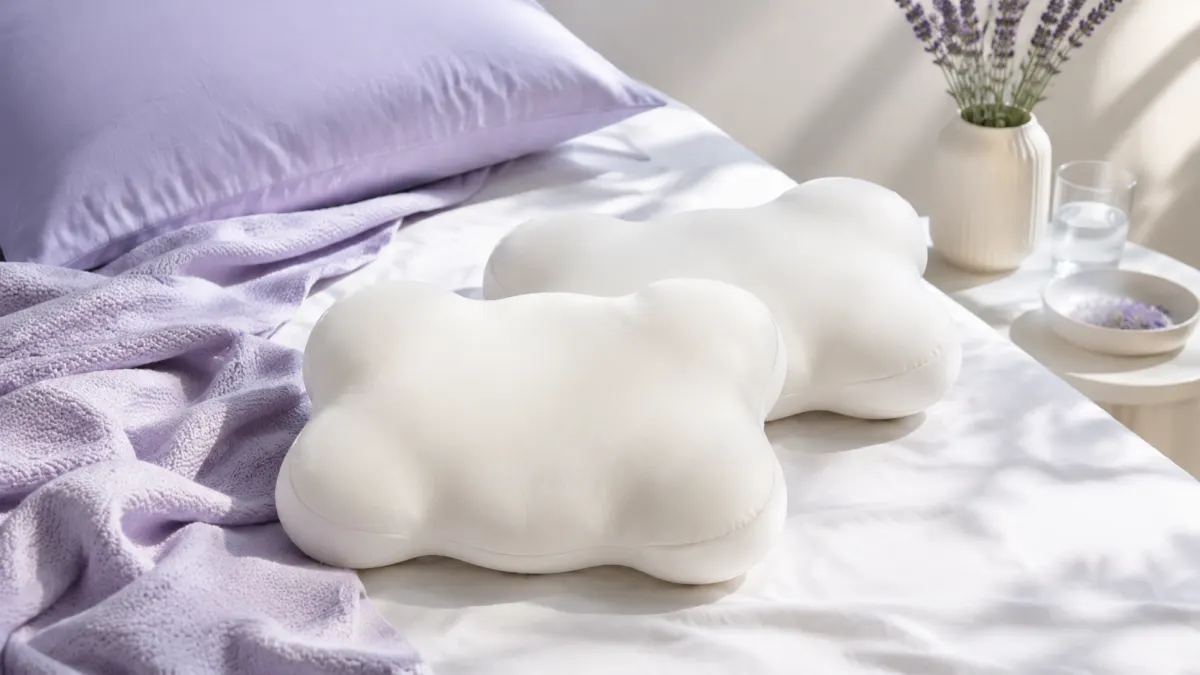
Lumuwala Cloud Pillow makes sense for sleepers who want a stable foam pillow with a breathable cover and a cleaner replacement point than an old, collapsing pillow. It should be used with a clean pillowcase, and allergy-prone sleepers can add a separate allergen-proof encasing if their clinician or symptom pattern points toward dust mites. The pillow should not be presented as allergy treatment.
The best use case is practical comfort: a pillow that supports the neck, runs cooler than a stale old setup, and gives you a fresh surface to manage with normal laundry habits. If symptoms improve after a cleaner pillow system, good. If symptoms continue, that is information too. The next step may be room humidity, mattress encasing, pets, pollen, detergent, or medical evaluation rather than another pillow swap.
Where Cloud Pillow does and does not fit
Good fit
Lumuwala fits when the shopper wants one Cloud Pillow to test for comfort, support, heat, and care instead of building a complicated pillow stack.
Not the fit
Lumuwala is not the right fit for every allergies and pillows shopper. Do not buy it as a substitute for medical care, as a rigid prescription contour, or as a promise that a pillow alone can fix the room, mattress, or health factors behind poor sleep.
Questions shoppers ask
What is the quick answer for allergies and pillows?
Focus on dust, humidity, washable layers, and allergy-conscious pillow hygiene. The right pillow should solve that main job while keeping height, heat, care, and return risk in balance.
Where does Lumuwala Cloud Pillow fit in allergies and pillows?
It fits when you want a soft support pillow to test at home with the current policy details in view and you are not looking for a rigid medical contour.
Can a pillow solve allergies by itself?
No. A pillow can support a cleaner sleep setup, but allergy control usually also involves washing routines, pillowcases, humidity control, and medical guidance when symptoms persist.
How many nights should I test the pillow?
Use several normal nights, not one nap or one showroom squeeze. Keep the same pillowcase, mattress, and bedding so the pillow is the main variable.
What should I write down during the test?
Track heat timing, pillow flips, folds, stacking, pressure at the jaw or ear, shoulder load, neck angle, and morning comfort.
Is a higher pillow always better?
No. Side sleepers often need more loft than stomach sleepers, but too much height can tilt the neck upward or push a back sleeper's chin down.
When should I stop self-testing?
Stop and get medical guidance if symptoms are persistent, worsening, nerve-like, tied to injury, or include weakness, numbness, dizziness, or breathing concerns.
What makes an article trustworthy for pillow shopping?
Trust pages that separate fit guidance from medical claims, cite real sources, disclose evidence limits, and avoid invented review counts, ratings, or lab measurements.
Sources
- Carrard A, Pichler C. House dust mite allergy. PubMed PMID: 22477664.
- Wang Y, Xiong L, Yin X, et al. House dust mite allergen levels and allergic rhinitis symptoms. PubMed PMID: 25198017.
- Halken S, Host A, Niklassen U, et al. Effect of mattress and pillow encasings on children with asthma and house dust mite allergy. PubMed PMID: 12532114.
- Matsui EC, et al. Improving indoor environments: reducing allergen exposures. PubMed PMID: 15990784.