Sleep pain guide
Pillow for Side Sleepers With Rotator Cuff Pain
Rotator cuff pain needs care boundaries first. A pillow can support side-sleeping height and pressure control, but it cannot treat the shoulder.
Quick answer
For pillow for side sleepers with rotator cuff pain, the useful answer is to solve shoulder-to-ear gap, pillow height, and pressure at the face without creating a worse tradeoff. Best fit: side or side/back sleepers who need enough loft to avoid head drop without a hard pressure point at the jaw or ear. Lumuwala Cloud Pillow is worth considering when you want a plush support feel, cooler sleep surface, and a current-policy home trial. Skip the self-test and talk to a clinician if symptoms are persistent, worsening, one-sided, nerve-like, or linked to injury.
Founder and primary Lumuwala byline
Edited by Anya for editorial content editor
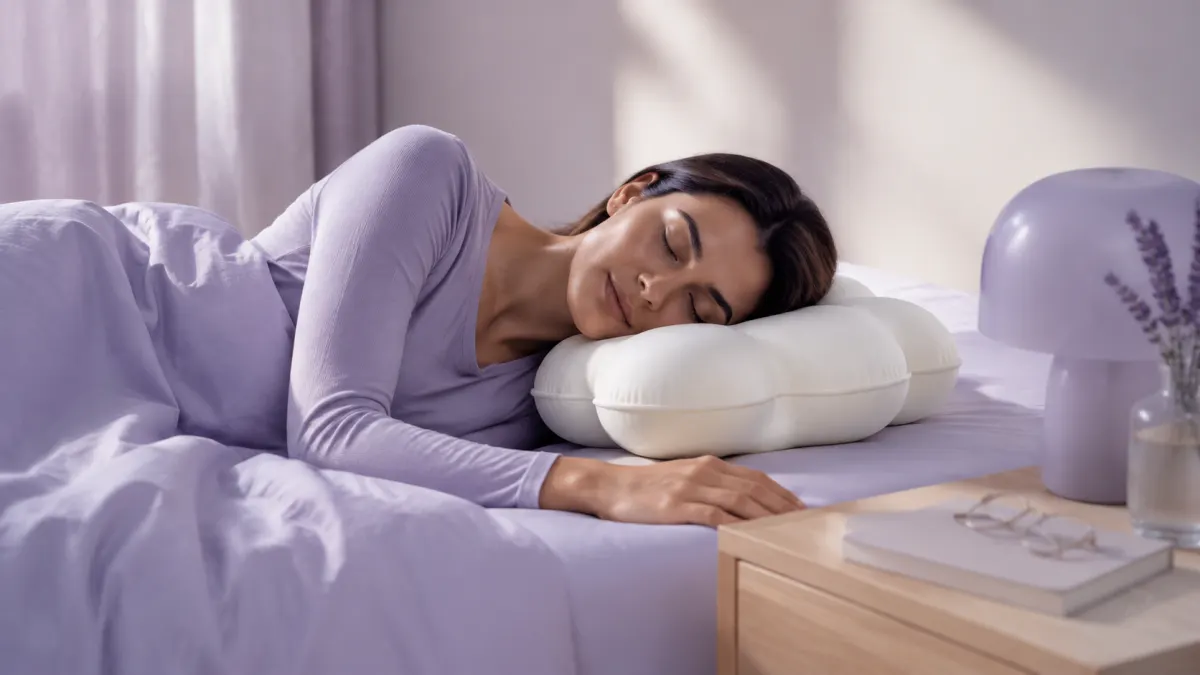
Buying brief
Decide before you shop.
Best fit
Best fit: side or side/back sleepers who need enough loft to avoid head drop without a hard pressure point at the jaw or ear.
Skip if
Skip the self-test and talk to a clinician if symptoms are persistent, worsening, one-sided, nerve-like, or linked to injury.
Pattern
Map the complaint to shoulder-to-ear gap, pillow height, and pressure at the face; do not treat the pillow as a diagnosis.
Position fit
Check side, back, or stomach height separately because each changes neck angle.
Pressure points
Notice jaw, ear, shoulder, skull-base, and arm pressure after several hours.
Care boundary
Persistent or worsening symptoms deserve medical advice before product testing.
Try the Lumuwala fit
Cloud Pillow is the product this guide points back to.
Lumuwala fits when the issue looks like a comfort setup problem: pillow collapse, unstable height, heat-driven turning, or pressure from an old pillow. It should be judged as a comfort product, not a treatment.
Try Cloud Pillow for side/back supportCluster links
Keep reading in this sleep path.
Put the shoulder boundary first
Rotator cuff pain is not a pillow diagnosis. Pain with weakness, trauma, loss of range of motion, numbness, worsening symptoms, or daytime function loss deserves medical advice. A pillow test should never delay care for a shoulder that is getting worse.
For a known or suspected shoulder-sensitive pattern, the pillow can still matter. Side sleeping loads the bottom shoulder, and pillow height changes how the neck and upper shoulder sit. The pillow can reduce some setup strain or add to it.
The honest goal is narrow: protect head and neck alignment, reduce avoidable shoulder crowding, and avoid extra pressure. That is useful, but it is not rotator cuff treatment.
What the research can support
A 2024 clinic sample reported that rotator cuff tears were related to preferred side sleeping position. The study cannot prove that side sleeping caused the tears, but it supports taking shoulder load seriously in side sleepers.
A side-sleeper pillow-height study ties useful pillow height to shoulder width and absolute pillow height. A pressure-distribution study shows that sleep surface, body area, sex, and sleep position can change pressure patterns. A pillow-design review links pillow design with neck pain, waking symptoms, satisfaction, and spinal alignment.
Together, these sources support a practical method: do not ask the pillow to heal the shoulder. Ask whether it keeps the head level, reduces neck pull, and avoids adding shoulder or jaw pressure while the shoulder gets appropriate care.
Try the Lumuwala fit
Cloud Pillow is the product this guide points back to.
Lumuwala fits when the issue looks like a comfort setup problem: pillow collapse, unstable height, heat-driven turning, or pressure from an old pillow. It should be judged as a comfort product, not a treatment.
Use the guide, then test the fitHeight changes the shoulder conversation
If the pillow is too low, the head drops toward the mattress and the top of the shoulder may feel pulled. The sleeper may tuck an arm under the pillow to create height, which can irritate the shoulder further. That habit is a clue, not a solution.
If the pillow is too high, the head tips upward and the upper shoulder can feel bunched. The jaw, ear, and temple may take pressure too. A rotator-cuff-sensitive sleeper does not need a pillow that solves neck drop by creating a new pressure point.
The side-sleeper target is boring: head level after the shoulder settles, no folding, no arm under the head, and no feeling that the pillow is driving the shoulder into the mattress.
A small height test can save money. If a thin folded towel under the current pillow reduces neck pull without increasing shoulder pressure, the direction may be more height. If removing a protector reduces jaw pressure, the direction may be less stack height or a softer surface.
Do not use pain relief in one spot as the whole score. A pillow can reduce neck pull and still worsen bottom-shoulder pressure. A shoulder-sensitive sleeper needs both scores to move in the right direction.
The mattress and arms may be louder than the pillow
A firm mattress can load the bottom shoulder before the pillow gets a chance to help. A soft mattress can let the shoulder sink enough that a once-good pillow becomes too tall. The pillow answer changes with the bed surface.
Arm position matters. The lower arm under the pillow can create fake height and shoulder strain. The top arm falling forward can rotate the chest and tug the upper shoulder. A small hug pillow or folded blanket can be a low-risk test for the top arm.
If changing arm position calms the shoulder while the pillow stays the same, keep that information. The pillow may be acceptable, and the side-sleeping posture may be the louder problem.
The mattress clue is usually timing. If the shoulder hurts as soon as you lie down, pressure from the bed may be loud. If the shoulder feels fine at bedtime and the neck or shoulder aches in the morning, pillow height or overnight movement deserves more attention.
A topper can change both problems at once. It may reduce shoulder pressure and lower the shoulder enough that the pillow becomes too tall. If a topper enters the test, the pillow height has to be retested instead of assumed.
Separate shoulder pressure from neck alignment
Shoulder pressure is usually local: bottom shoulder, upper arm, or front of shoulder. Neck alignment trouble often spreads into the side of the neck, upper trapezius, jaw, or shoulder blade. Both can happen together, but they should be scored separately.
A higher pillow can help neck drop and still leave the bottom shoulder compressed. A softer surface can reduce jaw pressure and still fail the neck. A mattress topper can reduce shoulder pressure and change the needed pillow height. The setup is a system.
That is why a rotator-cuff-sensitive sleeper should not buy from one measurement alone. Shoulder width matters. Mattress sink matters. Arm position matters. Pain timing matters. The pillow is only one lever.
Use a two-column note: shoulder and neck. If shoulder improves and neck worsens, the pillow is not a clean win. If neck improves and shoulder worsens, the bed or arm position may need the next test. If both improve, the pillow has earned more time.
Heat belongs in the note too. A warm pillow can make the sleeper roll forward or pull the arm into a bad position. Cooling is not shoulder treatment, but fewer hot moves can make a good alignment easier to keep.
A seven-night shoulder-safe test
Use seven nights only if symptoms are mild enough for a low-risk bedding test. Record shoulder side, bottom or top shoulder, neck drop, pillow fold, lower-arm position, top-arm support, heat, and morning stiffness.
Nights one and two: current setup. Night three: adjust pillow height only if the head drops or tips. Night four: test top-arm support. Night five: change case or cover only if heat causes movement. Nights six and seven: repeat the best low-risk setup.
Stop if pain worsens, spreads, or affects daytime shoulder use. A bedding test should not require gritting through shoulder pain. If the shoulder is louder, care comes before product comparison.
A useful result is less neck pull, fewer arm-under-pillow habits, calmer shoulder pressure, and no new jaw or ear pressure. Zero pain is not the required bar for a pillow verdict.
Repeat the best night before trusting it. Shoulder pain can vary with exercise, work, stress, and which side gets slept on longest. One good morning is a clue. Two or three similar mornings are a pattern.
If the best setup uses an extra support pillow for the top arm, include that in the verdict. The main pillow may be fine only when the shoulder is not being pulled forward all night.
Shopping checks that matter
Look for stable side-sleeper height with a surface that gives enough at the face. Very soft pillows can collapse and make the sleeper use the shoulder or arm for support. Very firm pillows can hold height but add face pressure.
Check the trial window and return rules. Shoulder symptoms vary, and one night can mislead. The sleeper needs enough time to test normal nights without forcing an irritated shoulder into a bad setup.
Avoid pillow copy that promises shoulder repair. Better copy explains fit, height, surface pressure, cooling, and limits. For rotator cuff pain, careful language is a feature.
Check size and edge behavior too. A side sleeper may start in the center and wake on the edge. If the edge collapses or feels thinner, the shoulder and neck may get a different pillow at 4am than they had at bedtime.
Do not ignore case texture. A rough or slippery case can make the head drift and change shoulder angle. The surface should stay comfortable without encouraging constant repositioning.
A good purchase should also make the return decision clear. After several ordinary nights, the pillow either reduces neck pull without adding shoulder compression, or it does not. If the answer is unclear, keep testing the bed and arm position before buying another pillow.
Where Lumuwala fits
Lumuwala Cloud Pillow can work for side sleepers with shoulder-sensitive nights when the main pillow problem is head drop, collapse, heat-driven movement, or constant folding. The 6 inch medium-firm profile gives a stable height target, and the cover can reduce hot-pillow moves that pull the sleeper out of position.
It may not solve bottom-shoulder pressure from a firm mattress. It may be too high for stomach-heavy sleepers or smaller sleepers on soft mattresses. Test head level, shoulder pressure, lower-arm habits, and jaw comfort before deciding.
Keep Lumuwala only if several normal nights show less neck pull, fewer pillow rebuilds, no extra shoulder compression, and no new jaw or ear pressure. If the shoulder needs clinical care or mattress relief, let that be true instead of making the pillow carry the whole problem.
If Lumuwala improves the neck but the shoulder stays angry, that is still useful information. Keep the pillow verdict separate from the shoulder diagnosis. The next test may be mattress pressure, top-arm support, or care first, not guesswork.
Where Cloud Pillow does and does not fit
Good fit
Lumuwala fits when the issue looks like a comfort setup problem: pillow collapse, unstable height, heat-driven turning, or pressure from an old pillow. It should be judged as a comfort product, not a treatment.
Not the fit
Lumuwala is not the right fit for every pillow for side sleepers with rotator cuff pain shopper. Do not buy it as a substitute for medical care, as a rigid prescription contour, or as a promise that a pillow alone can fix the room, mattress, or health factors behind poor sleep.
Questions shoppers ask
What is the quick answer for pillow for side sleepers with rotator cuff pain?
Focus on shoulder-to-ear gap, pillow height, and pressure at the face. The right pillow should solve that main job while keeping height, heat, care, and return risk in balance.
Where does Lumuwala Cloud Pillow fit in pillow for side sleepers with rotator cuff pain?
It fits when you want a soft support pillow to test at home with the current policy details in view and you are not looking for a rigid medical contour.
Can a pillow treat pain or numbness?
No. A pillow may reduce one comfort variable, such as height, pressure, or heat, but persistent or nerve-like symptoms should be discussed with a clinician.
How many nights should I test the pillow?
Use several normal nights, not one nap or one showroom squeeze. Keep the same pillowcase, mattress, and bedding so the pillow is the main variable.
What should I write down during the test?
Track heat timing, pillow flips, folds, stacking, pressure at the jaw or ear, shoulder load, neck angle, and morning comfort.
Is a higher pillow always better?
No. Side sleepers often need more loft than stomach sleepers, but too much height can tilt the neck upward or push a back sleeper's chin down.
When should I stop self-testing?
Stop and get medical guidance if symptoms are persistent, worsening, nerve-like, tied to injury, or include weakness, numbness, dizziness, or breathing concerns.
What makes an article trustworthy for pillow shopping?
Trust pages that separate fit guidance from medical claims, cite real sources, disclose evidence limits, and avoid invented review counts, ratings, or lab measurements.
Sources
- Richards DP, Miller DL, MacDonald ED, et al. Rotator cuff tears are related to side sleeping position. PubMed PMID: 38328528.
- Tian S, Yao C, Wang Y, et al. Individualized optimal pillow height and neck support design for side sleepers. PubMed PMID: 39412632.
- Mohamadi P, Theurot D, Halle S, et al. Body pressure distribution across sleep surfaces and positions. PubMed PMID: 40395183.
- Chun-Yiu JP, Man-Ha ST, Chak-Lun AF. Effects of pillow designs on neck pain, waking symptoms, sleep quality and spinal alignment. PubMed PMID: 33895703.